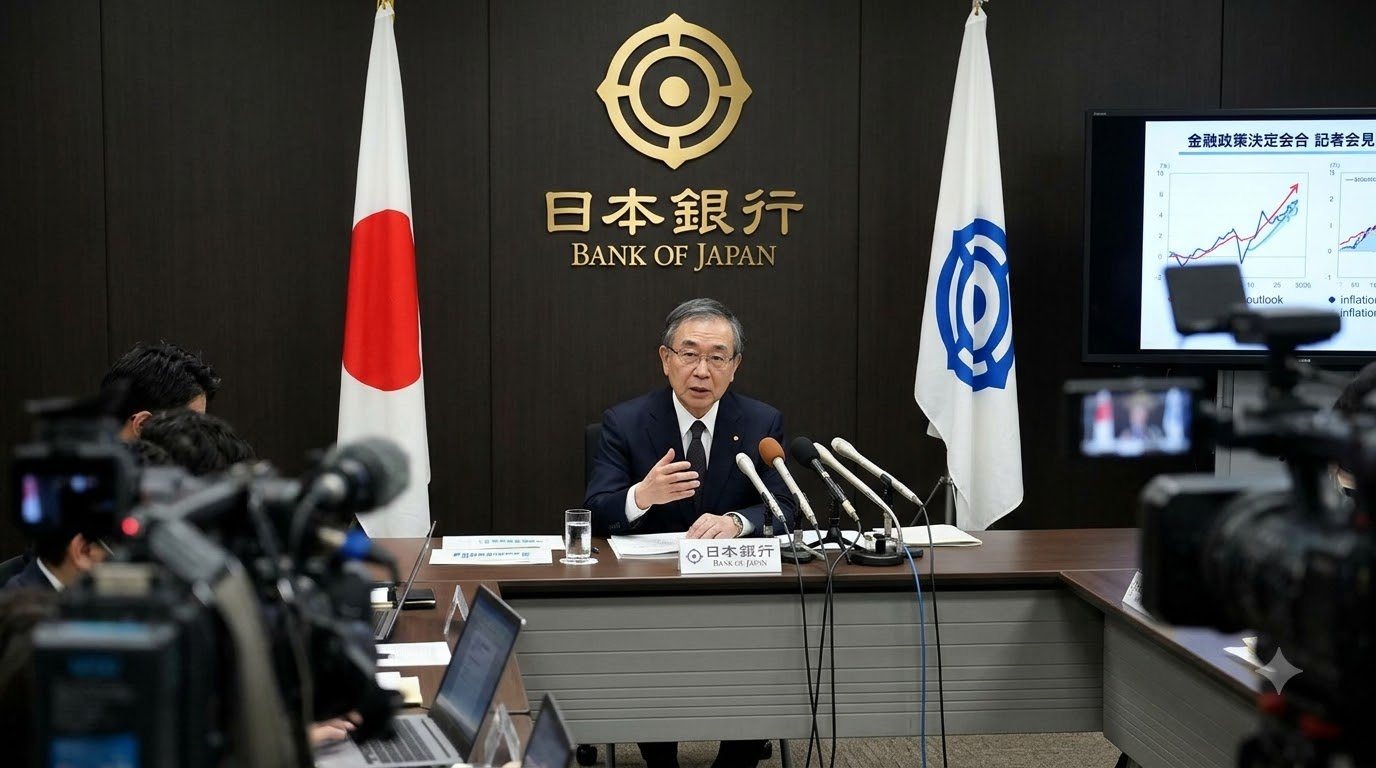
Japan’s central bank is preparing for a potential shift towards tighter monetary policy as rising import costs, wage pressures and a weaker yen complicate the country’s economic outlook.
The Worldonomics Times | 28 October 2026
Japan Enters a New Phase of Monetary Policy
The Bank of Japan (BOJ) is signalling that further interest-rate increases may be necessary as inflationary pressures become more persistent, marking an important change in the country’s monetary policy direction. After years of exceptionally low borrowing costs designed to stimulate economic activity, the central bank is increasingly focused on keeping inflation close to its 2% target.
The BOJ raised its benchmark short-term policy rate to 1.25% in September 2026, its highest level in 31 years. Governor Kazuo Ueda and other policymakers have since indicated that monetary tightening could continue if economic and price developments remain consistent with their forecasts.
The central bank’s two-day policy meeting on October 29–30 is expected to attract considerable attention. Markets are watching for updated economic and inflation forecasts, along with clues about the timing of the next increase. A further hike has not been confirmed, but recent policy signals have strengthened expectations that borrowing costs could rise again in the coming months.
Inflation Remains the Central Concern
Japan has spent decades battling weak inflation and periods of falling prices. The recent emergence of more persistent price increases has therefore changed the challenge facing policymakers.
Rising energy and raw-material costs have contributed to inflationary pressure, while a weaker yen has made imported goods more expensive. Japan relies heavily on imported energy, leaving households and businesses vulnerable to movements in international oil and gas prices.
The BOJ is also monitoring signs that inflation is becoming more deeply established in the domestic economy. Wage increases, changing consumer expectations and firms’ ability to pass higher costs on to customers all influence whether price pressures persist.
Governor Ueda has stressed that underlying inflation is approaching the bank’s 2% objective and that policymakers need to prevent it from rising excessively above that level.
For the central bank, the challenge is to distinguish temporary price increases caused by external shocks from sustained inflation driven by domestic demand and wages. If price pressures become entrenched, delaying policy adjustments could make inflation more difficult to control.
A Weaker Yen Adds to Policy Pressure
Currency movements are another important factor shaping Japan’s monetary outlook. A weaker yen increases the domestic cost of imported fuel, food, machinery and industrial materials. These higher costs can squeeze household budgets and reduce businesses’ profit margins.
Interest-rate differences between Japan and other major economies can influence currency demand. When Japanese interest rates remain comparatively low, investors may find higher-yielding assets elsewhere more attractive. Gradual monetary tightening could help narrow those differences, although exchange rates are also influenced by global risk sentiment, trade conditions and expectations about future policy.
A stronger yen could ease some imported inflation, but the BOJ cannot rely on currency appreciation alone to stabilise prices. Its principal task remains ensuring that inflation develops sustainably around its target while avoiding unnecessary damage to economic activity.
Higher Rates Bring Benefits and Risks
Further interest-rate increases could help moderate inflation by making borrowing more expensive and reducing excessive demand. Higher returns on savings may also benefit some households, particularly those with deposits that earn little interest.
However, tighter monetary policy can create difficulties for borrowers. Households with variable-rate mortgages may face higher repayments, while businesses could encounter increased financing costs when investing in equipment, expanding operations or hiring workers.
Small and medium-sized enterprises may be particularly sensitive to higher borrowing costs because they often have less access to alternative financing. If companies delay investment or reduce spending, the effects could spread to employment, wages and consumer demand.
Japan’s government finances could also face additional pressure. Higher interest rates can gradually increase the cost of issuing or refinancing public debt, depending on the maturity structure of government bonds and prevailing market yields. This makes the pace of monetary tightening important for both economic stability and fiscal planning.
Global Markets Will Watch Japan Closely
Japan’s monetary policy has implications beyond its borders. For many years, low Japanese interest rates encouraged investors to seek higher returns in overseas markets. As Japanese yields rise, some investors may reconsider their international portfolios or reduce borrowing strategies that depend on inexpensive yen funding.
Such adjustments could affect currency markets, government bond yields and asset prices in other economies. The scale of any impact will depend on how quickly rates rise, how markets have positioned themselves and whether the changes are already reflected in asset prices.
For Asian economies, Japan’s policy direction is especially relevant because of its importance in regional trade, manufacturing and investment. Changes in Japanese financing conditions can influence corporate investment decisions and cross-border capital flows.
Nevertheless, gradual and clearly communicated adjustments may give investors and businesses more time to adapt. Sudden policy surprises would carry a greater risk of market volatility.
The BOJ Must Balance Inflation and Growth
Despite growing inflation concerns, policymakers cannot ignore weaknesses in domestic demand. Japan’s economic recovery remains uneven, and higher living costs have placed pressure on household purchasing power.
The central bank must therefore assess whether wage growth is strong enough to support consumption and whether businesses can absorb higher financing costs without cutting investment. It must also consider how previous rate increases are affecting lending, financial conditions and economic activity.
Policymakers have emphasised that future decisions will depend on economic, price and financial developments rather than a predetermined schedule. This approach leaves the BOJ room to respond if inflation accelerates unexpectedly or growth weakens more sharply than anticipated.
The Worldonomics Times View
The Bank of Japan’s signals reflect a significant transition for an economy that has relied on exceptionally low interest rates for much of the past several decades. Moving towards more normal monetary conditions may help maintain price stability, but the process must be managed carefully.
The BOJ should remain attentive to the distinction between temporary imported inflation and sustained domestic price pressures. Clear communication, data-driven decisions and a measured approach can help reduce uncertainty for households, businesses and financial markets.
Japan’s government also has a role to play by supporting productivity, encouraging sustainable wage growth and helping vulnerable households manage higher living costs without creating excessive inflationary demand.
Ultimately, the success of Japan’s monetary policy shift will depend not simply on how high interest rates rise, but on whether inflation stabilises while economic growth and household purchasing power remain resilient. The coming policy meetings will be important in determining how the central bank navigates that balance.