Europe’s economy continues to expand, but higher energy prices, subdued productivity and uncertain global conditions are limiting the pace of recovery and complicating policy decisions.
The Worldonomics Times | 28 October 2026
A Fragile Recovery Across the Eurozone
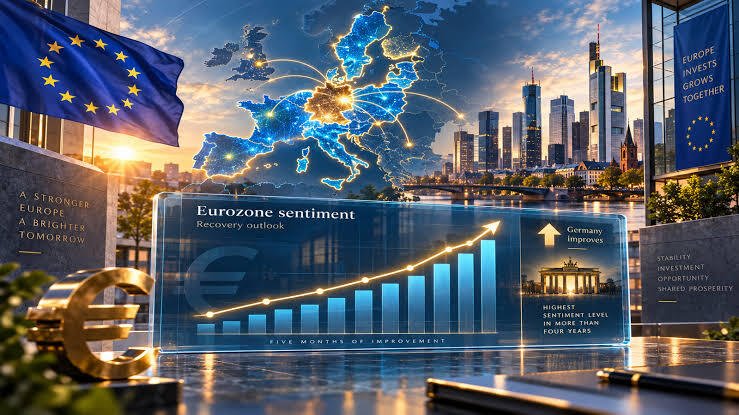
The eurozone economy is facing a period of modest growth as persistent external pressures and structural weaknesses continue to weigh on business confidence, consumer spending and investment. While the region has demonstrated resilience in the face of geopolitical tensions and changing global trade conditions, its economic recovery remains uneven.
The International Monetary Fund’s October 2026 Regional Economic Outlook for Europe describes the continent’s growth prospects as subdued, warning that the effects of the energy shock and longer-term productivity challenges could continue to constrain economic activity. The IMF projects growth in the euro area, excluding Ireland, at approximately 1.2% in 2026 and 1.1% in 2027.
These projections underline the difficulties facing the region. Although the economy is not necessarily heading towards a widespread contraction, growth remains too limited to resolve all the pressures affecting households, businesses and public finances.
Rising Energy Costs Create Fresh Headwinds
Higher energy prices have become a significant obstacle to Europe’s economic outlook. Geopolitical tensions and disruptions to energy supplies have increased uncertainty over the cost and availability of oil and natural gas, placing additional pressure on European businesses.
Energy-intensive industries, including chemicals, metals, manufacturing and transportation, are particularly exposed. Higher operating costs can reduce profit margins, weaken competitiveness and discourage companies from expanding production. Businesses may respond by increasing prices, reducing output or postponing investment.
Households are also affected. When energy and transport costs rise, families have less disposable income available for other purchases. This can weaken demand for retail goods, hospitality, leisure and other consumer services.
The IMF warns that the recovery could lose further momentum if energy prices remain elevated for longer than expected. Even if supply conditions gradually improve, the delayed effects of higher costs may continue to influence prices and spending decisions.
Consumer Spending Remains Important
Household consumption is a key factor in determining whether the eurozone can sustain its recovery. Wage growth and easing inflation can support purchasing power, but rising essential expenses may limit the benefits for consumers.
When households become uncertain about future employment, energy bills or borrowing costs, they may increase savings and postpone major purchases. This can affect demand for cars, housing-related products, household appliances and other goods.
The situation differs across member countries. Economies with stronger labour markets and healthier household finances may be better positioned to maintain consumption, while countries facing weaker demand or tighter fiscal conditions may find recovery more difficult.
Restoring consumer confidence will require predictable economic conditions, stable employment opportunities and inflation that does not repeatedly erode household incomes.
Investment and Productivity Remain Structural Challenges
Europe’s longer-term growth prospects are also affected by weak productivity growth. Productivity determines how efficiently businesses turn labour, capital and technology into economic output. When productivity advances slowly, it becomes more difficult to raise wages, improve competitiveness and sustain higher living standards.
Businesses across the region face decisions about investing in new equipment, digital technologies, research and development. Higher energy costs, financing uncertainty and changing trade conditions can delay those decisions.
The IMF has highlighted the need for reforms that encourage innovation, help businesses expand and strengthen the functioning of the European single market. Greater integration could make it easier for companies to operate across national borders, access capital and commercialise new technologies.
Investment in artificial intelligence, automation and digital infrastructure could also support productivity. However, the gains will depend on how effectively firms adopt these technologies and whether workers have the skills needed to use them.
The European Central Bank Faces a Delicate Balance
The European Central Bank (ECB) faces a difficult policy challenge as it seeks to contain inflation without unnecessarily weakening economic activity.
Higher energy prices can push inflation upwards even as they reduce consumers’ purchasing power and slow growth. This creates a complicated environment for monetary policymakers. Raising interest rates can help prevent inflation from becoming entrenched, but it can also increase borrowing costs for households and businesses.
Lower rates, on the other hand, may support investment and consumption but could prove less effective if inflationary pressures remain persistent.
The ECB must therefore assess energy prices, wage developments, inflation expectations and the strength of domestic demand before adjusting its policy stance. Clear communication is important to prevent uncertainty over future interest rates from discouraging investment or creating unnecessary volatility in financial markets.
Public Finances Face Competing Demands
Governments across the eurozone are also balancing competing priorities. They must support economic resilience, maintain essential public services and invest in infrastructure while managing debt and budget deficits.
Higher borrowing costs can increase the expense of refinancing public debt, particularly for countries with large financing requirements. At the same time, energy support, defence, infrastructure and social spending can create additional demands on government budgets.
The IMF has cautioned against relying on broad-based fiscal expansion when inflationary pressures remain elevated. Instead, governments need to preserve room for manoeuvre, provide targeted assistance where necessary and direct public resources towards investments that improve long-term productivity.
A coordinated approach would help countries manage common challenges while recognising differences in national fiscal positions and economic conditions.
The Worldonomics Times View
The eurozone’s modest growth outlook reflects a combination of immediate economic pressures and deeper structural challenges. Energy-market uncertainty is testing the region’s resilience, while weak productivity and fragmented markets are limiting its ability to generate stronger long-term growth.
Policymakers should focus on strengthening energy security, improving cross-border trade and investment, and creating conditions that encourage innovation. Support for vulnerable households and energy-intensive businesses should be carefully targeted so that short-term relief does not undermine fiscal sustainability.
The region must also invest in skills, digital infrastructure and modern industrial capacity to ensure that technological progress translates into higher productivity and better employment opportunities.
Ultimately, the eurozone’s economic future will depend on more than the next set of growth figures. Sustained progress requires a combination of stable prices, productive investment, responsible public finances and reforms that allow businesses to compete and expand. By addressing these priorities, Europe can strengthen its resilience and build a more durable foundation for economic growth.