Europe’s economic recovery is facing renewed pressure as rising energy prices, persistent inflation and geopolitical uncertainty weaken business confidence and household spending. With industries struggling to manage higher operating costs, the region faces the challenge of restoring growth while maintaining price stability.
Europe is entering another challenging phase of economic uncertainty. After navigating the energy crisis, supply-chain disruptions and inflationary pressures of recent years, the continent is once again confronting rising energy costs and weakening economic momentum. Higher prices for oil, natural gas and electricity are putting pressure on households, businesses and governments, making economic recovery increasingly difficult.
Although the European economy continues to expand, growth remains modest. According to Eurostat’s preliminary estimate, euro area GDP increased by 0.4% in the third quarter of 2026, while the European Union recorded growth of 0.5%. This represented a slowdown compared with the previous quarter, when growth reached 0.6% in the euro area and 0.7% across the EU.
The figures highlight an economy that remains resilient but is struggling to build stronger momentum.
Rising Energy Costs Intensify Economic Pressure
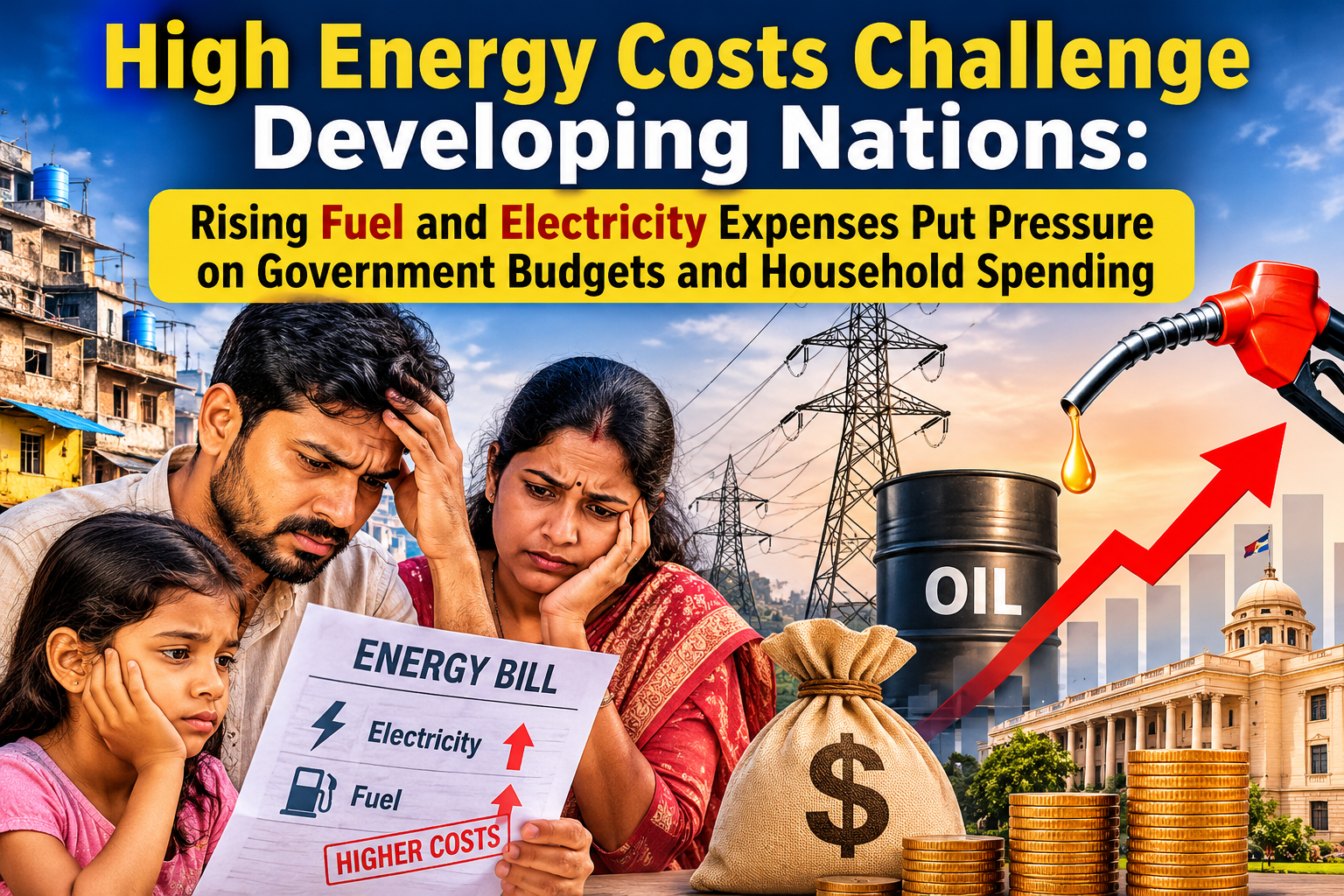
Energy prices have become one of the most significant challenges for Europe’s economic outlook. Geopolitical tensions and disruptions to international energy transportation have contributed to higher oil and gas prices, increasing the cost of electricity, heating and industrial production.
Europe remains exposed to fluctuations in international energy markets because many countries depend on imported energy resources. When global prices rise, the effects spread throughout the economy, affecting manufacturers, transport companies, agricultural producers and service providers.
The chemical, steel, automotive and manufacturing industries are particularly vulnerable because energy represents a significant part of their operating expenses. Higher production costs reduce profit margins and can make European products less competitive in international markets.
Recent industry warnings illustrate the seriousness of the situation. Energy-intensive businesses are facing weaker demand alongside elevated energy and raw-material costs. Some companies may respond by reducing production, delaying investment or reconsidering their European operations.
The impact is also visible among households, where higher electricity, gas and fuel bills leave less disposable income for other purchases.
Inflation Continues to Challenge Consumers
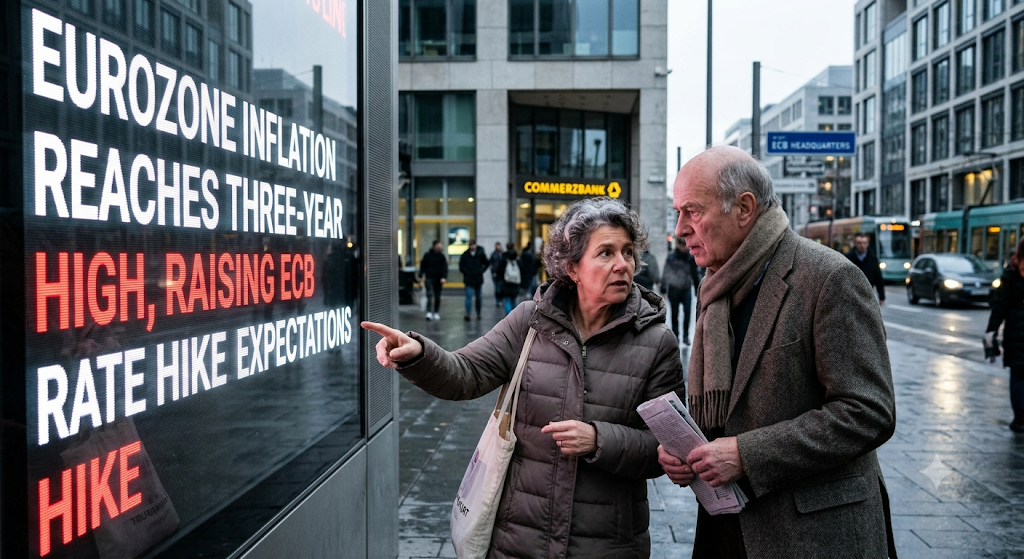
Inflation remains another major obstacle to economic recovery. According to Eurostat’s flash estimate published on 4 November 2026, annual inflation in the euro area increased to 4.0% in October, compared with 3.8% in September.
Energy was the largest contributor to the renewed pressure, with annual energy inflation reaching an estimated 20.8% in October, compared with 18.9% in September.
Higher energy prices can gradually increase the cost of food production, transportation, manufacturing and everyday services. Businesses facing rising expenses may pass some of these costs on to consumers, creating additional pressure on household budgets.
For families, persistent inflation reduces purchasing power and makes it harder to maintain living standards. Consumers may postpone major purchases, reduce discretionary spending and become more cautious about their financial decisions.
This reduction in consumption can weaken demand across retail, hospitality, housing and other important sectors, creating further challenges for economic growth.
European Businesses Face Competitiveness Challenges
High energy costs and uncertain demand are placing European businesses under considerable pressure. Companies must balance rising operating expenses with the need to remain competitive against international manufacturers that may benefit from lower energy and labour costs.
Small and medium-sized enterprises are particularly vulnerable because they often have limited financial resources and less negotiating power with suppliers. Higher electricity bills, transportation costs and borrowing expenses can significantly affect their profitability.
Large manufacturers are also reconsidering investment decisions. When energy prices remain unpredictable, businesses may delay factory expansion, equipment upgrades and research projects.
This creates a longer-term concern for Europe’s industrial competitiveness. Reduced investment can slow technological development, weaken productivity and make it more difficult for European companies to compete in global markets.
The European Central Bank Faces a Difficult Balancing Act
The renewed rise in inflation creates a complicated challenge for the European Central Bank (ECB). Higher interest rates can help contain demand and prevent inflationary pressures from becoming persistent. However, tighter monetary policy also increases borrowing costs for households and businesses.
Expensive loans can discourage consumer spending, reduce business investment and place additional pressure on sectors such as construction and real estate.
The ECB must therefore balance two important objectives: controlling inflation and supporting economic stability. Energy-driven inflation is particularly difficult to address through monetary policy because interest rates cannot directly increase the supply of oil or natural gas.
The challenge is to prevent temporary external price shocks from developing into broader and more persistent inflation.
What Lies Ahead for Europe’s Economy?
The outlook will depend heavily on energy-market developments, geopolitical conditions, consumer confidence and the policy response from European governments.
The European Commission’s Spring 2026 Economic Forecast projected EU economic growth of 1.1% in 2026, compared with 1.5% in 2025. It also projected euro area growth of 0.9% in 2026. The IMF’s October 2026 outlook subsequently estimated euro area growth at 1.1%, indicating a modest improvement in expectations but not a strong recovery.
Investment in renewable energy, electricity infrastructure and energy-efficient technologies could help reduce Europe’s exposure to future energy shocks. Governments can also support vulnerable households and businesses through targeted measures while avoiding excessive pressure on public finances.
Strengthening domestic energy production, diversifying import sources and improving cross-border energy infrastructure will be important for long-term economic resilience.
The Worldonomics Times View
Europe’s economic slowdown is not simply a temporary problem caused by higher energy bills. It reflects deeper structural challenges involving energy dependence, industrial competitiveness, geopolitical exposure and the region’s ability to adapt to a changing global economy.
The latest inflation figures demonstrate how quickly external energy shocks can affect domestic economic conditions. At the same time, moderate GDP growth shows that Europe’s economy continues to function despite these pressures. The priority should be to protect this resilience without allowing inflation to become entrenched.
The Worldonomics Times believes that Europe’s long-term economic recovery must be built on energy security, industrial modernisation and responsible economic policymaking. Governments should prioritise investment in renewable energy, nuclear capacity where appropriate, storage systems and modern electricity networks. Temporary support for households and businesses should be targeted at those most affected rather than becoming an expensive, permanent subsidy system.
The European Central Bank must also remain cautious, recognising that excessive monetary tightening could weaken an already fragile recovery, while insufficient action could allow inflation to spread.
Ultimately, Europe needs a growth strategy that goes beyond managing each new crisis. Improving productivity, encouraging innovation, strengthening domestic industries and expanding affordable energy supplies will be essential to restoring confidence.
Europe’s economic future will depend not only on how it responds to today’s energy shock, but also on whether it uses this difficult period to build a more competitive, sustainable and economically secure region.