By The Worldonomics Times | Global Economy
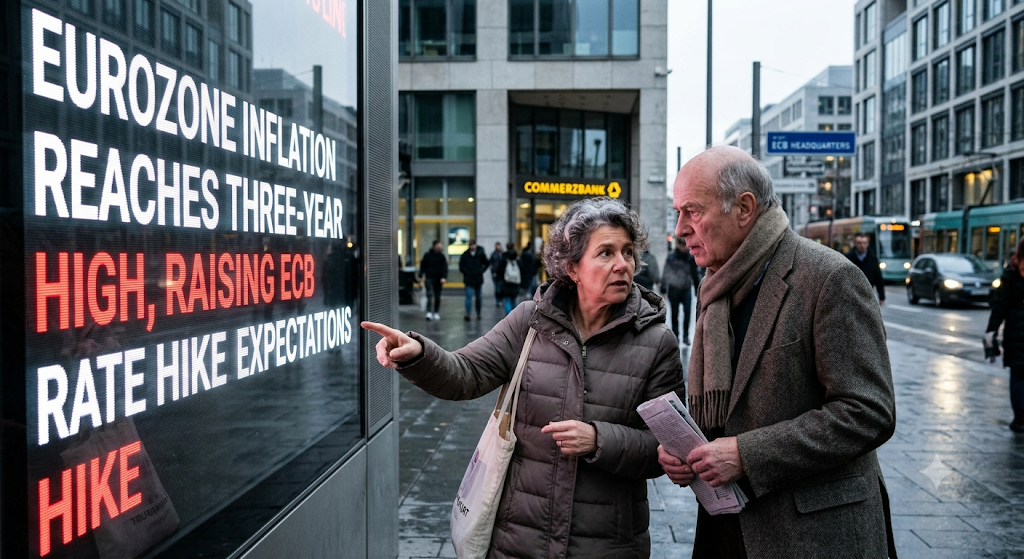
The Eurozone is facing renewed inflationary pressure as consumer prices accelerated to 4% in October 2026, reaching their highest level in approximately three years. Rising energy costs, geopolitical tensions and increasing concerns about future price stability have placed the European Central Bank (ECB) under greater pressure to consider further monetary tightening.
According to Eurostat’s preliminary estimate released on November 4, annual inflation increased from 3.8% in September to 4% in October. The latest figure is significantly above the ECB’s medium-term inflation target of 2%, raising concerns among policymakers, investors and businesses about the direction of the European economy.
The increase comes at a challenging time for the eurozone, where economic growth remains relatively modest and households continue to face pressure from living costs. Financial markets are now paying close attention to the ECB’s next policy decisions, with expectations of a possible interest rate increase in December becoming stronger.
Energy Prices Drive Inflation Higher
The sharp increase in energy prices has been the primary factor behind the latest rise in eurozone inflation. Eurostat estimates that annual energy inflation reached 20.8% in October, compared with 18.9% in September.
Geopolitical tensions and disruptions to international energy supplies have contributed to higher oil and natural gas prices. These developments have increased costs for households and businesses across the region.
Higher energy prices also affect other sectors of the economy. Transportation companies face increased fuel expenses, manufacturers experience higher production costs and businesses may pass additional expenses on to consumers. If these pressures continue, the initial energy shock could gradually influence the prices of a wider range of goods and services.
Food prices are another area attracting attention. Annual inflation in food, alcohol and tobacco increased to 1.6% in October from 1.3% in September. Unprocessed food prices recorded a more significant increase of 4.6%, adding to concerns about household purchasing power.
ECB Faces Difficult Interest Rate Decisions
The latest inflation figures have strengthened expectations that the European Central Bank may need to raise interest rates again. The ECB’s primary objective is to maintain price stability, and persistent inflation above its 2% target creates pressure for a policy response.
However, increasing interest rates is not without economic consequences. Higher borrowing costs can reduce consumer spending, discourage business investment and make mortgage repayments more expensive. Governments may also face increased debt-servicing costs as market interest rates adjust.
The ECB must therefore balance the need to control inflation against the risk of weakening economic activity.
The central bank left its interest rates unchanged at its October policy meeting. However, policymakers have indicated that prolonged energy price increases could create broader inflationary pressures. Financial markets have consequently increased their expectations of a December rate increase.
A further increase would represent a significant adjustment in the eurozone’s monetary policy direction, particularly if energy-related inflation begins spreading into other parts of the economy.
Core Inflation Offers a More Complicated Picture
Despite the increase in headline inflation, underlying price developments remain an important consideration for policymakers.
Eurostat’s October flash estimate showed that core inflation, which excludes energy and food prices, remained at 2.5%, unchanged from September. This suggests that the latest inflation increase is still being driven primarily by energy costs rather than a broad acceleration across all categories.
Services inflation increased slightly from 3.2% to 3.3%, while non-energy industrial goods inflation rose from 1.1% to 1.2%.
These figures indicate that some domestic price pressures remain, but they do not yet demonstrate a widespread acceleration in underlying inflation.
The ECB will closely monitor whether higher energy costs begin influencing wage negotiations, business pricing decisions and consumer inflation expectations. If these indirect effects become more persistent, policymakers may have stronger reasons to tighten monetary policy.
Businesses and Consumers Face Higher Costs
Rising inflation is creating challenges for businesses and households throughout the eurozone. Higher electricity, heating and transportation expenses are reducing the purchasing power of consumers and increasing operating costs for companies.
Small and medium-sized businesses may face particular difficulties because they often have less financial flexibility to absorb rising expenses. Manufacturers, logistics providers and energy-intensive industries could experience additional pressure on profit margins.
Households may also reduce discretionary spending as a greater proportion of income is allocated to essential expenses. This could affect retail sales, hospitality, tourism and other consumer-dependent industries.
If inflation remains elevated, businesses may delay expansion plans and become more cautious about recruitment and investment. Such developments could weaken economic activity at a time when the region is seeking stronger and more sustainable growth.
Impact on the Eurozone Economy and Financial Markets
The possibility of further interest rate increases is influencing financial market expectations. Government bond yields, currency movements and equity valuations may respond to changing expectations about the ECB’s monetary policy.
Higher interest rates can support the euro by making euro-denominated investments more attractive, although currency movements also depend on economic conditions and monetary policy in other major economies.
For investors, the changing inflation outlook creates uncertainty across several asset classes. Banking institutions may benefit from certain interest-rate developments, while highly indebted companies and interest-sensitive industries could face higher financing costs.
The broader economic outlook will depend on whether energy prices stabilise and whether inflation gradually moves towards the ECB’s target.
The Worldonomics View
The latest rise in eurozone inflation highlights the difficulty of managing an economy exposed to international energy markets and geopolitical developments. While monetary policy can influence demand and inflation expectations, it cannot directly resolve disruptions to energy production or international supply routes.
The ECB should therefore assess the persistence of inflation rather than respond mechanically to a single headline figure. The stability of core inflation at 2.5% suggests that policymakers still need to distinguish between temporary energy-related pressures and more persistent domestic inflation.
At the same time, ignoring a prolonged energy shock could allow higher costs to spread across the economy. A balanced approach, supported by clear communication and careful monitoring of inflation expectations, will be essential.
Governments should also consider measures that improve energy security, diversify supply sources and reduce excessive dependence on imported fossil fuels. These steps could help limit the impact of future external shocks without creating additional long-term fiscal pressures.
Conclusion
Eurozone inflation reaching 4% in October has renewed concerns about price stability and increased expectations of further European Central Bank interest rate increases. Rising energy costs remain the main driver, while food and services prices are also showing signs of upward pressure.
Although core inflation has remained relatively stable, the possibility of broader price increases presents a significant challenge for policymakers.
The ECB now faces a difficult decision: controlling inflation without placing excessive pressure on an already cautious economic recovery. Its response in the coming months will be important for financial markets, businesses, consumers and the wider European economy.