Canada’s 2026 federal budget introduces an ambitious investment strategy focused on infrastructure development, business tax incentives and productivity improvements. With approximately C$400 billion in planned capital investment over six years, the government aims to attract private capital, strengthen domestic industries and make Canada more competitive in the global economy.
Canada has announced a major economic investment programme designed to strengthen its long-term growth prospects amid rising international competition, geopolitical uncertainty and changing global trade relationships.
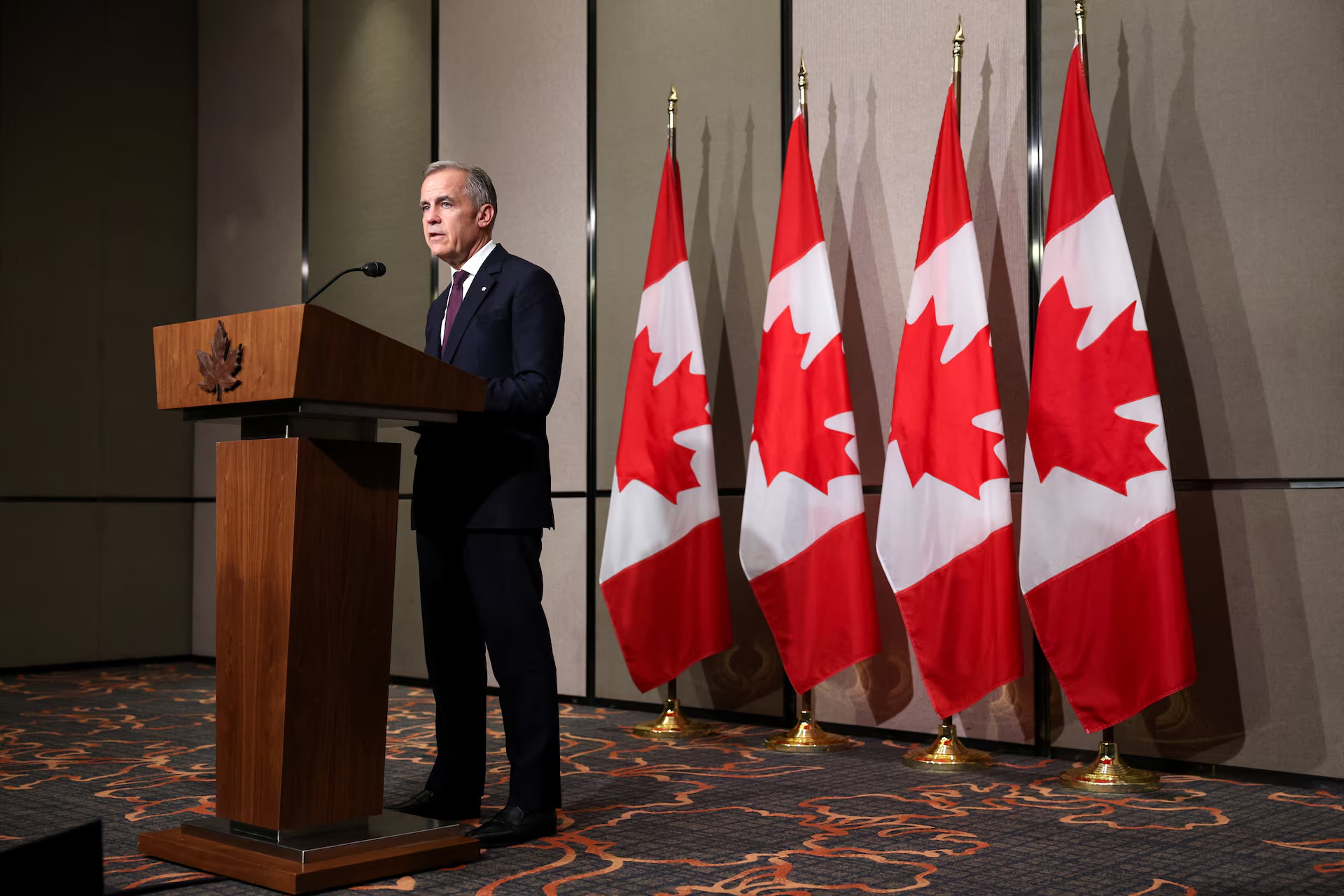
Presented on November 5, 2026, by Finance Minister François-Philippe Champagne, the federal budget, titled Masters of Our Destiny, places infrastructure, business investment and productivity at the centre of the country’s economic strategy.
The government plans to mobilise approximately C$400 billion in capital investment over six years, combining public funding, private-sector participation and incentives for businesses to expand their operations.
The announcement comes at a critical time for Canada. Slower economic growth, trade tensions with the United States and persistent productivity challenges have increased pressure on policymakers to strengthen domestic investment and diversify international trade.
Major Infrastructure Investment to Drive Growth
Infrastructure development is one of the most important components of Canada’s new economic programme.
The government intends to accelerate major projects involving transportation, electricity generation, energy infrastructure, critical minerals and digital connectivity.
These investments are expected to improve the movement of goods, reduce logistical costs and create better connections between industrial centres and international markets.
A major priority is expanding Canada’s electricity infrastructure. The budget provides more than C$50 billion for the national electricity strategy, with the objective of doubling electricity grid capacity by 2050.
This investment is particularly important as electricity demand increases through artificial intelligence, data centres, electric vehicles and industrial electrification.
The government has also allocated C$2.3 billion to its Critical Minerals Strategy, supporting domestic production and processing capabilities. Canada possesses significant reserves of minerals essential for batteries, electric vehicles, renewable energy systems and advanced manufacturing.
In addition, the Mackenzie Valley Highway and other strategic infrastructure projects are expected to improve access to remote regions and strengthen economic opportunities.
These initiatives could create employment across construction, engineering, energy, manufacturing and transportation industries.
New Business Tax Incentives Encourage Investment
A central feature of the budget is the introduction of the Productivity Mega Deduction, one of the most significant changes to Canada’s business tax system in decades.
The measure allows businesses to immediately deduct the full cost of a much broader range of eligible investments instead of spreading deductions over several years.
Approximately two-thirds of capital assets are expected to qualify, compared with around 15% previously.
Eligible investments include machinery, equipment, software, research and development, pipelines, vehicles, fibre-optic infrastructure and other productive assets.
According to the government, the measure is expected to reduce the marginal effective tax rate on new business investment from approximately 13% to 6.4%.
This could make Canada a more attractive destination for domestic and international investors, particularly in manufacturing, technology, mining and energy.
The budget also introduces the Canada Growth Incentive, including a proposed capital-gains tax exemption of up to C$15 million for eligible investments in Canadian businesses. The initiative is designed to encourage entrepreneurs and investors to keep more capital within the country and support business expansion.
Supporting Innovation and Small Businesses
Canada’s economic competitiveness depends not only on infrastructure but also on the ability of businesses to innovate and adopt new technologies.
The government has committed C$930 million to expand the Scientific Research and Experimental Development (SR&ED) tax incentive programme. The expansion is intended to help businesses develop new technologies, commercialise research and bring innovative products to market.
Small and medium-sized enterprises are particularly important to this strategy. Many smaller businesses face financial barriers when purchasing modern equipment, adopting automation or expanding production.
By lowering investment costs and improving access to capital, the government hopes to encourage more businesses to modernise their operations.
The budget also seeks to improve Canada’s position in artificial intelligence, clean technology and advanced manufacturing. These industries are expected to play an increasingly important role in international trade and future employment.
Diversifying Trade and Strengthening Economic Independence
Another major objective is reducing Canada’s dependence on the United States as its principal trading partner.
The government plans to double non-US exports by the end of 2035, encouraging Canadian businesses to explore opportunities in Europe, Asia and other international markets.
Trade-enabling infrastructure, including ports, railways, airports and transportation corridors, will be essential to achieving this goal.
The budget allocates approximately C$6.6 billion to trade diversification and infrastructure strategies. These investments are expected to improve export capacity and strengthen connections between Canadian producers and overseas customers.
For sectors such as agriculture, critical minerals, energy and manufacturing, greater market diversification could reduce exposure to trade disputes and changing tariff policies.
Fiscal Discipline and Economic Challenges
Although the investment programme is ambitious, it also raises questions about government spending and fiscal sustainability.
The budget includes C$142.1 billion in spending and investment measures over five years, alongside initiatives intended to improve affordability and strengthen economic security.
The government forecasts that Canada’s economy will grow by approximately 1% in 2026 and 1.7% in 2027. It also projects a federal deficit of C$62.3 billion for the 2026–27 fiscal year.
These figures demonstrate that the investment strategy is being introduced during a period of relatively modest economic growth.
The success of the programme will depend on whether public investment attracts additional private capital, improves productivity and generates sufficient long-term economic returns.
The Worldonomics Times View
Canada’s 2026 budget represents an important attempt to move beyond short-term economic support and address structural challenges affecting the country’s competitiveness.
The focus on infrastructure, business tax incentives, energy capacity and trade diversification is strategically significant. Stronger electricity networks, modern transportation systems and improved access to capital can create the conditions necessary for sustained private-sector investment.
However, announcing large investment commitments is only the first step. The real test will be whether projects are completed efficiently, businesses respond by increasing productive investment and workers benefit through higher employment opportunities and wages.
The Productivity Mega Deduction could become particularly important if it encourages businesses to adopt advanced machinery, automation and digital technologies. Nevertheless, tax incentives must be supported by skilled workers, competitive markets and reliable infrastructure.
Canada must also maintain fiscal discipline. Public investment should be evaluated according to its long-term economic contribution rather than its announced financial scale.
The Worldonomics Times believes that Canada’s new investment strategy offers a significant opportunity to strengthen its position in the global economy. Its success will depend on converting public commitments into productive infrastructure, competitive businesses and sustainable employment. The ultimate measure of the budget will not be how much money is announced, but how much lasting economic value it creates.