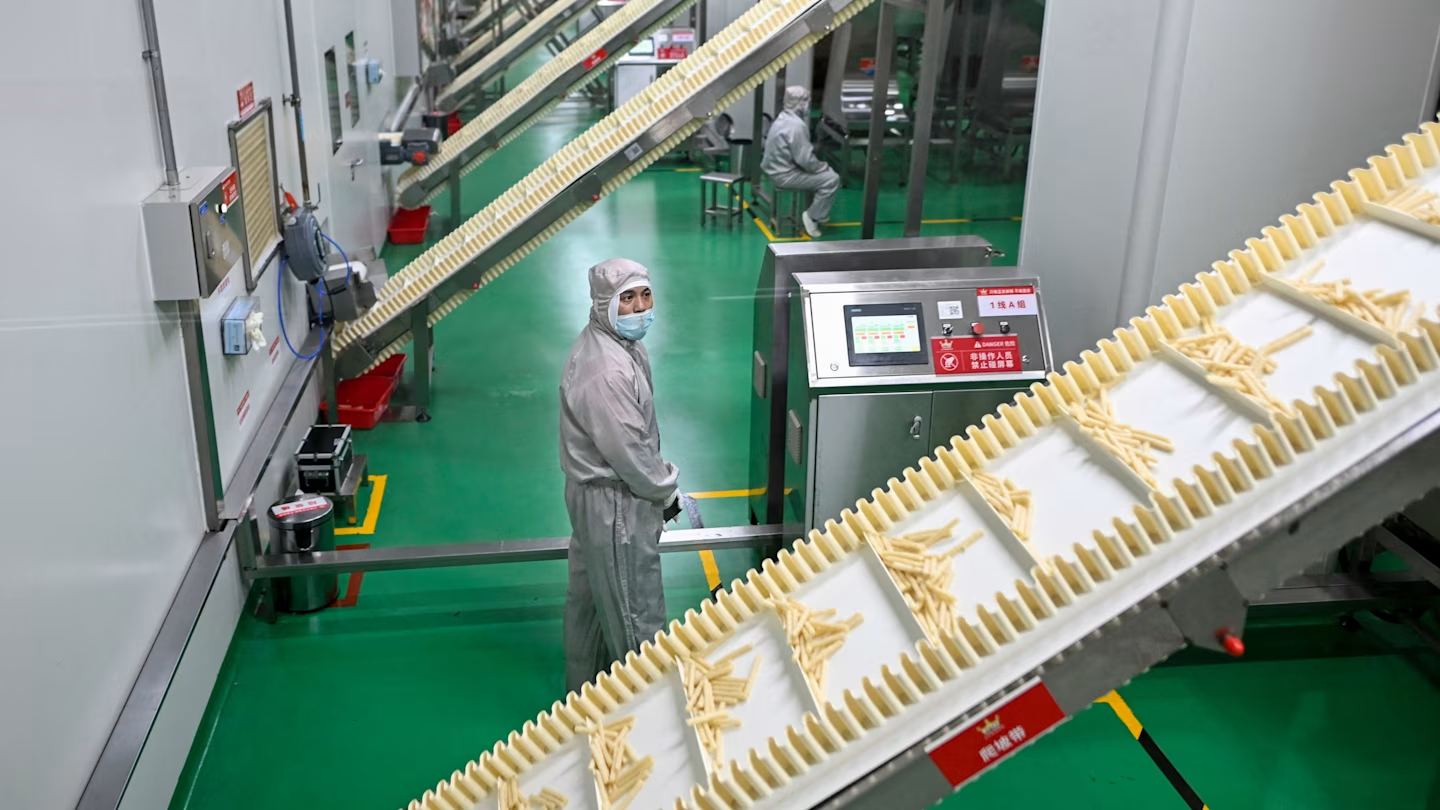
China’s official manufacturing PMI fell to 49.3 in October, indicating contraction amid weaker export orders and domestic demand.
By The Worldonomics Times | Global Economy
China’s manufacturing sector is showing renewed signs of weakness as domestic demand softens and export orders lose momentum. The latest official economic data indicate that industrial activity returned to contraction in October 2026, raising concerns about the strength of the country’s economic recovery and its impact on global trade.
According to China’s National Bureau of Statistics (NBS), the official Manufacturing Purchasing Managers’ Index (PMI) declined to 49.3 in October from 50.1 in September. A reading below 50 indicates contraction, suggesting that more manufacturers reported deteriorating business conditions than improving conditions during the month.
The decline highlights the challenges facing the world’s second-largest economy as manufacturers deal with weaker consumer demand, uncertain international trade conditions and increasing production costs. Although some advanced industrial sectors continue to perform well, the broader manufacturing environment remains under pressure.
Manufacturing Activity Returns to Contraction
The October PMI reading represents a reversal of the improvement recorded in September, when China’s manufacturing sector returned to expansion territory.
The NBS survey showed that the production index declined to 49.8, down from 51.7 in September. The new orders index also weakened, falling to 49.4 from 50.5. These figures indicate that both factory production and market demand lost momentum.
The slowdown was particularly visible among smaller businesses. Large enterprises recorded a PMI of 50.2, remaining slightly above the expansion threshold. However, medium-sized enterprises registered 48.4, while small enterprises recorded 47.5.
This difference suggests that smaller manufacturers are experiencing greater difficulties in managing weaker demand and rising operating expenses. Businesses with limited financial resources may find it harder to absorb higher costs, maintain production levels and compete in international markets.
Weaker Export Orders Create Additional Pressure
International trade has been an important source of support for China’s manufacturing industry. Chinese exporters have benefited from demand for electronics, machinery, industrial equipment, consumer products and other manufactured goods.
However, October’s figures indicate that overseas demand is becoming less supportive. The official new export orders index fell to 46.5, compared with 48.5 in September, indicating a contraction in export-related demand.
One factor behind the decline was the timing of international orders. Some overseas buyers brought forward Christmas-related purchases into September, temporarily supporting factory activity before orders weakened in October.
Trade uncertainty is another important concern. Changes in international tariffs, geopolitical tensions and shifting supply-chain arrangements are influencing decisions by global companies sourcing products from China.
Manufacturers must also respond to growing competition from other production centres, particularly in Southeast Asia and other emerging markets. As international buyers diversify their supply chains, Chinese exporters may face additional pressure to maintain prices and market share.
Domestic Demand Remains a Major Challenge
Weak domestic consumption is another factor affecting China’s manufacturing outlook. Household spending has struggled to generate sufficiently strong momentum, while the prolonged property-sector downturn continues to influence consumer confidence and investment decisions.
When households become cautious about their financial position, they may postpone purchases of automobiles, furniture, electronics and other consumer products. This reduces demand for manufactured goods and affects businesses throughout the supply chain.
The National Day holiday in early October provided some temporary support to consumer activity, but spending momentum weakened after the holiday period.
The property market also remains an important concern because it supports demand for steel, cement, construction materials, furniture, household appliances and other industrial products. Continued weakness in property investment can therefore affect several manufacturing industries.
The October official non-manufacturing PMI also declined to 49.7 from 50.2 in September, indicating that services and construction activity faced difficulties as well.
Technology Manufacturing Provides Some Support
Despite the broader slowdown, China’s advanced manufacturing industries continue to demonstrate relative strength.
The high-technology manufacturing sector recorded a PMI of 51.3 in October, while equipment manufacturing registered 50.6. Both remained in expansion territory.
Demand for semiconductors, electronics, artificial intelligence infrastructure, aerospace equipment and advanced machinery is creating opportunities for manufacturers with specialised capabilities.
China’s investment in industrial automation, electric vehicles, batteries and renewable energy equipment is also supporting the development of higher-value manufacturing activities.
These industries may help offset some of the weakness in traditional manufacturing sectors. However, their growth alone may not be sufficient to compensate for slower demand across the wider industrial economy.
Economic Policy and Government Support
The weakening manufacturing data may increase pressure on Chinese policymakers to introduce additional measures supporting domestic economic activity.
Potential policy priorities include encouraging household consumption, improving access to financing for smaller businesses, supporting private investment and strengthening confidence in the property market.
Targeted measures could help manufacturers manage short-term financial difficulties while encouraging businesses to invest in technology and production capacity.
However, policymakers face the challenge of supporting growth without creating excessive debt or encouraging inefficient industrial expansion. Sustainable improvement will require stronger domestic demand alongside continued investment in productive sectors.
Implications for Global Trade and the Economy
China’s manufacturing performance has significant implications for the international economy because the country plays a central role in global supply chains.
A prolonged slowdown could affect demand for imported raw materials, energy, industrial machinery and agricultural products. Commodity-exporting economies may experience weaker demand if Chinese factories reduce production and purchasing activity.
International manufacturers and retailers could also face changes in sourcing patterns, inventory planning and product pricing.
At the same time, weaker Chinese domestic demand may increase competition among exporters seeking overseas customers. This could create pricing pressure for manufacturers in other countries.
For Asian economies, the developments are particularly important because China is a major trading partner and an important part of regional production networks.
The Worldonomics View
China’s latest manufacturing data highlight the difference between industrial capacity and actual market demand. The country continues to possess substantial manufacturing capabilities, advanced infrastructure and strong export industries. However, these advantages cannot fully protect businesses when domestic consumption and international orders weaken.
A sustainable recovery requires stronger household confidence, more balanced domestic demand and a stable environment for private-sector investment. Support for smaller manufacturers is also important because these businesses face greater financial and competitive pressures.
Policymakers should focus on measures that encourage genuine consumption and productive investment rather than relying exclusively on higher industrial output or export growth.
Conclusion
China’s manufacturing sector faces renewed pressure as the official PMI falls to 49.3 in October 2026. Weaker export orders, subdued domestic demand and uneven industrial performance are creating challenges for manufacturers across the country.
Although advanced technology and equipment industries continue to provide support, the broader manufacturing environment remains uncertain. The coming months will be important in determining whether China can restore stronger industrial momentum and strengthen the domestic demand needed for sustainable economic growth.
For global markets, China’s manufacturing performance will remain an important indicator of international trade conditions, commodity demand and the wider outlook for the global economy.