India’s MSME sector is often described as the backbone of the Indian economy. From small manufacturers and traders to service providers and emerging entrepreneurs, these businesses play a crucial role in generating employment, supporting supply chains and driving economic growth.
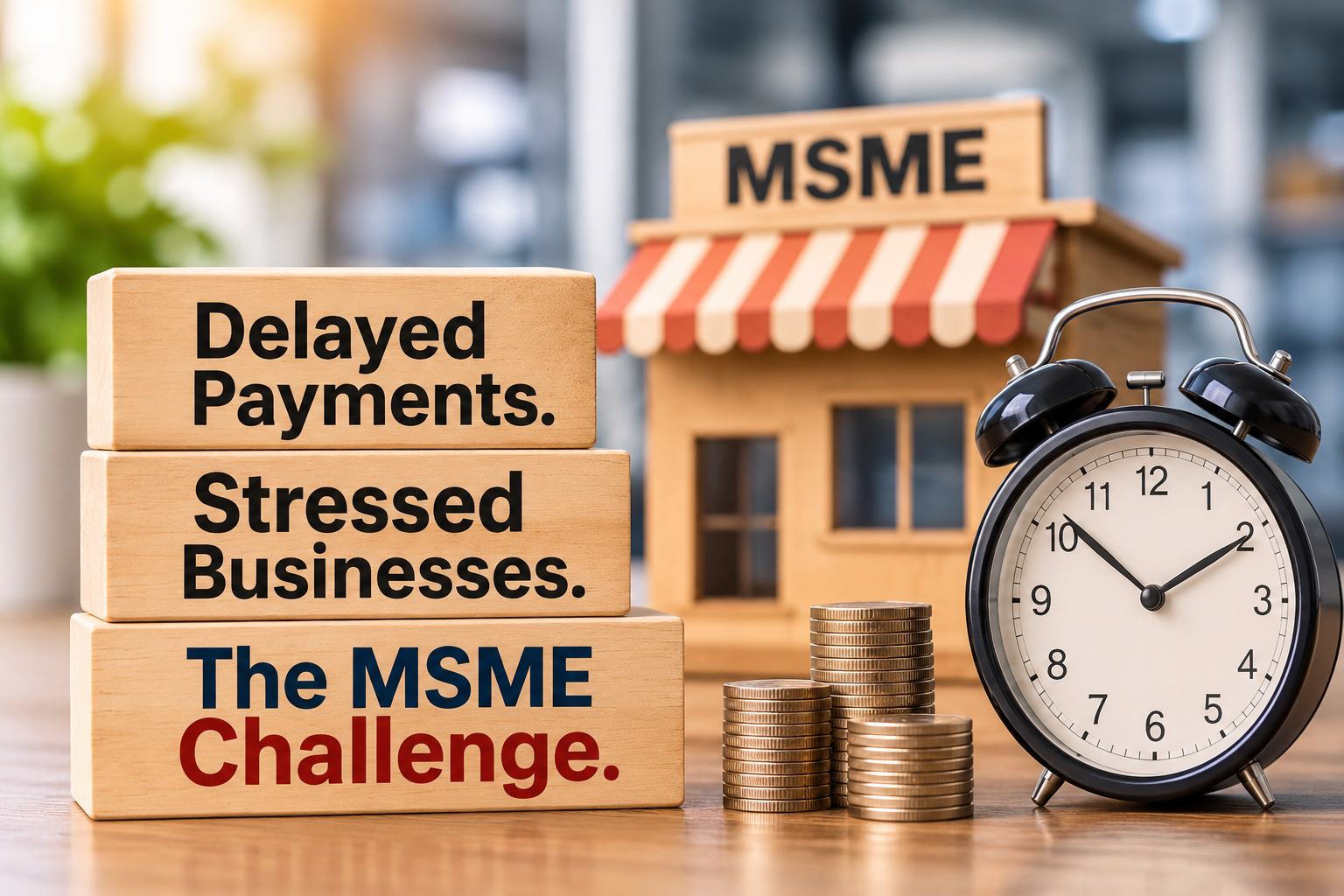
However, behind many successful-looking businesses lies a serious financial challenge: delayed payments.
A business may have customers, orders, sales and even healthy profits on paper, but if the money does not arrive on time, its ability to operate can become severely restricted.
The Real Problem: Sales Without Cash
Consider a small manufacturing enterprise that supplies goods worth ₹10 lakh to a large corporate customer.
The goods are delivered, the invoice is raised and revenue is recorded. However, payment is received only after 90 days.
Meanwhile, the manufacturer must pay employees, suppliers, electricity bills, transportation costs and other operating expenses.
The result?
The business is profitable in its books but financially stressed in reality.
This is where delayed payments become more than an accounting issue. They become a business survival challenge.
Why Delayed Payments Hurt MSMEs
1. Working Capital Pressure
When payments are delayed, businesses need additional funds to manage everyday operations. This increases dependence on loans and short-term borrowings.
2. Higher Financing Costs
To bridge cash shortages, MSMEs may approach banks or other lenders. Interest expenses reduce profitability and affect future investment capacity.
3. Disruption in Supply Chains
When an MSME cannot pay its suppliers on time, the problem moves further down the supply chain, affecting other small businesses.
4. Limited Growth Opportunities
Money trapped in unpaid invoices cannot be used for technology upgrades, business expansion, new machinery or hiring skilled employees.
What Does the Law Say?
The Micro, Small and Medium Enterprises Development (MSMED) Act, 2006 provides a framework to protect eligible micro and small enterprises against delayed payments.
Under Section 15, the agreed payment period cannot exceed 45 days from acceptance or deemed acceptance of goods or services.
The Act also provides for compound interest with monthly rests at three times the RBI bank rate in specified cases of delayed payment.
However, legal protection alone cannot solve the problem. Awareness, timely action and responsible business practices are equally important.
What Can Businesses Do?
MSMEs should move towards stronger receivables management through:
- Establishing clear credit policies and payment terms.
- Conducting customer credit assessments before extending credit.
- Regularly monitoring outstanding invoices.
- Following up on overdue payments without unnecessary delay.
- Using digital invoicing and accounting systems.
- Maintaining adequate working capital reserves.
- Understanding and using available legal remedies.
At the same time, large corporates must recognise that timely payments to smaller suppliers are not merely contractual obligations; they are essential to maintaining a healthy business ecosystem.
The Way Forward
India’s journey towards becoming a stronger manufacturing and entrepreneurial economy requires financially sustainable MSMEs.
We often celebrate revenue growth, new orders, profitability and business expansion. But one important question deserves equal attention:
How quickly does a business convert its sales into cash?
Because business success is not determined only by how much a company sells, but also by how efficiently it collects what it has earned.
Delayed payments may appear to be a small operational issue for large organisations, but for an MSME, they can determine the difference between survival and growth.
Remember: A sale creates revenue, but timely payment creates the ability to do business again.
Strong businesses need strong payment discipline. And a stronger MSME sector needs both.