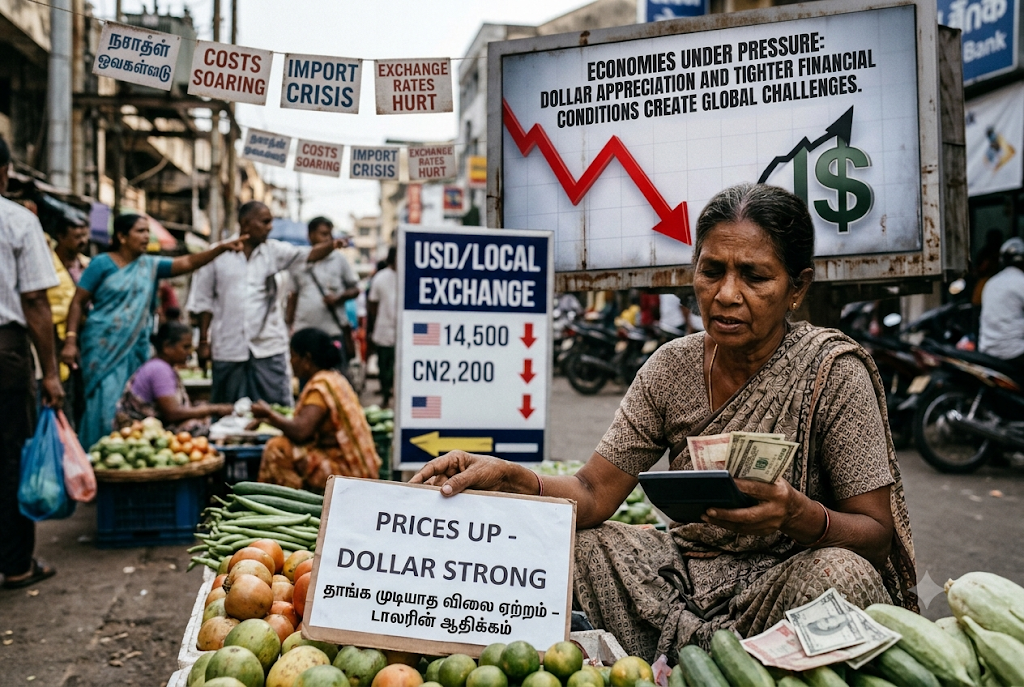
Dollar appreciation and tighter global financial conditions create additional pressure on developing economies.
The strengthening of the US dollar is creating fresh challenges for emerging market economies as higher American interest rate expectations and changing international investment patterns influence global financial conditions. A stronger dollar can increase the cost of foreign borrowing, weaken developing-country currencies and place additional pressure on governments and businesses with significant dollar-denominated debt.
The latest movement in international currency markets has attracted attention from investors and policymakers. On November 12, 2026, the US dollar climbed to a 19-month high after stronger-than-expected American inflation data reinforced expectations that the Federal Reserve could maintain restrictive monetary policy or increase interest rates further.
Although a stronger dollar reflects confidence in the US economy and demand for dollar-denominated assets, its effects are not equally positive across the global economy. Countries with high external debt, limited foreign exchange reserves and substantial import requirements may face particularly difficult conditions.
US Dollar Strengthens as Interest Rate Expectations Change
The US dollar remains the world’s leading international reserve and financing currency. Its value is influenced by economic growth, inflation, interest rate expectations and demand for relatively safe financial assets.
Recent US inflation figures have strengthened expectations that the Federal Reserve may need to maintain higher interest rates for longer. Higher American interest rates can make US Treasury securities and other dollar-denominated investments more attractive to international investors.
According to Reuters reporting on November 12, the dollar index increased to approximately 102.98, reaching its highest level in 19 months. Stronger-than-expected October inflation and expectations of further monetary tightening contributed to the currency’s appreciation.
When international investors move funds towards US assets, demand for dollars can increase. This may place downward pressure on emerging market currencies, particularly when their domestic interest rates do not offer sufficient returns to compensate investors for additional risks.
The resulting movement in exchange rates can create financial challenges for countries that depend on international capital markets.
Foreign Currency Debt Becomes More Expensive
One of the most significant consequences of dollar appreciation is the increasing burden of foreign currency debt.
Many emerging economies borrow internationally in US dollars because global financial markets provide access to substantial financing for infrastructure, energy projects, industrial development and government expenditure.
However, when domestic currencies depreciate against the dollar, the local-currency value of outstanding dollar-denominated debt increases. Governments and companies may therefore need to spend more domestic currency to repay the same amount of foreign borrowing.
The Financial Stability Board has highlighted this vulnerability, noting that more than 80% of emerging market economy external debt is denominated in foreign currencies, predominantly US dollars, in its analysis of dollar funding risks.
Companies that earn revenue in domestic currencies but have substantial dollar liabilities can face particularly serious difficulties. Higher repayment expenses may reduce investment, weaken profitability and increase the risk of financial distress.
Governments may also experience greater pressure on public finances, particularly when external debt repayments coincide with higher import costs and slower economic growth.
Capital Outflows Tighten Financial Conditions
A stronger dollar can influence international capital flows by encouraging investors to reconsider the balance between returns and risks in emerging markets.
When US interest rates rise, investors may prefer American financial assets over investments in developing economies. This can reduce demand for emerging market bonds, equities and currencies.
The possibility of capital outflows may increase borrowing costs for governments and businesses. Countries with weaker credit ratings or limited access to international markets can experience greater difficulty refinancing existing obligations.
Research published by the Overseas Development Institute in November 2026 illustrates how quickly these conditions can change. During September, non-resident portfolio flows to emerging markets shifted from inflows of $11.4 billion in August to outflows of $26.3 billion. Investors also sold approximately $8.21 billion in bonds across South Korea, Thailand, India, Malaysia and Indonesia.
These figures highlight the sensitivity of emerging market investments to changing global financial conditions. However, the impact varies across countries depending on economic fundamentals, investor confidence and the strength of domestic financial institutions.
Inflation and Import Costs Create Additional Pressure
Currency depreciation can also increase inflationary pressure in developing economies.
Many emerging markets depend on imported crude oil, natural gas, machinery, electronic components, fertilisers and industrial raw materials. When their currencies weaken against the dollar, these imports become more expensive in domestic currency terms.
Higher import costs can eventually influence transportation expenses, electricity prices, manufacturing costs and consumer prices.
Central banks may respond by increasing interest rates or maintaining restrictive monetary policies to support their currencies and prevent inflation expectations from rising.
However, higher interest rates can also make borrowing more expensive for households and businesses. Companies may postpone investment, consumers may reduce spending and governments may face greater debt-servicing costs.
This creates a difficult policy environment in which authorities must balance currency stability, inflation control and economic growth.
Developing Economies Face Different Levels of Risk
The effects of a stronger dollar differ significantly across emerging markets.
Countries with substantial foreign exchange reserves, credible monetary policies and diversified export sectors are generally better positioned to manage external financial shocks.
Commodity-exporting economies may benefit from periods of strong international demand and favourable export prices. However, a stronger dollar can also coincide with weaker commodity prices, creating additional pressure on export earnings and government revenues.
Commodity-importing countries face another challenge because currency depreciation can increase the domestic cost of essential energy and industrial imports.
The World Bank’s International Debt Report 2026 highlights how external shocks can weaken the financial position of lower-income economies through declining foreign exchange earnings, higher debt-servicing expenses and increasing refinancing costs. It also identifies foreign exchange reserves and credible monetary policy frameworks as important safeguards.
India and Other Asian Economies Monitor Currency Pressures
Asian emerging economies are closely monitoring developments in the US dollar because of their exposure to international trade, imported energy and foreign investment.
India, for example, imports a substantial proportion of its crude oil requirements. A weaker rupee can increase the domestic cost of petroleum imports, potentially affecting the current account balance and inflation.
Other economies, including Indonesia, Thailand, Malaysia and South Korea, also face different combinations of currency, trade and external financing pressures.
However, emerging Asia is not uniformly vulnerable. Countries with stronger reserves, diversified exports and well-developed domestic financial markets may be better equipped to absorb changes in international investment flows.
For policymakers, maintaining confidence in domestic financial institutions and ensuring adequate foreign exchange liquidity will remain important priorities.
The Road Ahead for Emerging Market Economies
The outlook for developing economies will depend on the direction of US monetary policy, international investor sentiment, commodity prices and domestic economic conditions.
If American inflation remains elevated and interest rates stay higher for longer, the dollar could maintain its strength, creating continued pressure on vulnerable currencies and external borrowers.
Conversely, easing inflation, a more accommodative Federal Reserve and improving global risk appetite could encourage international investment flows towards emerging markets.
Developing economies can strengthen their resilience by improving fiscal discipline, diversifying sources of foreign exchange earnings, building adequate reserves and encouraging borrowing in domestic currencies where possible.
Transparent monetary policies and stable regulatory environments can also help maintain investor confidence during periods of international financial uncertainty.
The Worldonomics Times Views
The appreciation of the US dollar highlights the close relationship between American monetary policy and financial stability across the global economy. While a stronger dollar may reflect confidence in US economic conditions, it can create substantial challenges for developing countries that rely on international borrowing and imported commodities.
Emerging market governments should prioritise responsible debt management, adequate foreign exchange reserves and stronger domestic financial systems. Reducing excessive dependence on short-term foreign currency borrowing will be particularly important in limiting exposure to sudden changes in global financial conditions.
Central banks must also maintain a careful balance between controlling inflation, supporting economic activity and managing exchange rate volatility. Flexible exchange rate arrangements, credible monetary frameworks and transparent policy decisions can help countries respond more effectively to external shocks.
For investors and businesses, differences in national economic fundamentals will remain essential when evaluating emerging market opportunities. Countries with stronger institutions, manageable debt levels and diversified economies are likely to demonstrate greater resilience.
Ultimately, the strength of the US dollar is not simply a currency market development. It is an important factor influencing international borrowing costs, capital flows, trade competitiveness and economic stability. The ability of developing economies to strengthen their financial resilience will determine how successfully they navigate an environment of tighter global financial conditions.