Introduction: The Next Phase of India’s Growth Story
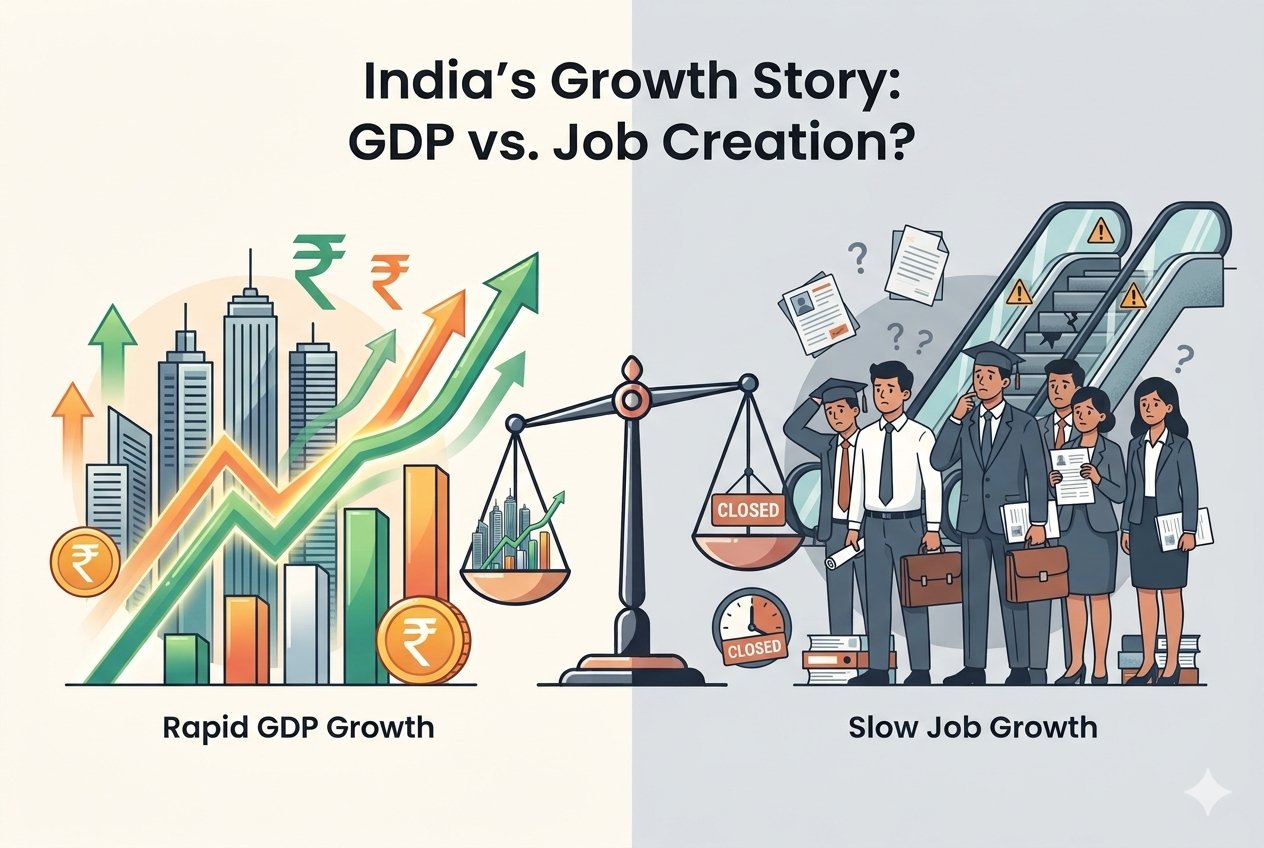
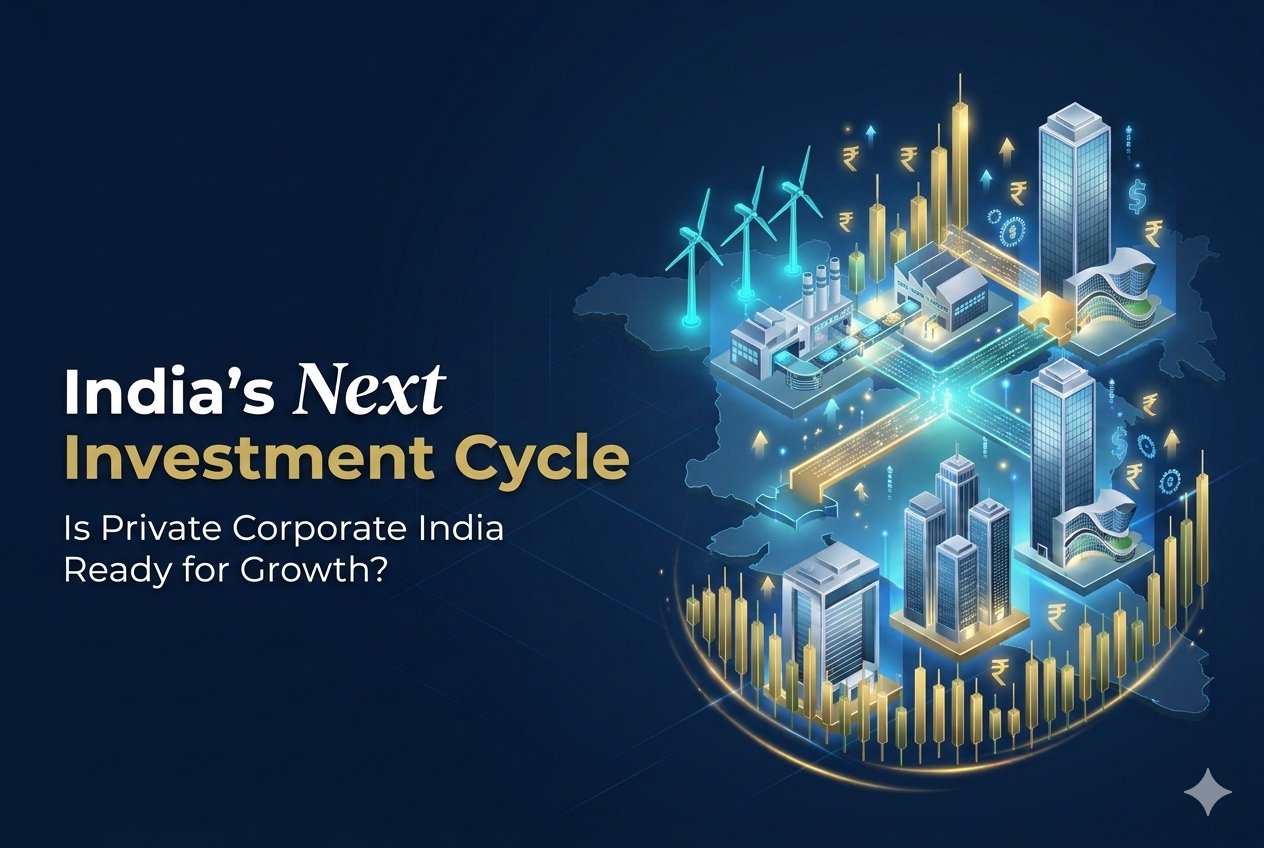
For years, India’s economic growth story has been strongly supported by government infrastructure spending, domestic consumption and policy-led initiatives. However, a new question is emerging: Is the private corporate sector preparing to take a stronger role in India’s next phase of economic expansion?
Recent investment indicators suggest encouraging signs.
According to the Reserve Bank of India’s September 2026 Bulletin, the total cost of projects sanctioned by selected banks and financial institutions increased to ₹4.4 lakh crore in FY 2025–26, compared with ₹3.7 lakh crore in the previous financial year.
This development points towards improving private investment intentions and raises expectations of a stronger corporate investment cycle.
But what does this mean for Indian businesses, investors and the overall economy?
1. Understanding the Private Investment Cycle
Private corporate investment refers to expenditure by businesses on assets and capabilities that support future growth.
It includes investments in:
- Manufacturing facilities and industrial plants.
- Machinery, equipment and technology.
- Warehousing and logistics infrastructure.
- Renewable energy and power generation.
- Digital infrastructure and research facilities.
- Expansion of existing business operations.
Such investments are important because they increase productive capacity, improve efficiency and create opportunities for employment.
When businesses become confident about future demand, they are more likely to invest in new projects and expand their operations.
2. What Do the Latest Investment Numbers Tell Us?
The RBI’s September 2026 analysis provides encouraging evidence of corporate investment intentions.
The total cost of projects sanctioned by selected banks and financial institutions increased from ₹3.7 lakh crore in FY 2024–25 to ₹4.4 lakh crore in FY 2025–26.
This represents an increase of approximately 18.9%.
The RBI also indicated that the investment outlook for FY 2026–27 is expected to remain healthy.
Importantly, these figures represent project costs based on selected financing channels. They should not be interpreted as actual investment expenditure already completed across the entire Indian corporate sector.
Nevertheless, they offer a useful indication of business confidence and future investment plans.
3. Which Sectors Could Drive India’s Next Investment Wave?
Several sectors are positioned to play an important role in India’s next investment cycle.
A. Manufacturing
India’s manufacturing ecosystem is attracting attention through industrial expansion, domestic production initiatives and efforts to strengthen supply chains.
Investments in electronics, automobiles, semiconductors and industrial equipment can improve domestic production capabilities.
B. Renewable Energy
The transition towards cleaner energy is creating investment opportunities in solar power, wind energy, battery storage and green hydrogen.
Companies are increasingly looking at renewable energy not only as an environmental responsibility but also as a long-term business opportunity.
C. Infrastructure and Logistics
Roads, railways, ports, warehouses and industrial corridors remain important foundations for economic development.
Improved logistics infrastructure can reduce transportation costs, improve supply-chain efficiency and support manufacturing competitiveness.
D. Digital Infrastructure
Data centres, cloud computing, artificial intelligence and telecommunications infrastructure are becoming important areas of corporate investment.
As businesses increasingly depend on digital platforms, demand for reliable technology infrastructure is expected to remain significant.
4. Why Are Companies Becoming More Investment-Oriented?
Several factors can influence corporate investment decisions.
Stronger Corporate Balance Sheets: Businesses with healthier financial positions and lower debt burdens have greater capacity to undertake expansion projects.
Improving Domestic Demand: Expectations of sustained consumption can encourage companies to increase production capacity.
Access to Financing: Banking credit, capital markets, external commercial borrowings and internal accruals provide different sources of funding.
Government Policy Support: Infrastructure development, manufacturing incentives and sector-specific reforms can improve the attractiveness of investment opportunities.
However, investment decisions also depend on global economic conditions, interest rates, commodity prices and business confidence.
5. The Role of Financial Management in Corporate Expansion
Investment decisions are not simply about spending money. They require careful financial evaluation.
Before committing capital to a new project, businesses must assess:
- Capital Budgeting: Whether the project generates sufficient expected returns.
- Cost of Capital: Whether the expected return justifies the cost of financing.
- Net Present Value (NPV): Whether the present value of future cash flows exceeds the initial investment.
- Internal Rate of Return (IRR): Whether the project’s expected rate of return meets the company’s investment requirements.
- Risk Assessment: Whether the business can manage uncertainties relating to demand, costs and project execution.
A company may have access to substantial capital, but poor investment decisions can weaken its financial position.
The objective should be productive capital allocation rather than expansion for the sake of expansion.
6. What Could This Mean for Employment and India’s Economy?
A sustained increase in private corporate investment can generate benefits beyond the companies making the investments.
New manufacturing facilities can create direct and indirect employment.
Infrastructure projects can support construction, engineering, transportation and associated industries.
Technology investments can increase demand for skilled professionals and improve productivity.
Additionally, greater industrial capacity can strengthen domestic supply chains and reduce dependence on imports in selected sectors.
However, the economic benefits will depend on the quality of investments, their execution and the extent to which they generate productive employment and sustainable output.
7. Challenges That Could Slow the Investment Momentum
Despite encouraging indicators, several challenges remain.
- Global geopolitical uncertainties can affect business confidence.
- High borrowing costs can make capital-intensive projects less attractive.
- Delays in land acquisition, clearances and project execution can increase costs.
- Volatile commodity prices can affect project profitability.
- Uncertainty in global trade policies can influence export-oriented industries.
- Weak demand in particular sectors can result in underutilised capacity.
Therefore, a healthy investment outlook does not automatically guarantee successful project implementation.
8. The Bigger Picture: From Government-Led Growth to Private Sector Participation
Government infrastructure expenditure can create the foundation for economic expansion, but sustained long-term growth also requires active participation from private businesses.
When public infrastructure development is accompanied by private corporate investment, the economy can benefit from stronger productive capacity, improved efficiency, innovation and employment opportunities.
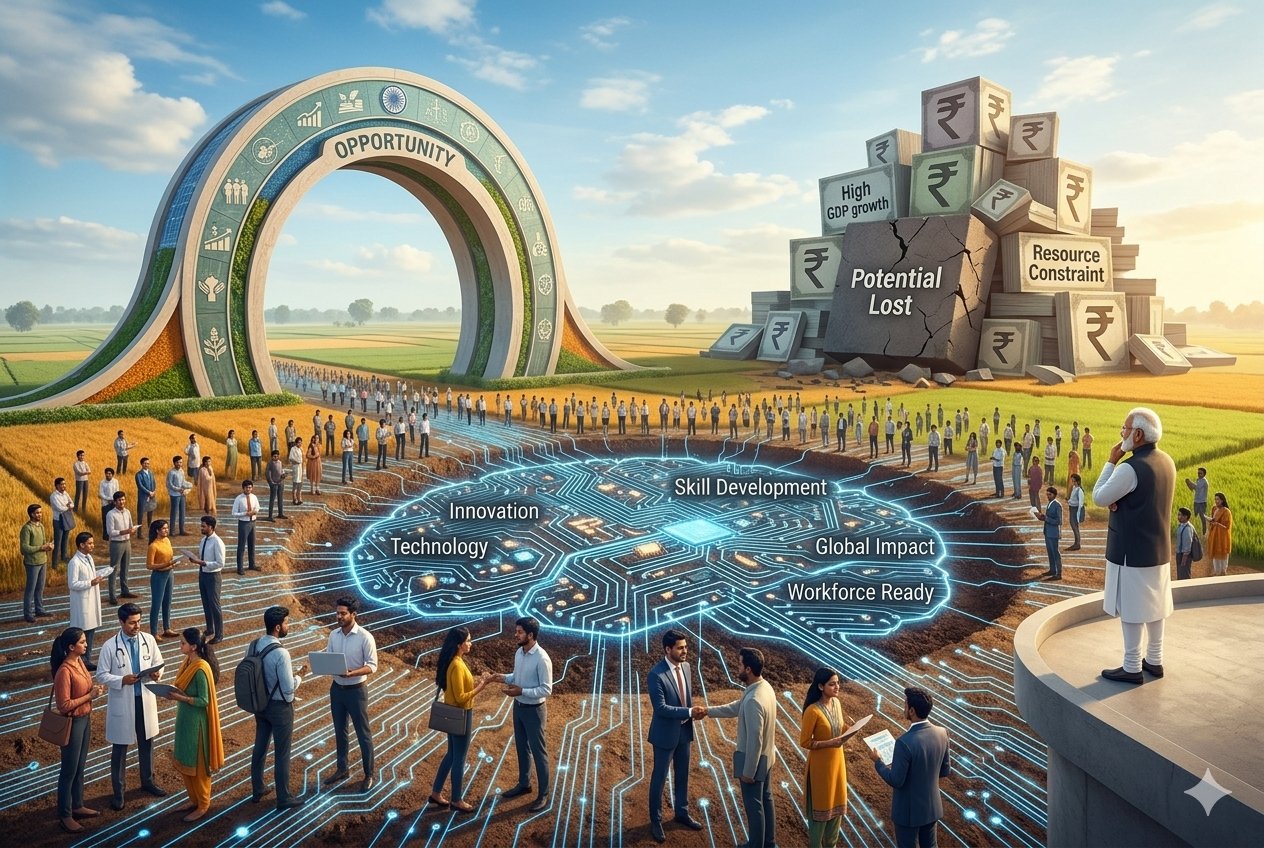
The next stage of India’s growth story may therefore depend on how effectively public investment translates into confidence and investment commitments from private enterprises.
Conclusion: Investment Today, Economic Strength Tomorrow
India’s emerging corporate investment momentum presents an encouraging opportunity for the country’s economic future.
The increase in sanctioned project costs, improving corporate financial positions and investment opportunities across manufacturing, infrastructure, renewable energy and technology indicate the potential for a stronger investment cycle.
However, the real measure of success will not be the number of projects announced or the amount of capital committed.
It will be the ability to convert investment intentions into operational assets, productive capacity, employment and sustainable profitability.
India’s next growth phase will not be defined merely by how much capital is available, but by how effectively that capital is invested.