Imagine a world without smartphones, electric vehicles, artificial intelligence, computers or modern banking systems. Almost every technology we depend on today has one thing in common: semiconductors.
Often called the brain of modern electronics, semiconductor chips have become one of the most strategically important resources in the global economy.
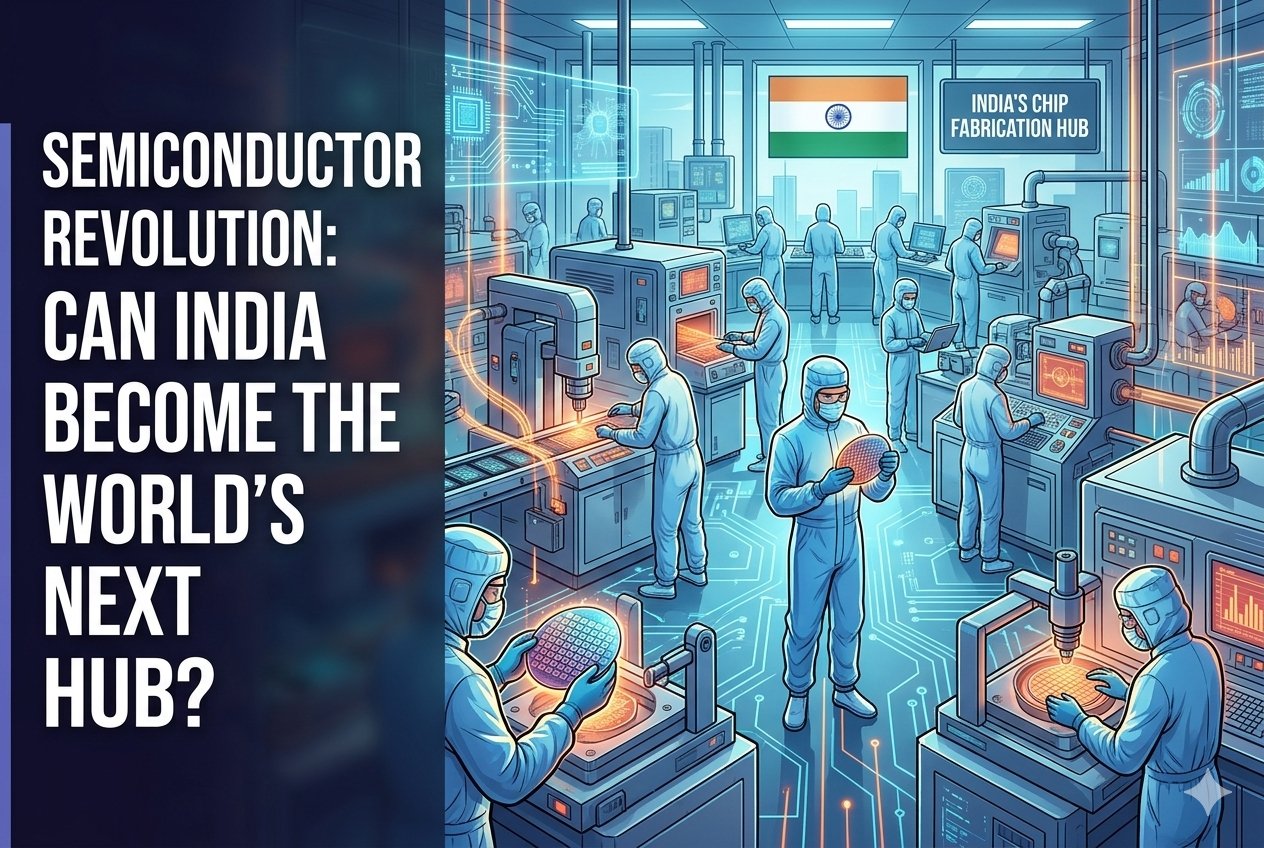
As countries compete to secure technology, manufacturing capabilities and supply chains, India is positioning itself as an emerging player in the global semiconductor industry.
But the bigger question remains: Can India move beyond being a major consumer of chips and become one of the world’s leading semiconductor manufacturing hubs?
1. Why Semiconductors Matter to the Global Economy
Semiconductors are essential components in almost every modern industry.
Their applications extend across:
- Artificial Intelligence and data centres.
- Automobiles and electric vehicles.
- Telecommunications and 5G technology.
- Defence and aerospace.
- Medical equipment and industrial automation.
- Consumer electronics and smart devices.
The global semiconductor supply chain is highly interconnected, with different countries specialising in chip design, fabrication, packaging and testing.
Recent geopolitical tensions and supply-chain disruptions have made semiconductor self-reliance a strategic priority for major economies.
2. India’s Semiconductor Ambition: A New Industrial Chapter
India’s semiconductor journey received a major policy push through the India Semiconductor Mission.
The first phase focused on establishing domestic manufacturing capabilities and attracting global semiconductor companies.
The next phase, Semicon 2.0, approved by the Union Cabinet on 15 July 2026, takes this ambition further with a fiscal outlay of ₹1,27,500 crore.
Its six strategic pillars include:
- Semiconductor chip design.
- Manufacturing machines and materials.
- Establishing additional fabrication facilities.
- Strengthening ATMP and OSAT facilities.
- Research and development.
- Skill and talent development.
The objective is not simply to manufacture chips but to develop a complete semiconductor ecosystem.
3. India’s Progress: From Policy Announcements to Production
India’s semiconductor ambitions are gradually translating into industrial activity.
According to the Ministry of Electronics and Information Technology, as of October 2026:
- 12 semiconductor manufacturing projects had been approved across six states.
- The cumulative investment commitment exceeded ₹1.64 lakh crore.
- Five projects had commenced commercial production.
- 105 startups had received access to industry-standard chip-design tools.
- 24 semiconductor design projects had received financial support.
Major companies, including Micron, Tata Electronics, CG Power and Kaynes Technology, are contributing to the development of India’s semiconductor ecosystem.
These developments indicate that India is moving beyond its traditional strength in semiconductor design services towards domestic manufacturing and packaging capabilities.
4. The Investment Opportunity: Beyond Chip Manufacturing
The semiconductor opportunity extends far beyond establishing fabrication plants.
A semiconductor ecosystem requires substantial investment in:
Infrastructure: Reliable electricity, uninterrupted water supply, specialised industrial facilities and cleanroom environments.
Technology: Advanced manufacturing equipment, precision engineering and research capabilities.
Supply Chains: Specialty chemicals, industrial gases, silicon wafers and other critical materials.
Human Capital: Skilled engineers, researchers and technicians with specialised semiconductor knowledge.
This creates opportunities for domestic manufacturers, MSMEs, technology companies, infrastructure developers and global investors.
For finance professionals, semiconductor projects also introduce important considerations involving capital budgeting, project financing, cost control, investment appraisal and long-term return on investment.
5. The Challenges India Must Overcome
Despite the progress, becoming a global semiconductor hub will not happen overnight.
India faces several challenges:
High Capital Requirements: Semiconductor fabrication plants require enormous upfront investments and long gestation periods.
Technology Dependence: Access to advanced manufacturing technology, intellectual property and specialised equipment remains critical.
Infrastructure Readiness: Semiconductor manufacturing requires exceptionally reliable utilities and specialised industrial infrastructure.
Global Competition: Countries such as Taiwan, South Korea, Japan, China and the United States have established semiconductor ecosystems.
Talent Development: India must continue building specialised technical capabilities to support complex manufacturing operations.
Government incentives can attract investment, but long-term competitiveness will depend on productivity, technological innovation and operational efficiency.
6. What Does the Future Hold?
India’s semiconductor demand is projected to reach approximately USD 110 billion by FY2030, according to the Government of India’s September 2026 semiconductor industry backgrounder.
This growing domestic demand provides an important foundation for investment and manufacturing expansion.
The real opportunity lies in building capabilities across the entire value chain — from chip design and fabrication to packaging, testing and semiconductor equipment.
India also has the opportunity to become a trusted partner in diversifying global semiconductor supply chains.
Conclusion: From Semiconductor Aspirations to Global Competitiveness
India’s semiconductor revolution represents more than a technological transformation. It is an opportunity to strengthen industrial capabilities, attract long-term investment, create skilled employment and improve economic resilience.
However, the success of this journey should not be measured only by the number of factories inaugurated or the amount of investment announced.
It should be measured by manufacturing capabilities, technological innovation, global competitiveness and the ability to build products that create value in international markets.
India has taken its first major steps towards becoming a semiconductor manufacturing destination. The next challenge is to turn this momentum into a globally competitive industry.
Because the future will not simply belong to countries that consume technology, but to those that have the capability to create it.