New Income-tax (Eighth Amendment) Rules, 2026 introduce Rule 189A and Form No. 112A to streamline merger-related compliance for charitable institutions and non-profit organisations.
The Central Board of Direct Taxes (CBDT) has notified the Income-tax (Eighth Amendment) Rules, 2026, vide Notification No. 139/2026 dated 30 October 2026, introducing a prescribed mechanism for reporting mergers of registered non-profit organisations (NPOs) having the same or similar charitable objectives.
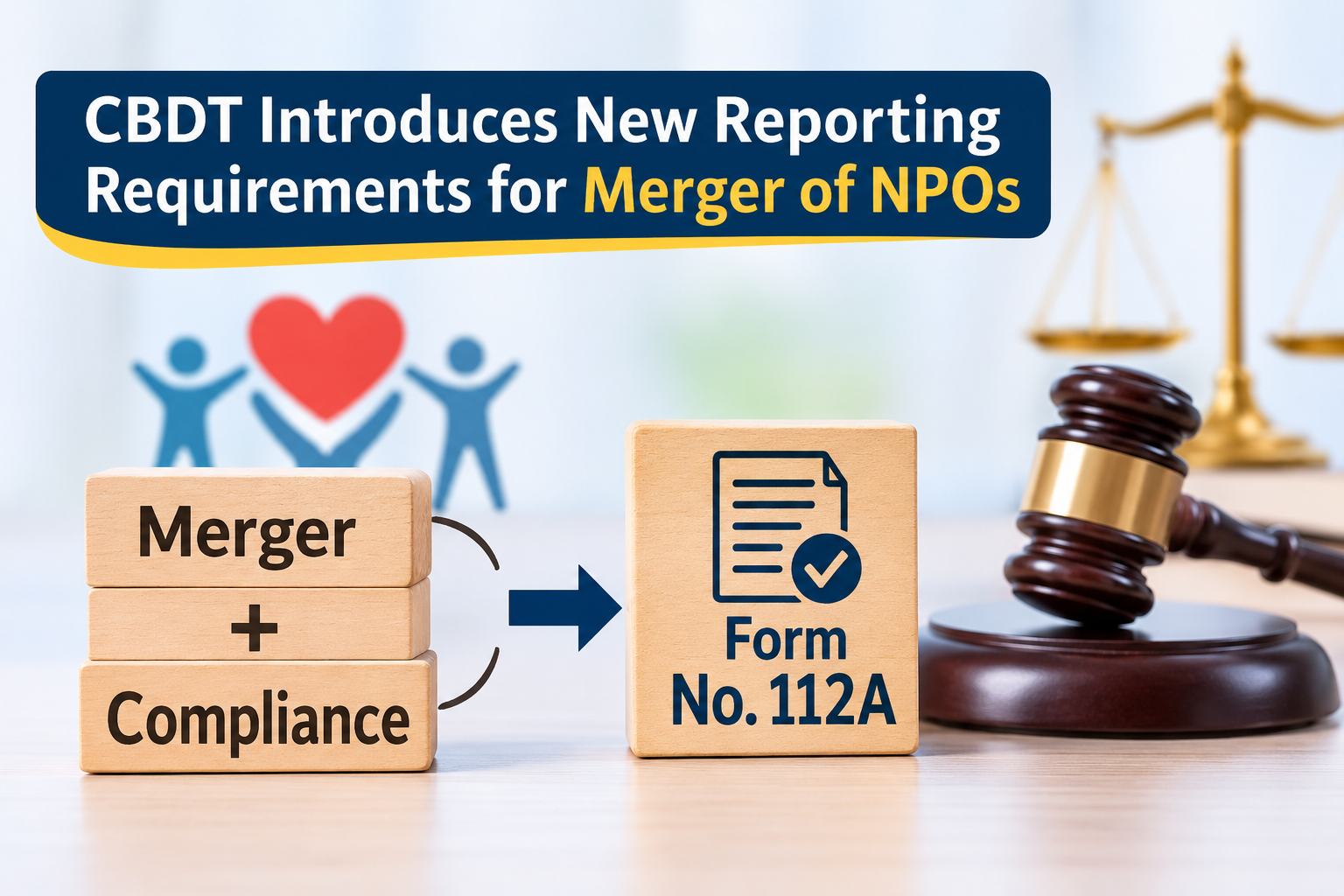
The amendment is an important development for charitable trusts, educational institutions, religious organisations and other non-profit entities seeking to consolidate their operations through mergers or restructuring. By introducing Rule 189A and a new Form No. 112A, the CBDT aims to establish a structured reporting framework and strengthen regulatory oversight of such mergers.
Key Highlights of the Amendment
The amendment primarily introduces the following provisions:
1. Introduction of Rule 189A
A new Rule 189A has been incorporated into the Income-tax Rules, 2026, prescribing the procedure and conditions for reporting mergers of registered non-profit organisations having identical or similar objects.
This provision is intended to ensure that mergers are undertaken within the prescribed regulatory framework and that the charitable character of the organisations is preserved.
2. Introduction of Form No. 112A
CBDT has introduced a new Form No. 112A for furnishing information regarding mergers of eligible registered non-profit organisations.
The prescribed form establishes a formal reporting mechanism through which the relevant particulars of the merger can be communicated to the Income-tax Department. Organisations undertaking such mergers will need to ensure that the prescribed information and supporting documentation are properly maintained and furnished.
3. Compliance with prescribed conditions
The merger of registered NPOs is not merely an administrative restructuring exercise. Organisations must carefully examine the applicable conditions concerning their registration, charitable objectives, assets and liabilities, and compliance with the relevant provisions of the Income-tax Act, 2025.
The prescribed framework is intended to ensure that the merger does not result in the diversion of charitable assets or compromise the tax-exempt status of the resulting organisation.
Implications for Charitable Trusts and Non-Profit Organisations
The introduction of Rule 189A and Form No. 112A is particularly relevant for organisations operating in the charitable and educational sectors.
Several trusts and institutions operate independently despite having similar objectives, geographical reach or areas of activity. Merging such organisations may help reduce administrative costs, improve operational efficiency, optimise resources and strengthen the delivery of charitable activities.
However, such restructuring must be supported by appropriate legal documentation and compliance with the applicable income-tax requirements.
The new reporting framework makes it important for organisations to evaluate the tax implications of a proposed merger before implementing it. Failure to comply with prescribed conditions or reporting requirements may create difficulties in establishing continued eligibility for tax exemptions.
Practical Considerations for Tax Professionals
Chartered Accountants and tax advisors assisting charitable institutions should consider the following measures:
- Review registration status: Verify the registration and eligibility of the merging organisations under the applicable provisions of the Income-tax Act, 2025.
- Examine similarity of objects: Ensure that the charitable objectives of the organisations satisfy the prescribed requirements.
- Maintain merger documentation: Keep merger agreements, resolutions, financial statements and supporting records properly documented.
- Review assets and liabilities: Ensure that the transfer and utilisation of assets are consistent with the applicable charitable and tax requirements.
- Ensure timely reporting: Examine the filing requirements and prescribed timelines for Form No. 112A under Rule 189A.
Professional advisors should also review the constitutional documents, trust deeds and governing instruments of the organisations before recommending any merger.
Conclusion
The Income-tax (Eighth Amendment) Rules, 2026 represent an important step towards formalising the regulatory framework for mergers of registered non-profit organisations. The introduction of Rule 189A and Form No. 112A provides a prescribed reporting mechanism and reinforces the importance of transparency, documentation and regulatory compliance in the charitable sector.
For charitable trusts and non-profit institutions, the amendment presents an opportunity to consolidate resources and improve operational efficiency while ensuring compliance with applicable tax laws.
For Chartered Accountants and tax professionals, understanding the new provisions and advising clients on appropriate merger documentation and reporting procedures will be essential to safeguarding the tax-exempt status of eligible organisations.