By The Worldonomics Times
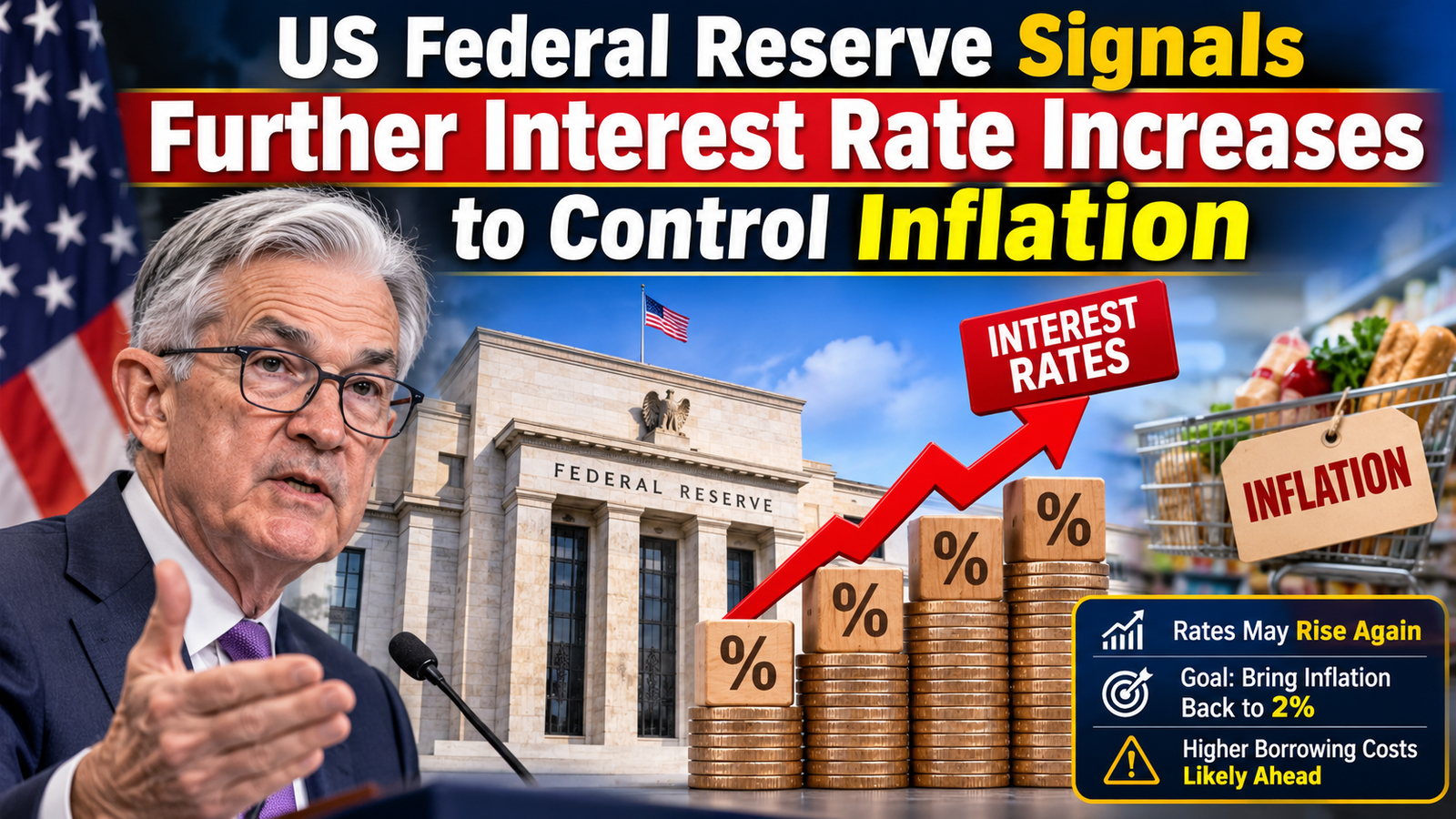
The United States Federal Reserve is signalling a continued focus on controlling inflation, with several policymakers indicating that additional interest rate increases may be necessary to bring price pressures under control. The renewed possibility of monetary tightening has drawn attention from global financial markets, investors, businesses, and policymakers, as higher borrowing costs could influence economic activity both within the United States and internationally.
The Federal Reserve’s approach reflects growing concerns that inflation remains persistently above its long-term target despite previous monetary policy adjustments. While the US economy has demonstrated resilience through consumer spending, business investment, and technological development, rising prices continue to create challenges for economic stability.
Federal Reserve Maintains a Firm Stance on Inflation
The Federal Reserve has a dual mandate: maintaining price stability and supporting maximum employment. However, persistent inflation has increasingly placed price stability at the centre of its monetary policy decisions.
At its October 28, 2026, policy meeting, the Federal Open Market Committee maintained the federal funds target range at 3.75% to 4%. The decision followed an earlier rate increase in September. Several Federal Reserve officials have subsequently indicated that further tightening may be required if inflation remains elevated.
Dallas Federal Reserve President Lorie Logan has supported at least two additional quarter-percentage-point increases, while Philadelphia Fed President Anna Paulson has also advocated gradual monetary tightening. These statements indicate that policymakers remain concerned about inflationary pressures and are prepared to consider further action.
However, the timing and scale of future increases will depend on incoming economic data, inflation trends, and labour market conditions.
Rising Inflation Drives Monetary Policy Decisions
Inflation remains a significant concern for the American economy. Increasing costs across essential goods, services, energy, housing, and transportation continue to affect households and businesses.
Recent October inflation data has strengthened concerns among policymakers. Consumer prices increased by 0.4% compared with the previous month, while annual inflation reached 4%, according to recent reported figures.
Several factors are contributing to these price pressures, including energy costs, import tariffs, supply chain expenses, and increasing investment demand in technology-related industries.
The Federal Reserve aims to bring inflation towards its long-term 2% target. Interest rate increases are one of its primary tools for achieving this objective. Higher rates make borrowing more expensive, potentially reducing consumer spending and business investment. This can gradually moderate demand and ease upward pressure on prices.
However, controlling inflation through monetary tightening requires careful judgement because excessive increases could weaken economic growth and employment.
Impact on Consumers, Businesses and Financial Markets
Further interest rate increases could have significant consequences for different sectors of the American economy.
For consumers, higher borrowing costs may increase monthly payments on mortgages, automobile loans, credit cards, and personal loans. Households may consequently reduce discretionary spending and become more cautious about major purchases.
Businesses may also face higher financing expenses when borrowing money for expansion, infrastructure, technology, and operational improvements. Small and medium-sized enterprises could experience particular difficulties as higher interest rates reduce access to affordable credit.
Financial markets are equally sensitive to changes in Federal Reserve policy. Expectations of additional rate increases can influence stock valuations, bond yields, currency movements, and investment decisions.
Technology companies and other high-growth businesses may face additional pressure because their valuations are often influenced by expectations of future earnings and the cost of capital.
Global Economic Implications
The Federal Reserve’s monetary policy decisions extend beyond American borders. Since the US dollar plays a central role in international trade and global financial markets, changes in US interest rates can influence economies worldwide.
Higher American interest rates can attract international investment towards US financial assets, potentially strengthening the dollar. This may create pressure on emerging market currencies and increase the cost of servicing dollar-denominated debt.
Developing economies that depend heavily on imported energy, raw materials, and international borrowing may face additional financial challenges.
Countries such as India must carefully monitor these developments because fluctuations in the US dollar can influence import costs, foreign investment flows, currency stability, and domestic inflation.
At the same time, international investors may reassess their portfolios as changing interest rate expectations influence the relative attractiveness of different markets.
Balancing Inflation Control with Economic Growth
Although controlling inflation remains essential, the Federal Reserve must avoid weakening economic activity unnecessarily.
The US economy has shown considerable resilience, supported by consumer spending, business investment, and growing demand for artificial intelligence and advanced technologies. However, higher interest rates could gradually affect housing activity, business expansion, and employment opportunities.
The challenge for policymakers is to identify the appropriate level of monetary restriction without creating excessive pressure on households and industries.
A gradual, data-dependent approach may allow the economy to adjust while giving policymakers sufficient time to evaluate the effects of previous decisions.
The Worldonomics Times View
The Federal Reserve’s increasingly cautious but firm approach towards inflation highlights the importance of maintaining long-term economic stability. While further interest rate increases may help control persistent price pressures, monetary tightening is not without consequences.
In our view, the central bank must strike a careful balance between controlling inflation and preserving economic momentum. Price stability is essential for sustainable growth, but excessively restrictive monetary policy could discourage investment, weaken consumer confidence, and create additional financial pressure.
Businesses should prepare for a potentially prolonged period of higher borrowing costs by strengthening financial planning, managing debt responsibly, and improving operational efficiency. Investors should also adopt disciplined strategies rather than making decisions based solely on short-term market movements.
For emerging economies, particularly India, the Federal Reserve’s decisions underline the importance of maintaining strong domestic economic fundamentals, attracting stable investment, and managing currency-related risks.
Ultimately, the success of monetary policy should not be measured only by how quickly inflation declines, but also by whether economic stability and employment can be sustained throughout the process.
The coming months will be important in determining the direction of US monetary policy. The Federal Reserve’s ability to respond effectively to changing economic conditions will influence not only America’s financial outlook but also the broader direction of the global economy.