By The Worldonomics Times | Global Economy
Oil remains one of the most important commodities driving the global economy. From international shipping and aviation to manufacturing, agriculture, and logistics, nearly every major industry depends directly or indirectly on affordable and reliable energy supplies. Consequently, fluctuations in global crude oil prices have far-reaching consequences for international trade, business operations, inflation, and economic growth.
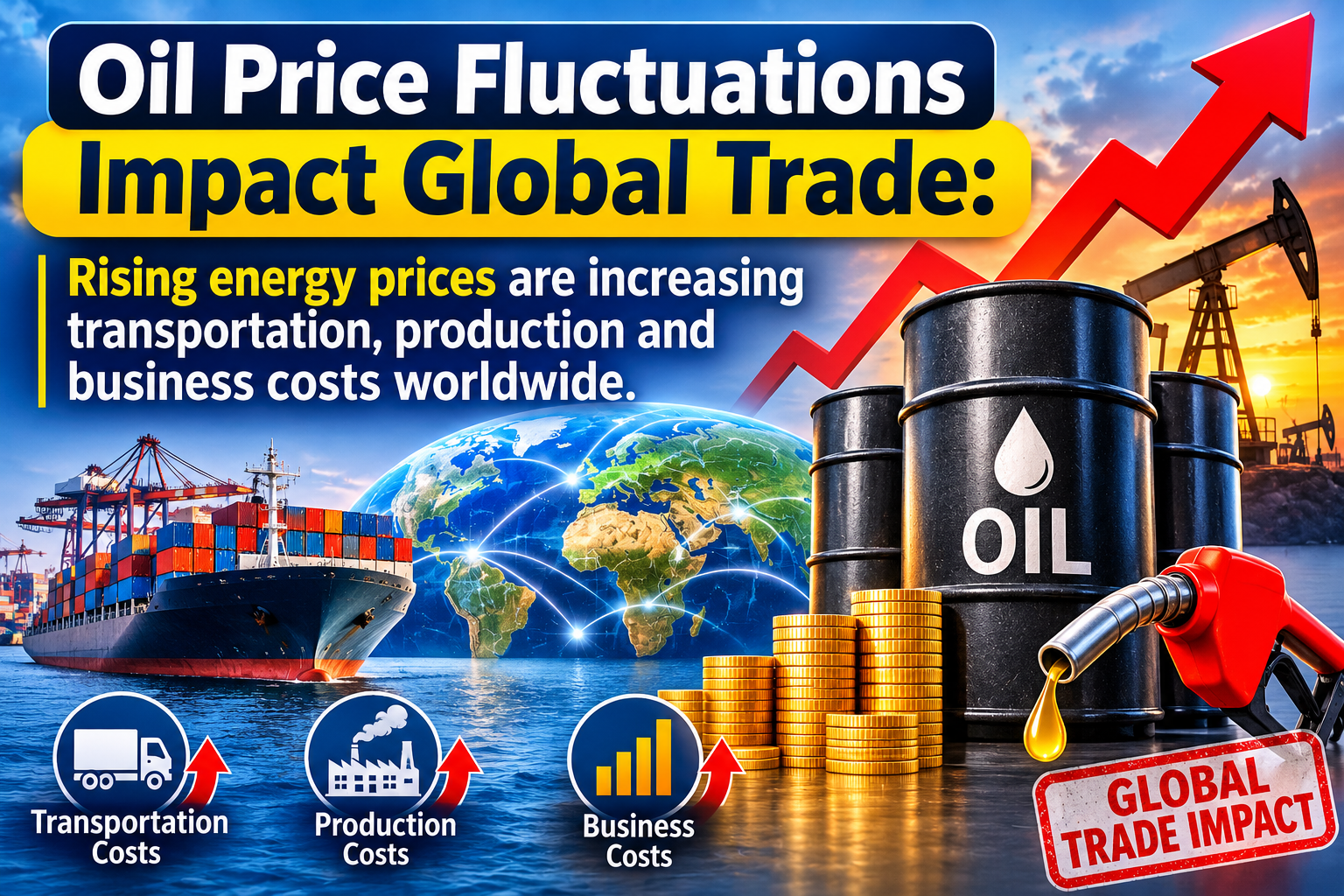
In recent months, geopolitical tensions, supply disruptions, changing energy demand, and uncertainty surrounding international shipping routes have intensified volatility in global oil markets. Rising energy prices are increasing transportation and production expenses, placing additional pressure on businesses and consumers worldwide. As countries and industries navigate these challenges, energy security has become an increasingly important economic priority.
Rising Oil Prices and Their Impact on Global Trade
International trade relies heavily on energy-intensive transportation networks. Ships, aircraft, trucks, and freight trains require substantial quantities of fuel to move goods across domestic and international markets.
When crude oil and refined fuel prices increase, transportation companies face higher operating expenses. Shipping operators may introduce fuel surcharges, airlines may increase ticket prices, and logistics providers may adjust freight charges to protect their profit margins.
These additional costs ultimately affect the prices of imported and exported goods. Businesses involved in international commerce may find it difficult to maintain competitive pricing, particularly when operating on narrow profit margins.
According to the OECD’s 2026 Economic Outlook, global ocean freight rates rose approximately 45% above pre-conflict levels, while global air freight rates increased nearly 30%, reflecting higher fuel costs and shipping-related risks. These developments demonstrate how energy market disruptions can influence international supply chains beyond the oil industry itself.
Manufacturing and Production Costs Under Pressure
Rising oil prices also affect industrial production. Petroleum products are essential not only for operating machinery and transporting raw materials but also as inputs in several manufacturing processes.
Industries such as chemicals, plastics, textiles, fertilisers, construction materials, and automotive manufacturing are particularly exposed to changes in energy prices.
Higher fuel and electricity expenses can increase factory operating costs, while more expensive raw materials and transportation create additional financial pressure. Manufacturers may respond by increasing product prices, reducing production volumes, postponing expansion plans, or searching for alternative suppliers.
Small and medium-sized enterprises are especially vulnerable because they often have limited financial resources to absorb sudden increases in operating expenses.
If elevated energy prices continue for an extended period, businesses may pass additional costs to consumers, contributing to broader inflationary pressures.
Geopolitical Tensions and Global Oil Supply Disruptions
Geopolitical developments remain a major influence on international oil markets. Conflicts in important energy-producing regions can disrupt production facilities, restrict exports, and affect strategically important maritime routes.
The Strait of Hormuz is particularly significant because it connects major Gulf oil producers with international energy markets. Any disruption to shipping through this strategic passage can affect global oil availability, increase transportation insurance premiums, and create uncertainty among energy-importing countries.
The International Energy Agency’s October 2026 Oil Market Report highlights the vulnerability of global oil supply and the continuing effects of geopolitical disruptions on production, inventories, and refined petroleum markets.
Such uncertainty encourages governments and businesses to reconsider their energy procurement strategies and strengthen supply-chain resilience.
Impact on Emerging Economies and Developing Countries
Emerging economies are particularly sensitive to rising oil prices because many depend heavily on imported energy to support transportation, industrial production, and electricity generation.
India, for example, imports a substantial proportion of its crude oil requirements. Higher international oil prices can increase the country’s import expenditure, put pressure on the trade balance, and contribute to domestic inflation.
Rising fuel costs can also affect agriculture, logistics, manufacturing, and household consumption. Businesses may face higher input expenses, while consumers experience increased transportation and everyday living costs.
Other energy-importing economies across Asia and Africa face similar challenges. Countries with limited foreign exchange reserves and weaker fiscal positions may find it particularly difficult to manage prolonged energy price increases.
Strengthening domestic energy production, diversifying import sources, and investing in renewable alternatives can help reduce these vulnerabilities over time.
Renewable Energy and the Search for Long-Term Solutions
Increasing oil price volatility is encouraging governments and businesses to accelerate their transition towards alternative energy sources.
Solar, wind, hydropower, and other renewable technologies offer opportunities to diversify energy supplies and reduce dependence on imported fossil fuels.
Electric vehicles, battery storage systems, energy-efficient machinery, and green industrial technologies are also becoming important components of long-term energy strategies.
Although the transition requires substantial investment in infrastructure and technology, it can provide economic benefits through improved energy security, employment generation, and reduced exposure to international commodity price shocks.
For businesses, investing in energy efficiency and alternative power sources can also improve long-term cost management and operational stability.
The Worldonomics View
At The Worldonomics Times, we believe that oil price fluctuations represent more than a challenge for the energy sector; they are a broader test of global economic resilience.
The increasing cost of energy demonstrates how closely international trade, industrial production, transportation, and consumer markets are interconnected. Countries that remain heavily dependent on a limited number of energy suppliers are particularly exposed to geopolitical disruptions and sudden changes in global commodity prices.
In our view, governments must prioritise energy diversification, strengthen strategic petroleum reserves, improve transportation infrastructure, and encourage investment in renewable energy. Businesses should focus on operational efficiency, diversified sourcing, and long-term energy management rather than relying entirely on short-term cost adjustments.
India and other emerging economies have an important opportunity to strengthen their economic independence through domestic energy development, clean technology investment, and improved industrial efficiency.
The Worldonomics perspective is clear: sustainable economic growth requires affordable, reliable, and diversified energy supplies. The future competitiveness of nations will increasingly depend on their ability to manage energy risks while building more resilient and sustainable economic systems.
Conclusion
Oil price fluctuations continue to influence global trade by increasing transportation expenses, raising manufacturing costs, and creating uncertainty across international supply chains. Although energy market volatility presents significant challenges for businesses and governments, it also highlights the importance of diversification, innovation, and sustainable development.
As the global economy becomes increasingly interconnected, maintaining energy security will be essential for protecting trade competitiveness, controlling inflation, and supporting long-term economic growth.
Ultimately, countries that invest in resilient energy infrastructure, diversify their supply sources, and accelerate technological innovation will be better positioned to navigate future disruptions and maintain economic stability.