By The Worldonomics Times
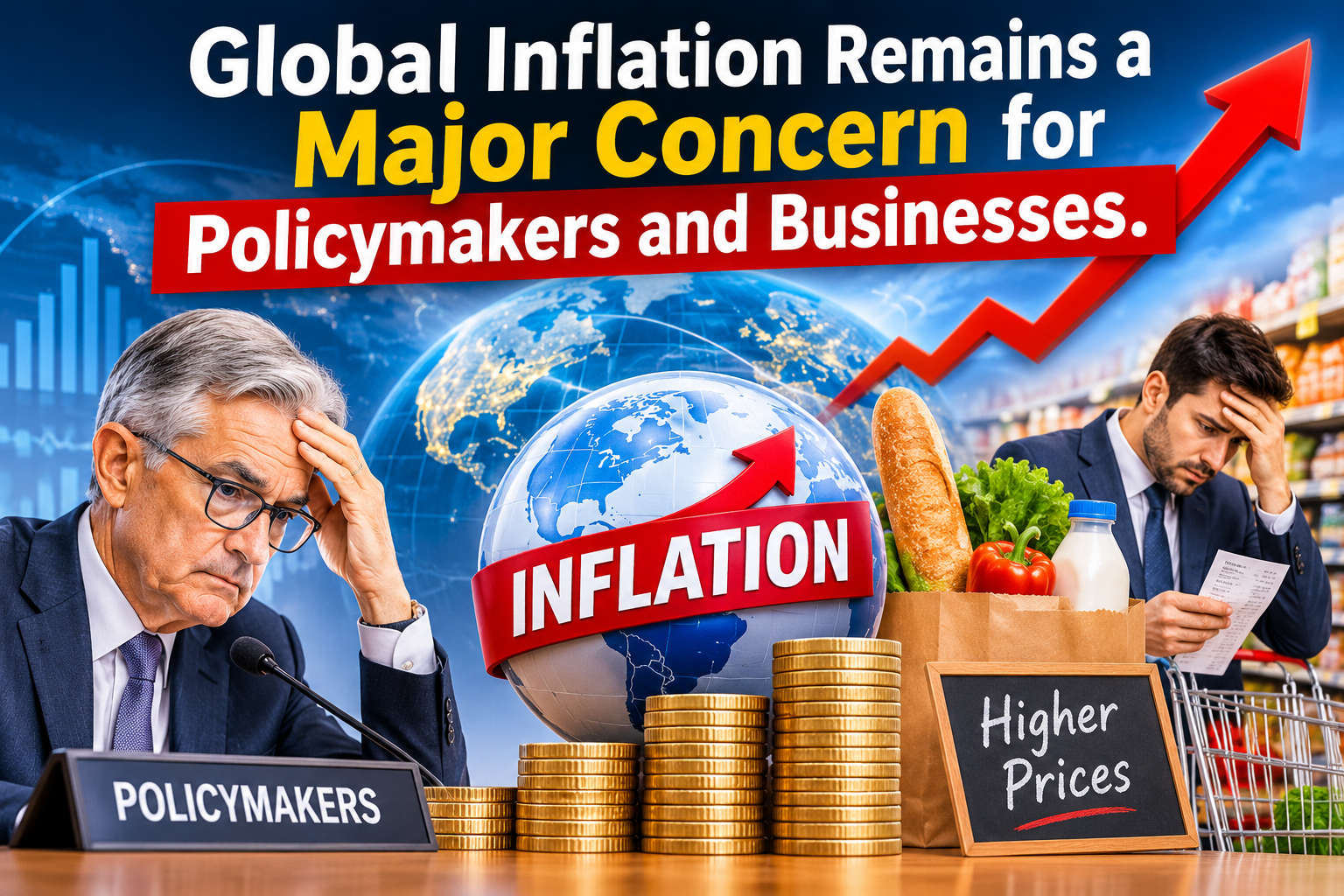
Global inflation continues to pose a significant challenge to economic stability, creating pressure on governments, central banks, businesses, and households across the world. Despite efforts to control rising prices through monetary tightening and fiscal adjustments, persistent increases in energy, food, transportation, housing, and production costs are making economic recovery increasingly complicated.
As economies navigate geopolitical tensions, international trade disruptions, changing energy markets, and uncertain financial conditions, inflation remains one of the most important issues influencing global economic policy. The challenge is no longer limited to controlling consumer prices; it also involves protecting purchasing power, maintaining business competitiveness, encouraging investment, and ensuring sustainable economic growth.
According to the International Monetary Fund’s October 2026 World Economic Outlook, global headline inflation is projected to reach 4.7% in 2026 before declining to 4.1% in 2027. These projections highlight that inflationary pressures remain persistent despite improvements in several economies.
Rising Energy and Food Prices Continue to Drive Inflation
Energy and food prices remain among the major contributors to inflationary pressures worldwide. Fluctuations in crude oil, natural gas, electricity, agricultural commodities, and transportation expenses directly influence the cost of producing and distributing essential goods.
Geopolitical conflicts and disruptions in international shipping routes have increased uncertainty in global energy markets. Countries dependent on imported fuel are particularly vulnerable because higher energy prices can increase manufacturing expenses, transportation costs, and electricity bills.
Food inflation presents another serious concern, particularly for developing economies where households spend a substantial portion of their income on essential commodities. Extreme weather conditions, agricultural supply disruptions, higher fertiliser costs, and trade restrictions can further increase food prices.
These developments create additional pressure on governments attempting to maintain affordable living standards while managing public expenditure.
Central Banks Face Difficult Monetary Policy Decisions
Central banks around the world are facing the difficult task of controlling inflation without unnecessarily slowing economic growth.
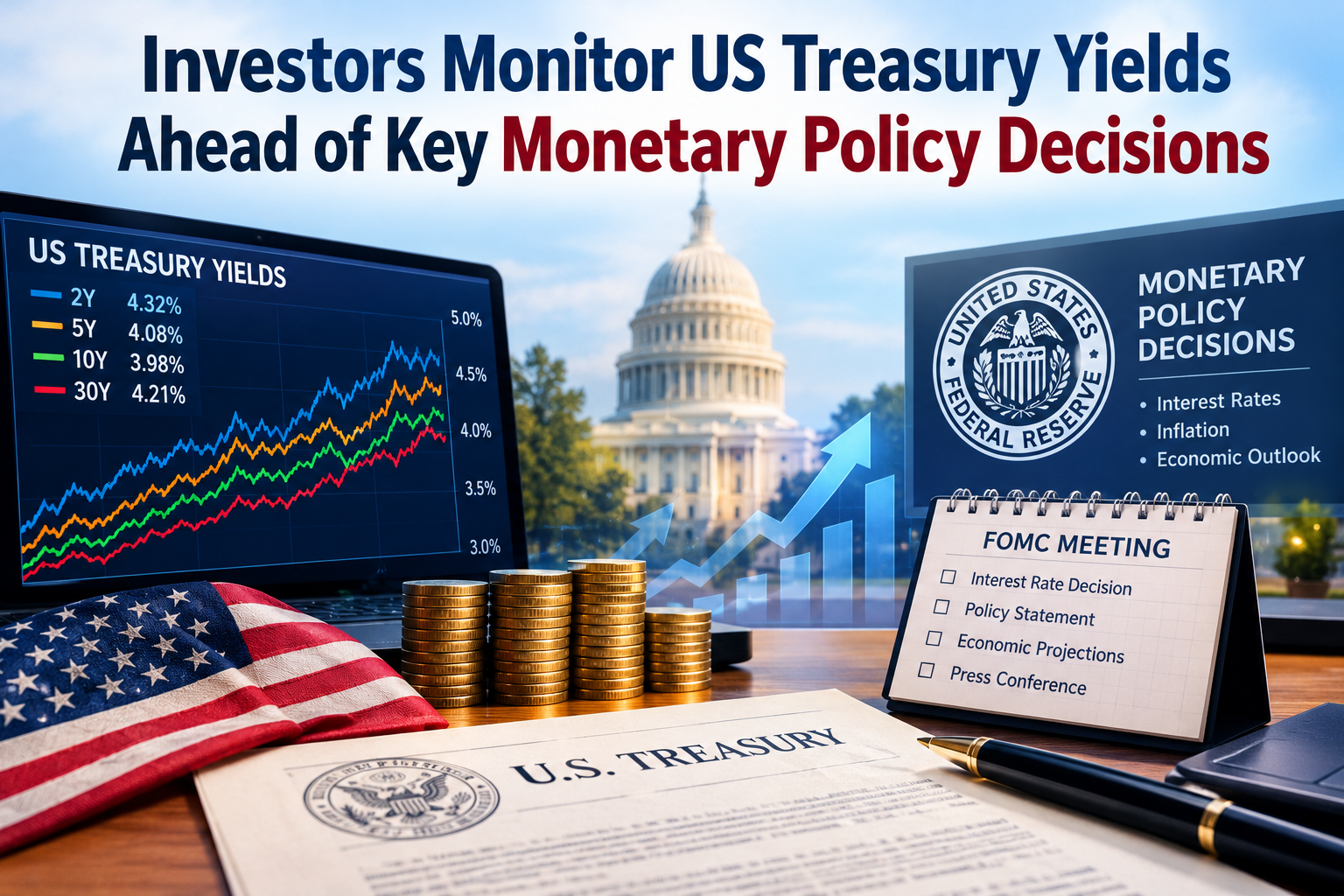
Institutions such as the US Federal Reserve, European Central Bank, and Bank of England use interest rate adjustments to influence borrowing, spending, and investment. Higher interest rates can reduce excessive demand and help moderate inflation, but they also increase borrowing costs for households and businesses.
The challenge becomes more complicated when inflation is driven by supply-side factors such as energy shortages, geopolitical disruptions, and higher production costs. Monetary tightening cannot directly resolve these problems, although it can prevent temporary price increases from becoming embedded in broader inflation expectations.
Policymakers must therefore balance inflation control with employment, investment, and financial stability.
Businesses Struggle with Increasing Operational Costs
Rising inflation is creating considerable challenges for businesses across manufacturing, retail, logistics, construction, agriculture, and services.
Higher raw material prices, employee wages, electricity expenses, transportation costs, and financing requirements are affecting business profitability. Companies that cannot pass additional expenses to consumers may experience reduced profit margins.
Small and medium-sized enterprises are particularly exposed because they often operate with limited financial reserves and have less bargaining power when negotiating with suppliers.
Businesses are increasingly required to adopt cost-efficient strategies, improve supply chain management, invest in automation, and diversify their sourcing networks.
According to the OECD’s September 2026 Economic Outlook, higher energy and commodity prices, combined with uncertainty surrounding international trade, are expected to moderate economic growth and maintain inflationary pressure.
Impact on Consumers and Household Purchasing Power
For ordinary consumers, inflation directly affects everyday financial decisions. Rising prices of groceries, housing, healthcare, education, fuel, and transportation reduce disposable income and weaken purchasing power.
When household expenses increase faster than wages, families may be forced to reduce discretionary spending, delay major purchases, or rely more heavily on credit.
This reduction in consumer spending can create a wider economic impact because household consumption is an important contributor to economic activity in many countries.
Lower-income households are particularly vulnerable because a larger proportion of their budgets is allocated to essential goods and services.
Governments must therefore develop effective social protection measures to support vulnerable communities without creating excessive fiscal pressure or adding further inflationary demand.
Global Trade and Geopolitical Uncertainty Add to Price Pressures
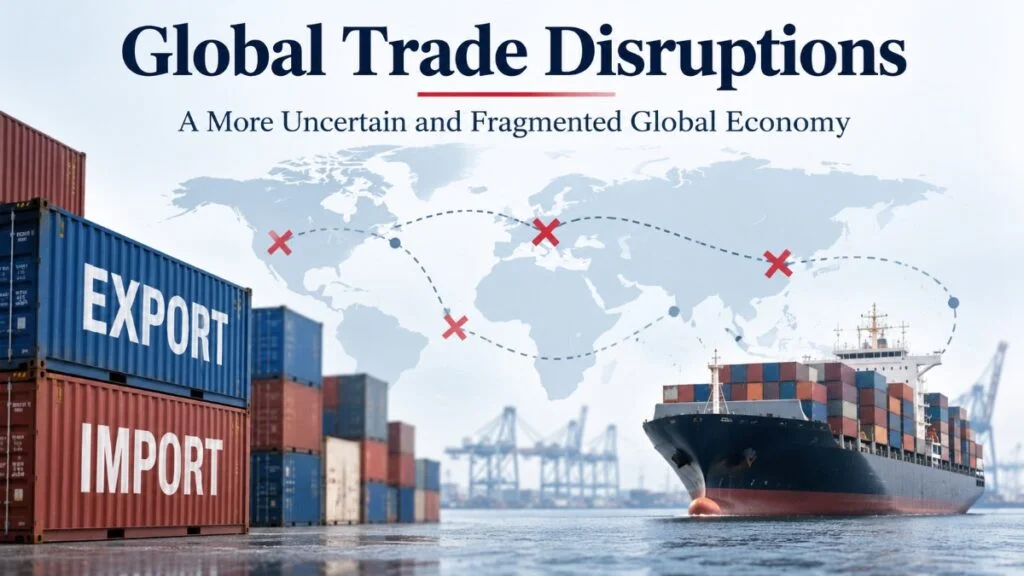
International trade remains highly sensitive to geopolitical developments, tariff policies, economic sanctions, and supply chain disruptions.
Changes in trade relationships can increase import expenses and create uncertainty for manufacturers dependent on international suppliers. Restrictions on critical commodities and industrial components can also affect production schedules and market availability.
Furthermore, disruptions in major energy-producing regions can influence prices across multiple economies, demonstrating how interconnected global markets have become.
The IMF has highlighted geopolitical tensions, renewed trade disputes, and commodity market disruptions among the major risks to the global economic outlook.
India’s Economic Outlook Amid Global Inflation
India is also navigating the challenges of an uncertain global inflation environment. Although domestic economic growth is supported by infrastructure development, digital expansion, manufacturing initiatives, and consumer demand, international price fluctuations remain an important consideration.
As a major importer of crude oil, India can experience additional inflationary pressure when global energy prices rise. Higher import costs may influence transportation, industrial production, logistics, and household expenditure.
Maintaining price stability while supporting economic expansion will require careful monetary and fiscal coordination.
Strengthening domestic manufacturing, improving agricultural productivity, investing in renewable energy, and diversifying international supply chains can help reduce external vulnerabilities.
Supporting small businesses and improving infrastructure efficiency will also be important in maintaining India’s long-term competitiveness.
The Worldonomics Times View
Global inflation is not merely a temporary economic inconvenience; it is a structural challenge that requires coordinated action from governments, central banks, businesses, and international institutions.
In our view, policymakers must move beyond relying exclusively on interest rate increases and adopt a broader strategy that addresses the underlying causes of inflation. Strengthening supply chains, improving energy security, supporting agricultural production, and encouraging productive investment should become important priorities.
Governments must also ensure that assistance reaches vulnerable households without creating unnecessary fiscal burdens. Targeted financial support, rather than broad and expensive price controls, can help protect purchasing power while preserving market stability.
For businesses, adaptability will be essential. Companies that invest in technology, improve productivity, diversify suppliers, and maintain responsible financial management will be better prepared to withstand continued price volatility.
Ultimately, controlling inflation requires more than reducing demand. It requires building resilient economies capable of managing external shocks while maintaining employment, investment, and consumer confidence.
The coming years will test the ability of policymakers and businesses to balance price stability with economic development. Nations that prioritise long-term resilience, international cooperation, and sustainable economic policies will be better positioned to navigate inflationary uncertainty and create lasting prosperity.