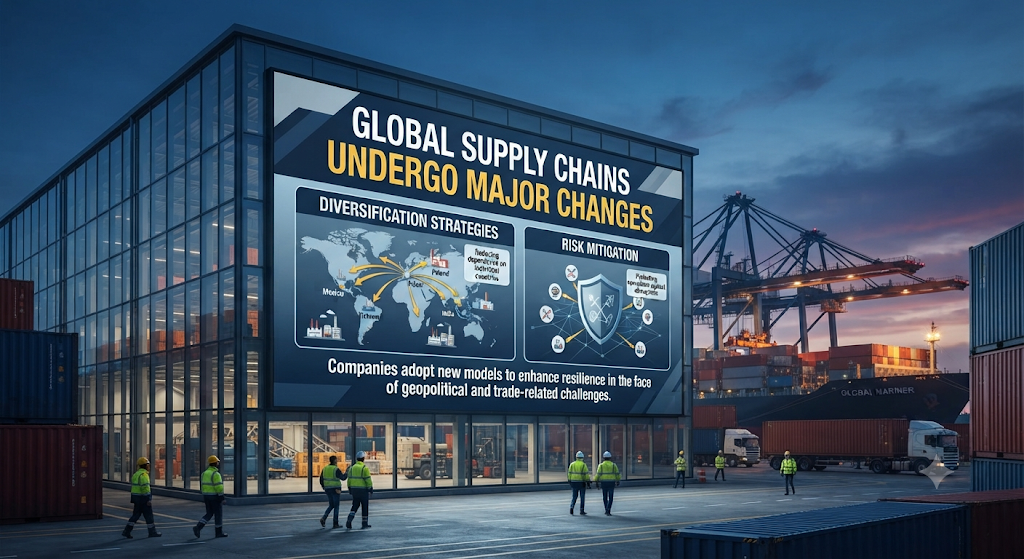
Global supply chains are undergoing a significant transformation as businesses rethink their manufacturing, sourcing and distribution strategies. Changing geopolitical conditions, international trade tensions, rising production costs and technological advancements are encouraging companies to reduce their dependence on a limited number of suppliers and manufacturing locations.
For decades, global businesses relied heavily on highly integrated supply networks designed to minimise costs and maximise production efficiency. However, disruptions caused by the COVID-19 pandemic, geopolitical conflicts, shipping bottlenecks and changing trade policies exposed the vulnerabilities of concentrated supply chains.
Today, companies are increasingly adopting diversified sourcing strategies, expanding manufacturing operations across multiple countries and investing in regional production facilities. This shift is reshaping international trade, creating new investment opportunities and changing the competitive position of emerging economies.
The Changing Landscape of Global Supply Chains
Traditional supply chain models were largely built around cost efficiency, economies of scale and access to inexpensive labour. Businesses often concentrated production in countries that offered competitive manufacturing costs and well-developed industrial ecosystems.
However, recent global disruptions have highlighted the risks associated with excessive dependence on individual markets.
Companies are now prioritising supply chain resilience alongside cost efficiency. Instead of relying on a single manufacturing destination, businesses are establishing alternative production facilities and developing relationships with suppliers in different geographical regions.
This approach helps companies maintain operations during international disruptions, reduce delivery delays and manage unexpected changes in trade regulations.
The transformation is particularly visible in industries such as electronics, automobiles, pharmaceuticals, textiles, semiconductors and consumer goods.
China Plus One Strategy Gains Momentum
One of the most significant developments in global manufacturing is the growing adoption of the China Plus One strategy.
Under this approach, companies maintain their existing manufacturing presence in China while expanding production or sourcing operations in at least one additional country.
The strategy is designed to reduce geographical concentration risks without completely abandoning established manufacturing ecosystems.
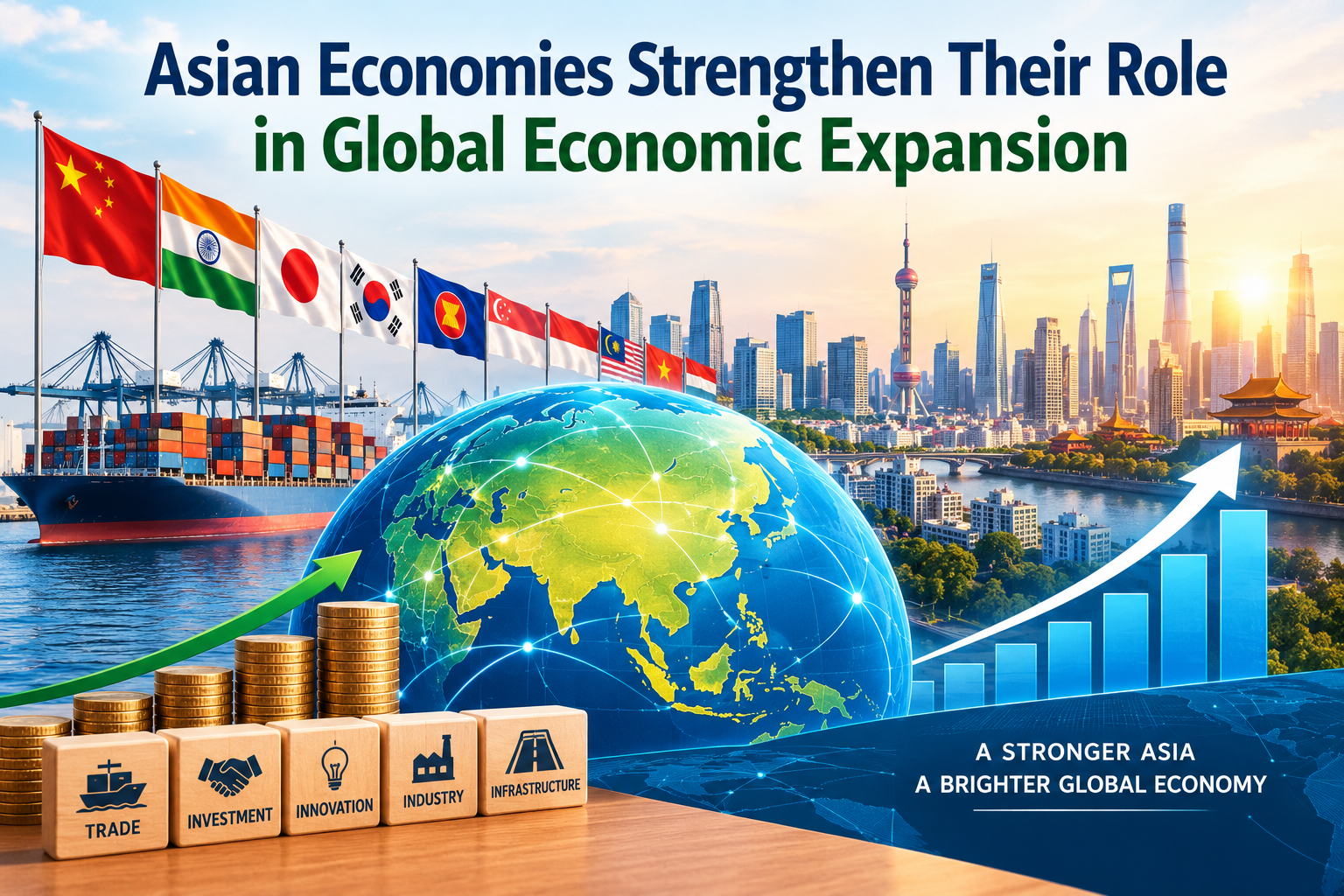
Countries such as India, Vietnam, Thailand, Indonesia and Mexico are attracting attention as alternative manufacturing and sourcing destinations.
Their appeal is supported by competitive production costs, improving infrastructure, expanding domestic markets and access to international trade networks.
For multinational corporations, diversifying manufacturing locations can provide greater operational flexibility and improve their ability to respond to changing market conditions.
Nearshoring and Friendshoring Reshape International Trade
Two additional strategies gaining importance are nearshoring and friendshoring.
Nearshoring involves relocating manufacturing or sourcing activities closer to major consumer markets. For example, companies serving North American customers may consider expanding production in Mexico to reduce transportation time and improve delivery efficiency.
Friendshoring involves shifting supply chain activities towards countries considered reliable strategic or trading partners.
These approaches are becoming increasingly relevant as businesses evaluate geopolitical risks, trade restrictions and national security considerations.
Although these strategies can improve supply chain security, they may also increase production costs and require substantial investments in infrastructure, logistics and workforce development.
Businesses must therefore balance geopolitical reliability with commercial competitiveness.
Emerging Economies Benefit from Manufacturing Diversification
The restructuring of global supply chains is creating opportunities for emerging market economies.
India, Vietnam, Indonesia, Mexico and other developing manufacturing centres are seeking to attract multinational companies through industrial incentives, infrastructure investment and business-friendly policies.
India, in particular, is strengthening its manufacturing ambitions through initiatives supporting electronics production, semiconductors, automobiles, pharmaceuticals and renewable energy equipment.
The country’s large domestic market, skilled workforce, engineering capabilities and expanding digital infrastructure provide important advantages.
Vietnam has also strengthened its position in electronics and export-oriented manufacturing, while Mexico benefits from its geographical proximity to the United States and established industrial relationships.
However, attracting international manufacturing investment requires more than competitive labour costs. Reliable electricity, efficient ports, transportation networks, skilled workers and predictable regulations are essential for building sustainable industrial ecosystems.
Technology and Digitalisation Transform Supply Chain Management
Technology is playing an increasingly important role in modern supply chain operations.
Artificial intelligence, automation, cloud computing and advanced analytics are helping businesses improve demand forecasting, inventory management and logistics planning.
Digital supply chain platforms allow companies to monitor shipments, track inventory and identify potential disruptions across international supplier networks.
Artificial intelligence can also help businesses analyse market demand, optimise transportation routes and predict supply shortages.
Meanwhile, warehouse automation and robotics are improving operational efficiency and reducing dependence on manual processes.
These technologies are enabling companies to build more transparent, responsive and adaptable supply chain networks.
As digitalisation advances, investment opportunities are emerging in logistics technology, industrial automation, warehouse management systems and enterprise software.
Challenges Facing Global Manufacturing Networks
Despite the benefits of diversification, restructuring supply chains presents several challenges.
Establishing manufacturing facilities in new countries requires significant capital expenditure, workforce training and regulatory compliance. Companies may also face differences in infrastructure quality, taxation systems and labour regulations.
In some cases, alternative manufacturing locations lack the supplier ecosystems and specialised industrial capabilities available in established production centres.
Higher transportation expenses, changing tariffs and currency fluctuations can further influence sourcing decisions.
Additionally, geopolitical tensions and trade restrictions may create uncertainty even in countries considered alternative manufacturing destinations.
Businesses must therefore undertake detailed assessments of production costs, supplier reliability, infrastructure capacity and long-term market conditions before relocating operations.
Investment Opportunities and Economic Implications
Global supply chain diversification is creating investment opportunities across several industries.
Manufacturing facilities, industrial parks, logistics centres, ports, warehouses and transportation infrastructure are receiving greater attention from investors and governments.
The semiconductor industry is particularly important because chips are essential components in automobiles, smartphones, industrial equipment, data centres and artificial intelligence systems.
Similarly, pharmaceutical manufacturing, renewable energy equipment and advanced electronics are attracting investments as countries seek greater control over strategically important supply networks.
For emerging economies, successful participation in global supply chains can generate employment, encourage technology transfers, strengthen exports and improve industrial productivity.
However, long-term success will depend on developing domestic supplier networks and moving towards higher-value manufacturing activities.
The Worldonomics Times View
Global supply chain diversification represents a structural transformation in international trade and manufacturing. Businesses are increasingly recognising that operational efficiency must be supported by resilience, geographical flexibility and reliable supplier relationships.
The Worldonomics Times believes that the future of global manufacturing will not depend on a single dominant production centre but on interconnected networks of countries, suppliers and technology-driven logistics systems.
Emerging economies have an important opportunity to strengthen their industrial capabilities and attract long-term international investment. However, governments must prioritise infrastructure development, workforce skills, regulatory stability and technological innovation to convert these opportunities into sustainable economic growth.
For businesses, diversification should not simply mean shifting production from one country to another. It should involve building a balanced sourcing network, strengthening supplier relationships and investing in digital supply chain management.
Ultimately, companies that successfully combine cost competitiveness with supply chain resilience will be better positioned to navigate international disruptions and changing consumer demand. As global trade evolves, diversified and technology-enabled supply networks are likely to become a defining feature of the next generation of international business.