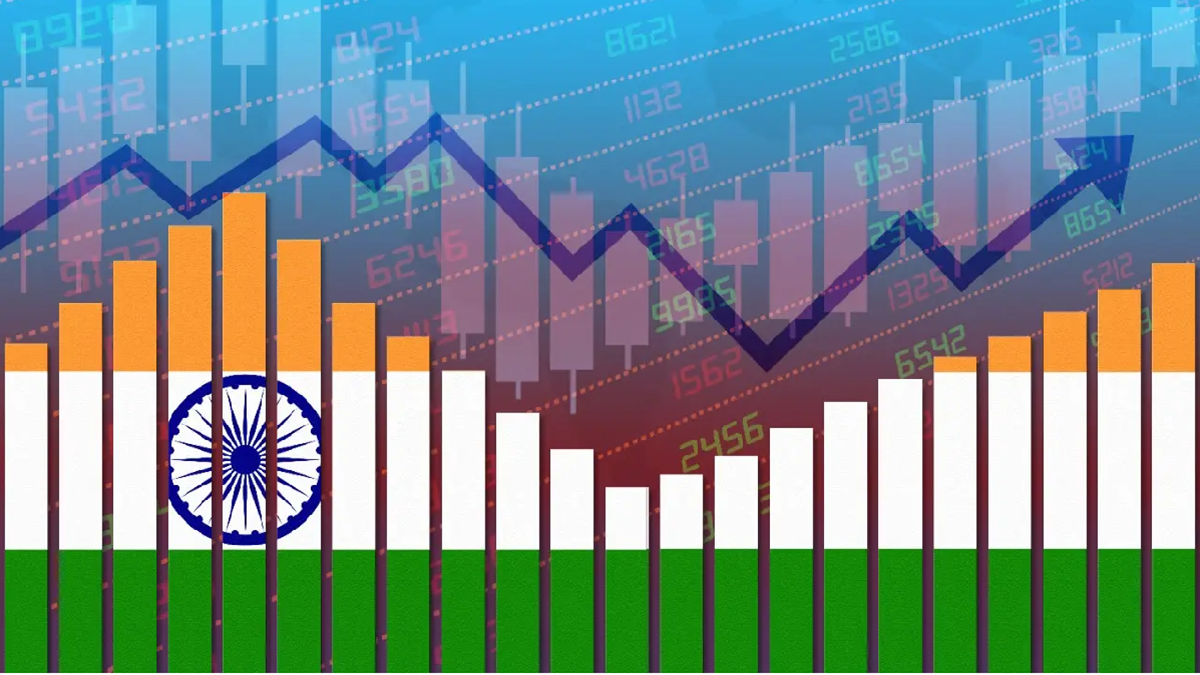
Stronger private capital expenditure and infrastructure investment are supporting India’s economic growth outlook.
By The Worldonomics Times | Global Economy
India’s economy is showing encouraging signs of a stronger private investment cycle as businesses increase capital expenditure and expand production capacity. After several years in which government-led infrastructure spending played a major role in supporting economic activity, private companies are increasingly emerging as an important driver of investment and long-term growth.
Investment in infrastructure, renewable energy, power generation, electronics, manufacturing, artificial intelligence and digital services is creating new opportunities across the Indian economy. Improving corporate balance sheets, rising demand and continued infrastructure development are encouraging businesses to commit more capital to expansion projects.
Recent economic indicators support this positive outlook. India’s gross fixed capital formation grew by 11.9% in the first quarter of FY2026–27, its strongest performance in four years, according to an October 2026 assessment by Deloitte. The increase suggests that investment is becoming a more significant contributor to economic growth.
Private Capital Expenditure Gains Momentum
Private capital expenditure, commonly known as capex, refers to the money businesses invest in physical assets such as factories, machinery, buildings, technology and infrastructure.
Higher private investment is important because it increases productive capacity, supports employment and creates demand for materials, equipment, transportation and professional services.
The Reserve Bank of India’s September 2026 Bulletin reported that the pipeline of private corporate investment projects financed through banks, financial institutions, external commercial borrowings and initial public offerings was estimated at approximately ₹3.2 lakh crore for FY2026–27. The comparable figure for FY2025–26 was ₹2.6 lakh crore.
The RBI also reported that the total cost of projects sanctioned by banks and financial institutions reached a record ₹4.4 lakh crore in FY2025–26, compared with ₹3.7 lakh crore in the previous financial year.
These developments indicate that private businesses are increasingly willing to commit funds to long-term projects despite international trade uncertainty and geopolitical risks.
Infrastructure Investment Supports Economic Expansion
Infrastructure remains one of the most important areas attracting private investment in India. Roads, railways, ports, electricity networks, renewable energy facilities and logistics infrastructure are essential for improving industrial productivity and reducing transportation costs.
Government investment in infrastructure has helped create opportunities for private companies by improving connectivity and strengthening the business environment.
According to the RBI’s September 2026 assessment, infrastructure accounted for 54.2% of the total cost of projects sanctioned by banks and financial institutions during FY2025–26. The power sector was the largest contributor within this category, followed by roads and bridges.
The growing participation of private companies in infrastructure development is particularly important because large projects require substantial financing, specialised technology and long-term operational expertise.
Improved infrastructure can also encourage additional investment from manufacturers, exporters and international companies seeking efficient production and distribution networks.
Manufacturing and Emerging Industries Attract Capital
India’s manufacturing sector is benefiting from investment in industrial expansion, modern equipment and advanced technologies. Businesses are increasing their focus on electronics, automobiles, semiconductors, chemicals, engineering products and industrial machinery.
Government initiatives supporting domestic manufacturing, including production-linked incentive programmes, have helped encourage investment in selected industries. However, sustained growth will also depend on competitive production costs, skilled labour, reliable infrastructure and stronger domestic supply chains.
Renewable energy is another major investment opportunity. Companies are committing capital to solar and wind power projects, battery manufacturing, energy storage and associated infrastructure. These investments support India’s energy security objectives while creating opportunities for equipment manufacturers and technology providers.
Digital infrastructure is also attracting significant attention. The expansion of data centres, cloud computing and artificial intelligence services is increasing demand for electricity, cooling systems, construction materials and advanced electronic equipment.
Together, these industries are broadening India’s investment base beyond traditional manufacturing and infrastructure.
Corporate Confidence and Financial Conditions Improve
A stronger private investment environment is supported by the financial position of Indian companies. Healthier balance sheets, improved access to financing and rising demand can encourage businesses to undertake expansion projects.
The October 2026 Deloitte India Economic Outlook identified improving private investment indicators over the previous two quarters. It also highlighted the contribution of capital formation to the country’s economic expansion.
When companies invest in new factories, machinery and technology, the benefits extend beyond the businesses making the investment. Construction companies, equipment suppliers, logistics operators and financial institutions also receive additional business opportunities.
However, investment decisions depend on expectations about future demand. Companies are more likely to expand when they have confidence that additional production capacity can generate sufficient revenue and returns.
Challenges That Could Affect Investment Growth
Despite the positive outlook, several challenges could influence the pace of private investment.
Geopolitical tensions, higher energy prices and international trade uncertainty can increase the cost of raw materials and imported machinery. Businesses may delay investment decisions if they are uncertain about future demand or the cost of financing.
Smaller companies can face additional difficulties because they often have less access to affordable credit and fewer financial resources to manage unexpected expenses.
There is also a need to ensure that investment growth creates broad economic benefits. Capital-intensive projects in technology and infrastructure can increase productivity, but employment opportunities depend on the industries receiving investment and the availability of appropriate skills.
Maintaining stable policies, improving the ease of doing business and strengthening infrastructure will therefore remain important for sustaining investor confidence.
The Worldonomics View
India’s growing private investment momentum represents an important development for its long-term economic outlook. Government infrastructure spending has helped create the conditions for private businesses to expand, and stronger corporate investment could gradually make economic growth more balanced and sustainable.
However, announced projects and investment pipelines should not be confused with completed expenditure. The real test will be whether companies consistently convert investment plans into operational factories, productive infrastructure and employment opportunities.
Policymakers should continue improving access to finance, strengthening transport and energy networks, simplifying regulations and supporting technology development. Greater participation from small and medium-sized enterprises will also be essential to ensure that investment benefits reach a wider section of the economy.
Conclusion
India’s economy is attracting growing private investment as businesses respond to improving opportunities in infrastructure, manufacturing, renewable energy and digital technology. Stronger capital formation and an expanding project pipeline indicate that private companies could play a larger role in the country’s next phase of economic growth.
Although global uncertainty and domestic investment challenges remain, sustained private-sector participation can strengthen industrial capacity, support employment and improve productivity.
The ability to convert investment commitments into productive assets will be central to India’s ambition of maintaining strong economic growth and strengthening its position in the global economy.