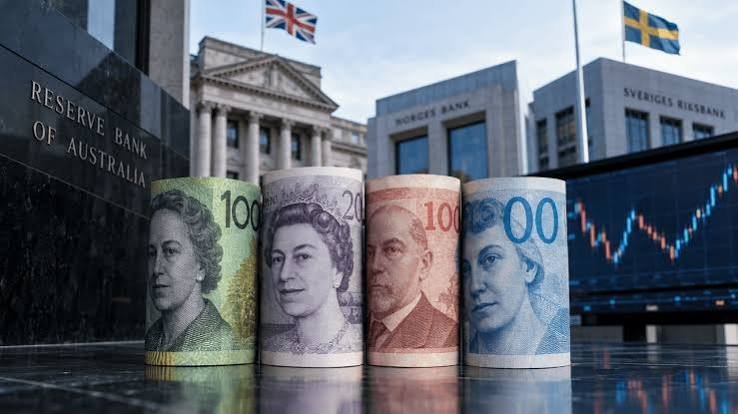
Currency Movements Reflect Interest Rate Expectations and Global Economic Sentiment
International currency markets are experiencing continuous movements as central bank policies, interest rate expectations and changing global economic conditions influence investor decisions. Exchange rates play a crucial role in the global financial system, affecting international trade, investment flows, commodity prices and economic competitiveness. As governments and central banks navigate inflationary pressures, economic growth challenges and financial uncertainty, monetary policy has become one of the most important factors shaping currency valuations.
Currencies are not merely instruments of international trade; they also reflect investor confidence in a country’s economic stability and future prospects. Movements in major currencies such as the US dollar, euro, British pound, Japanese yen and Chinese yuan influence financial markets worldwide. Even relatively small changes in exchange rates can have significant consequences for businesses, investors, importers and exporters.
Central Bank Policies Influence Currency Movements
One of the primary drivers of currency market fluctuations is monetary policy. Central banks use interest rates as a key instrument to manage inflation, maintain financial stability and support sustainable economic growth.
When a central bank increases interest rates, its currency may become more attractive to international investors seeking higher returns on deposits and fixed-income investments. Increased demand for domestic financial assets can strengthen the country’s currency.
Conversely, when central banks reduce interest rates, the relative attractiveness of investments denominated in that currency may decline. This can encourage capital to move towards economies offering comparatively higher returns, potentially putting downward pressure on the currency.
However, exchange rates are influenced by several factors beyond interest rates, including market expectations, economic growth, geopolitical developments and investor sentiment. Currency markets frequently respond not only to actual policy decisions but also to signals about future monetary policy.
The US Dollar and Its Global Influence
The US dollar continues to hold a central position in international financial markets. It serves as a major reserve currency and plays an important role in global trade, commodity transactions and international financial settlements.
Changes in expectations surrounding US Federal Reserve policy can therefore influence currencies across the world. When investors anticipate higher US interest rates, dollar-denominated assets may attract additional capital, supporting the dollar against other currencies.
On the other hand, expectations of monetary easing can reduce the dollar’s relative appeal, depending on the policy outlook in other economies.
A stronger dollar can increase the cost of importing commodities and servicing dollar-denominated debt for countries whose currencies are weakening. Developing economies may face additional financial pressure when their governments and businesses have significant external borrowing obligations.
Global Economic Sentiment Shapes Foreign Exchange Markets
Apart from monetary policy, international currency markets are strongly influenced by global economic sentiment. Investors continuously evaluate economic indicators such as inflation, employment figures, industrial production, GDP growth and consumer spending.
When economic conditions improve, investors may become more willing to invest in currencies associated with stronger growth prospects. However, during periods of uncertainty, financial market participants often shift towards currencies and assets perceived as safer.
Geopolitical tensions, international conflicts, trade restrictions and unexpected economic disruptions can also trigger sudden currency fluctuations.
The foreign exchange market therefore reflects a continuous assessment of economic opportunities and risks. Changes in investor confidence can sometimes produce significant movements even before central banks announce formal policy decisions.
Impact on International Trade and Businesses
Currency fluctuations have direct consequences for international trade and business operations. A weaker domestic currency can make a country’s exports more competitive in international markets because foreign buyers may find its products relatively less expensive.
However, depreciation also increases the domestic cost of imported goods, raw materials, energy and industrial components. Businesses dependent on imported inputs may experience higher production costs, which can eventually affect consumer prices.
For exporters, currency movements can influence revenue and profit margins, particularly when payments are received in foreign currencies. Multinational corporations must also manage exchange-rate risks associated with international operations, overseas investments and cross-border financial transactions.
As a result, businesses increasingly use financial risk-management strategies, including currency hedging, forward contracts and diversified international operations, to reduce exposure to unpredictable exchange-rate movements.
Emerging Economies and the Indian Rupee
Emerging economies often experience greater sensitivity to global currency movements because of their dependence on international capital flows, energy imports and foreign financing.
India’s currency market is influenced by several factors, including crude oil prices, foreign investment flows, trade balances, inflation, domestic economic growth and the monetary policy outlook of the Reserve Bank of India.
As a major importer of crude oil, India can face additional pressure when higher global energy prices coincide with currency depreciation. A weaker rupee can increase the import bill and contribute to imported inflation.
At the same time, currency depreciation may provide certain advantages to export-oriented industries, including information technology, pharmaceuticals and other internationally competitive sectors.
The Reserve Bank of India plays an important role in maintaining orderly foreign exchange market conditions through its monetary policy framework and liquidity management measures. Maintaining currency stability while supporting economic growth remains an important policy consideration.
The Road Ahead for International Currency Markets
Looking ahead, currency markets are likely to remain sensitive to central bank communication, inflation trends and international economic developments. Differences in monetary policy between major economies may create opportunities as well as volatility in foreign exchange markets.
Investors will continue monitoring interest rate decisions, employment data, inflation reports and economic forecasts to assess the future direction of major currencies.
Businesses and governments will also need to strengthen their currency risk-management frameworks to navigate an environment where exchange-rate fluctuations can quickly affect international financial commitments.
Digital financial infrastructure, cross-border payment systems and evolving international trade arrangements may further influence the structure of global currency markets over the coming years.
The Worldonomics Times View
The Worldonomics Times believes that international currency movements have become an increasingly important indicator of global economic confidence and financial stability. Central bank decisions, interest rate expectations and changing investor sentiment are shaping exchange-rate movements in ways that directly affect international trade, investment and economic growth.
While monetary policy remains a powerful influence on currency valuations, policymakers must recognise that currency stability cannot be achieved through interest rate decisions alone. Strong economic fundamentals, sustainable fiscal policies, competitive industries and investor confidence are equally important.
For emerging economies such as India, maintaining an appropriate balance between currency stability, export competitiveness and domestic economic growth is particularly important. Businesses must also become more proactive in managing foreign exchange exposure rather than treating currency fluctuations as an occasional financial risk.
The global economy requires stronger coordination, transparent monetary communication and responsible financial management. Ultimately, the strength of a currency is closely connected to the confidence investors place in the economy behind it. Countries that build resilient economic foundations and maintain credible financial institutions will be better positioned to navigate the uncertainties of international currency markets.