Growing investments in artificial intelligence, advanced computing, data centres and digital infrastructure are emerging as important drivers of economic activity, creating new business opportunities and raising expectations of long-term productivity growth.
Artificial Intelligence (AI) is rapidly transforming the global economic landscape, becoming an increasingly important source of investment, innovation and business expansion. Governments, multinational corporations and technology companies are committing substantial financial resources to AI development, recognising its potential to improve productivity, reduce operational costs and create new economic opportunities.
The growing AI investment cycle is providing support to economic activity at a time when several major economies are dealing with inflationary pressures, geopolitical uncertainty and slower traditional growth drivers.
According to the International Monetary Fund’s September 2026 Annual Report, technology investments related to AI contributed an estimated 0.5 percentage point to US GDP growth in 2025. The report also highlights that private-sector AI investment could exceed $2 trillion globally in 2026, based on external estimates.
These developments indicate that AI is no longer simply a technological innovation. It is becoming an important component of global economic strategy and a potential driver of future productivity.
AI Investment Becomes a Major Economic Growth Driver
The expansion of artificial intelligence is generating significant investment across multiple industries.
Technology companies are increasing expenditure on advanced semiconductors, high-performance computing systems, cloud infrastructure, software development and large-scale data centres.
These investments are creating demand across a broad network of industries, including electronics manufacturing, telecommunications, construction, energy and professional services.
The construction of AI data centres, for example, requires substantial investment in buildings, cooling systems, electricity infrastructure, networking equipment and specialised computing hardware.
This creates opportunities for suppliers, contractors, technology developers and infrastructure companies.
The economic impact also extends beyond major technology firms. Businesses adopting AI solutions are increasingly investing in automation, digital platforms and intelligent systems to improve operational efficiency and strengthen their competitive position.
Productivity Improvements Transform Business Operations
One of the most important economic benefits of AI is its potential to improve productivity.
Businesses are using AI-powered systems to automate repetitive tasks, analyse large datasets, improve customer services and support faster decision-making.
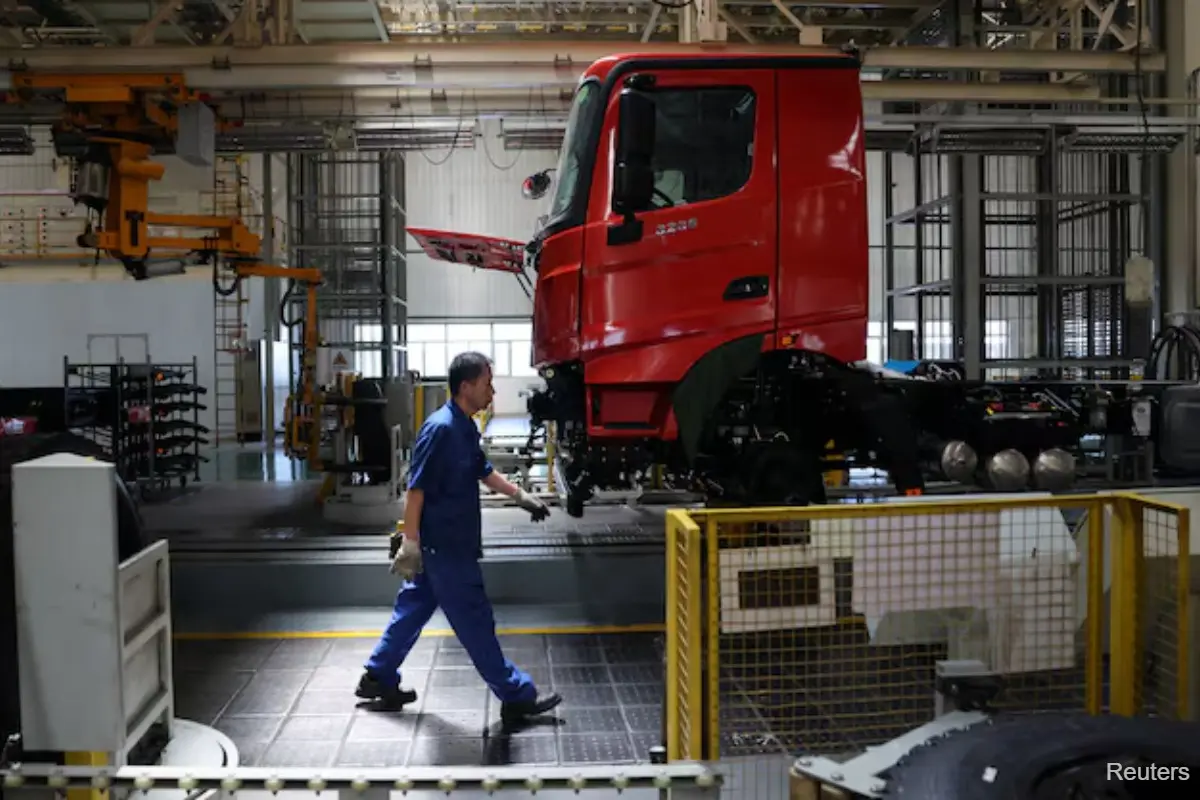
In manufacturing, AI-based predictive maintenance can identify potential equipment failures before they disrupt production. In financial services, intelligent systems help detect fraudulent transactions, analyse risks and improve operational processes.
Healthcare organisations are exploring AI applications for medical imaging, administrative efficiency and clinical research, while retailers are using intelligent systems to improve inventory management and understand consumer behaviour.
These developments can help companies reduce operating expenses, improve resource allocation and increase output without requiring proportionate increases in labour or capital.
The OECD’s 2026 analysis suggests that AI adoption could add between 0.5 and 1 percentage point to annual labour productivity growth across G7 economies over the next decade under its central adoption scenario.
However, the actual benefits will depend on how effectively businesses integrate AI into their existing operations.
Global Technology Competition Accelerates Investment
The growing economic importance of AI has intensified competition among major economies.
The United States, China, India and several European and Asian economies are increasing investments in AI research, semiconductor manufacturing, digital infrastructure and workforce development.
The United States continues to attract substantial private-sector investment through major technology companies and venture capital funding.
China is strengthening its domestic AI ecosystem through investments in advanced computing, industrial automation and technology research.
Meanwhile, India is emerging as an important participant in the global AI landscape, supported by its expanding technology sector, digital infrastructure, engineering talent and growing startup ecosystem.
Competition between these economies is expected to influence international trade, investment flows, technology partnerships and the future structure of global supply chains.
AI Creates Opportunities for Small and Medium Businesses
Although large technology companies account for a significant share of AI investment, the benefits of artificial intelligence are gradually becoming accessible to smaller businesses.
Cloud-based AI platforms and affordable software solutions are allowing small and medium-sized enterprises to adopt technologies that were previously available mainly to large corporations.
Businesses can use AI tools for marketing, customer communication, accounting support, inventory forecasting, content development and data analysis.
These applications can reduce administrative workloads and allow smaller companies to focus more resources on business development and customer relationships.
AI adoption can also help startups develop new products and services without requiring the same level of initial investment traditionally associated with technology businesses.
However, access to skilled employees, reliable digital infrastructure and affordable computing resources remains important for wider adoption.
Employment and Skills Development Remain Important Challenges
Despite its economic opportunities, AI is also creating uncertainty in labour markets.
Automation may reduce demand for certain repetitive and routine tasks, while increasing demand for professionals with expertise in data science, software engineering, cybersecurity and AI system management.
The transition could create employment challenges for workers whose existing skills become less relevant.
The IMF has highlighted that AI could affect approximately 40% of jobs globally through a combination of automation and augmentation, with exposure potentially reaching 60% in advanced economies.
This does not mean that all affected jobs will disappear. In many occupations, AI is more likely to change the nature of work by supporting employees rather than completely replacing them.
Governments and businesses must therefore prioritise reskilling, vocational education and digital literacy to help workers participate in the changing economy.
Investment Risks and Infrastructure Constraints
The rapid expansion of AI investment also presents financial and economic risks.
High expectations surrounding future AI profitability could encourage excessive investment and inflated company valuations. If productivity improvements fail to meet expectations, technology stocks and related investment markets could experience corrections.
Energy consumption is another important challenge. Large data centres require substantial electricity, cooling capacity and reliable power infrastructure.
Without adequate energy supplies, skilled workers and supporting infrastructure, the economic benefits of AI may remain concentrated among a limited number of countries and companies.
The IMF’s October 2026 economic assessment also identifies a possible reassessment of AI investment expectations as a downside risk to global economic growth.
This highlights the importance of ensuring that investment is supported by sustainable business models and measurable productivity improvements.
The Worldonomics Times View
Artificial Intelligence represents one of the most important opportunities for the global economy, but its real economic value will ultimately depend on how effectively innovation translates into productivity, employment opportunities and sustainable business growth.
In our view, the current AI investment expansion should not be measured only by the amount of money being invested in technology companies, semiconductors or data centres. The more important question is whether these investments are improving the efficiency and productive capacity of the wider economy.
For India, AI offers an opportunity to strengthen its position as a global technology and innovation hub. The country can benefit from its engineering talent, digital infrastructure, startup ecosystem and expanding IT services industry.
However, long-term success will require greater investment in research and development, semiconductor capabilities, reliable electricity infrastructure and advanced technical education.
We also believe that AI adoption should not remain limited to large corporations. Small businesses, manufacturers, educational institutions, healthcare providers and agricultural enterprises must receive greater access to affordable AI solutions.
Governments should focus on creating an environment that encourages innovation while ensuring responsible technology development, data protection and fair competition.
Workforce development must also remain a priority. The economic benefits of AI will be more widely shared when employees are equipped with the skills needed to work alongside intelligent technologies.
Our position is clear: AI investment should create productive economic capacity, not simply financial market excitement.
The next phase of global economic growth may increasingly depend on how successfully countries integrate artificial intelligence into their industries, institutions and everyday business operations.
Ultimately, nations that combine technological innovation with skilled human capital, strong infrastructure and responsible policymaking will be better positioned to convert the AI revolution into lasting economic prosperity.