Chamoli, Uttarakhand, November 24, 2026 | The Worldonomics Times
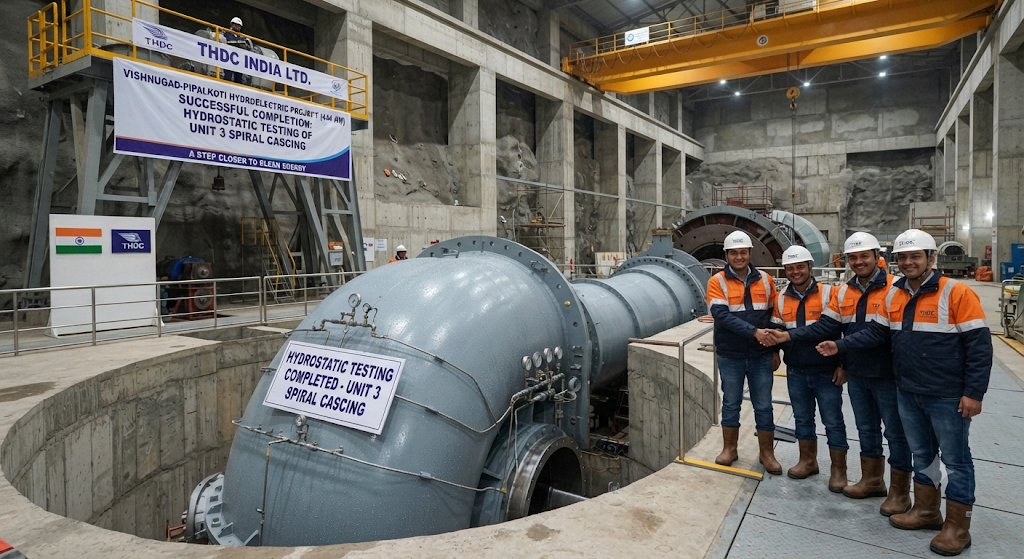
THDC India Limited has achieved another significant milestone in the development of its 444 MW Vishnugad-Pipalkoti Hydro Electric Project (VPHEP) in Uttarakhand by successfully completing the hydrostatic testing of the spiral casing of Unit No. 3.
The test was conducted by filling the spiral casing with clear water and gradually increasing its internal pressure to 48 kg/cm² in accordance with the prescribed pressure-time schedule specified in the approved engineering drawings. The entire testing procedure was successfully completed within six hours, meeting the stipulated technical, quality and safety requirements.
The achievement represents an important advancement in the project’s electromechanical installation and commissioning-related activities. It also demonstrates the technical capabilities and coordinated efforts of THDC’s project team and the agencies associated with the execution of this strategically important hydropower project.
Hydrostatic Testing: An Important Engineering Milestone
Hydrostatic testing is a critical procedure in the installation of hydropower generation equipment. It is conducted to verify the structural integrity and pressure-retaining capability of important components before they proceed to subsequent construction and installation stages.
The spiral casing is a specially designed steel structure that distributes water uniformly towards the turbine runner. It plays an essential role in ensuring efficient water flow and supporting the performance of the generating unit.
During the testing process, the casing is filled with water and subjected to controlled internal pressure. This helps engineers assess whether the structure can withstand the required operating pressure without leakage or structural failure.
For Unit No. 3 of the Vishnugad-Pipalkoti project, the pressure was gradually increased to 48 kg/cm², following the approved technical specifications. Successful completion within six hours highlights the effective execution of the testing procedure and the coordination among the engineering teams.
The milestone is important because it supports the progression of subsequent electromechanical works associated with the generating unit.
THDC Management Appreciates Project Team
Sipan Kumar Garg, Managing Director of THDC India Limited, congratulated the Vishnugad-Pipalkoti project team on successfully completing the hydrostatic testing.
He described the achievement as an important milestone in the development of the 444 MW project and appreciated the collective efforts, technical expertise and dedication demonstrated by the project team and associated agencies.
He also emphasised the importance of continued coordination, commitment and teamwork in advancing the remaining project activities.
Ajay Verma, Executive Director (Projects), also congratulated the team and highlighted the importance of effective coordination and close monitoring of construction and installation activities.
Dr. Niraj Kumar Agrawal, Head of Project (VPHEP), explained the technical significance of the hydrostatic testing and briefed the officials on the testing procedure and the important technical parameters achieved during the exercise.
Senior officials present during the occasion included Ravindra Singh Rana, General Manager (EM); Sanjay Mamgain, Additional General Manager (HM); Ajay Kumar, Additional General Manager (G&G); and other senior officers associated with the project.
About the 444 MW Vishnugad-Pipalkoti Hydropower Project
The Vishnugad-Pipalkoti Hydro Electric Project is a major run-of-the-river hydropower development located in Chamoli district of Uttarakhand on the Alaknanda River, one of the important tributaries of the Ganga.
The project has an installed generation capacity of 444 MW, comprising four generating units of 111 MW each.
Developed by THDC India Limited, the project is designed to harness the hydropower potential of the Alaknanda River through an advanced underground power generation system.
Its major infrastructure components include a 65-metre-high concrete diversion dam, a 13.4-kilometre-long headrace tunnel and a 3.04-kilometre-long tailrace tunnel.
The project utilises vertical Francis turbines and is designed to generate approximately 1,657 million units of electricity annually, subject to the specified design assumptions and operating conditions.
Once commissioned, the project is expected to contribute to electricity supply across several beneficiary states and Union Territories, including Uttar Pradesh, Uttarakhand, Delhi, Rajasthan, Punjab, Haryana, Jammu and Kashmir, Himachal Pradesh and Chandigarh.
Updated Commissioning Roadmap and Project Significance
According to THDC’s published project information, commissioning of the first generating unit is targeted for December 2027, while the fourth and final unit is targeted for June 2028.
The successful hydrostatic testing of Unit No. 3’s spiral casing represents progress towards the completion of the project’s complex electromechanical works. However, additional installation, testing and commissioning activities will be required before the generating unit can begin commercial power generation.
The project is particularly important for Uttarakhand and the broader northern electricity grid because hydropower can provide a flexible source of electricity and support the integration of variable renewable energy sources such as solar and wind.
Hydropower projects also contribute to improving regional energy security and diversifying India’s electricity generation portfolio.
THDC India’s Contribution to India’s Clean Energy Goals
THDC India Limited has an important role in developing hydropower and other energy infrastructure in the country. Its projects contribute to expanding electricity generation capacity while supporting the government’s broader objectives of strengthening energy security and promoting cleaner energy sources.
The Vishnugad-Pipalkoti project reflects the importance of harnessing India’s untapped hydropower potential through modern engineering, specialised infrastructure and efficient project execution.
As electricity demand continues to increase, large hydropower projects can play an important role in balancing the power system and supporting the transition towards a diversified energy mix.
The latest engineering milestone at Unit No. 3 highlights the progress being made towards bringing the project closer to its planned commissioning schedule.
The Worldonomis Times View
THDC India’s successful completion of hydrostatic testing for Unit No. 3 at the Vishnugad-Pipalkoti project is an encouraging development for India’s hydropower infrastructure sector.
The achievement highlights the importance of technical expertise, engineering precision and coordinated project execution in developing large-scale power infrastructure. Completing the test at 48 kg/cm² within six hours demonstrates progress in a critical stage of the generating unit’s installation.
The project also carries strategic importance for India’s long-term energy security. With increasing electricity demand and a growing share of renewable energy in the power mix, hydropower can provide valuable flexibility and help balance fluctuations in solar and wind generation.
THDC’s continued progress at Vishnugad-Pipalkoti reflects the important contribution of public sector enterprises in developing complex infrastructure projects and strengthening the country’s clean energy capabilities.
However, the focus must now remain on timely completion of the remaining construction, equipment installation and commissioning activities. Effective project monitoring, safety standards and coordination among contractors and technical teams will be essential to achieving the published commissioning targets.
The Worldonomis Times believes that projects such as Vishnugad-Pipalkoti are vital to India’s ambition of building a reliable, diversified and sustainable energy system. Their successful execution can strengthen regional electricity supply, improve energy security and support the country’s long-term clean energy transition.
Conclusion
The successful hydrostatic testing of Unit No. 3’s spiral casing marks another important step in the development of THDC India’s 444 MW Vishnugad-Pipalkoti Hydroelectric Project.
With four generating units of 111 MW each and a planned annual design energy generation of approximately 1,657 million units, the project is expected to become an important contributor to India’s hydropower capacity once commissioned.
The latest milestone reinforces THDC’s role in strengthening India’s energy infrastructure and advancing sustainable power generation.