The Worldonomics Times
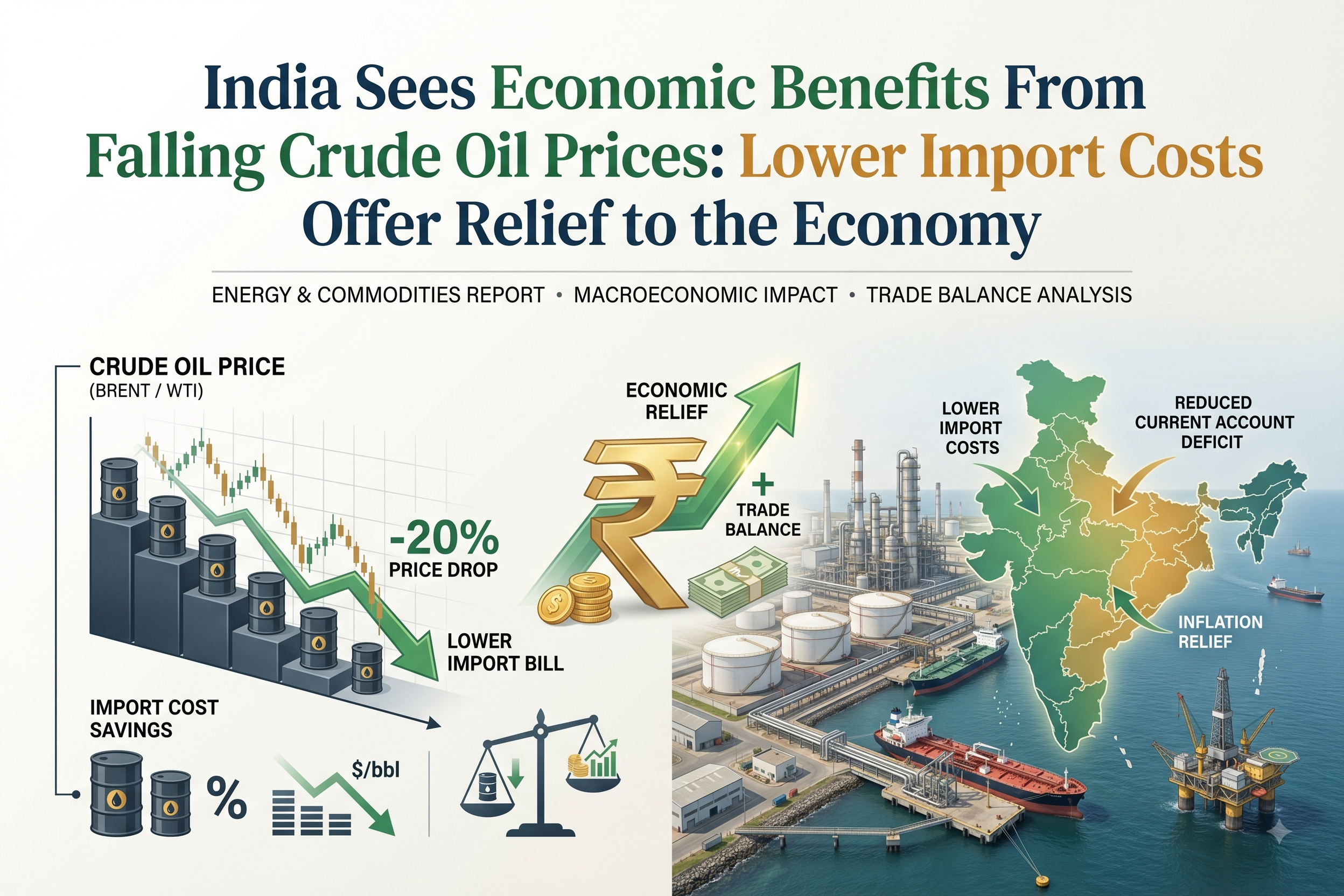
India could receive a significant economic boost from falling international crude oil prices and a stronger Indian rupee. The combination may reduce the country’s oil import expenses, ease inflationary pressures and improve profitability for businesses that depend heavily on fuel and petroleum-based inputs.
As one of the world’s major crude oil importers, India remains particularly sensitive to fluctuations in international energy markets. Changes in oil prices influence transportation expenses, manufacturing costs, government finances and household budgets. When crude oil prices decline, the benefits can extend across several sectors of the economy.
The recent improvement in energy costs, combined with a stronger domestic currency, offers an opportunity to strengthen India’s economic position and reduce some of the financial pressures associated with imported commodities.
Lower Crude Oil Prices Reduce India’s Import Burden
Crude oil represents a major component of India’s import expenditure. The country relies significantly on overseas suppliers to meet its energy requirements, making international oil prices an important factor in its trade balance.
When global crude oil prices decline, India may spend less on purchasing the same quantity of imported oil, assuming other factors remain unchanged. A lower import bill can help reduce demand for foreign currency and ease pressure on the country’s external finances.
This is particularly important because a large oil import bill can contribute to a wider trade deficit and increase pressure on the Indian rupee.
Lower energy import costs can also improve the country’s current account position, although the overall outcome depends on other imports, exports, services earnings and international investment flows.
For an economy with substantial energy requirements, more affordable crude oil can therefore provide meaningful macroeconomic relief.
Stronger Rupee Increases the Benefits
A stronger Indian rupee against the US dollar can further improve the impact of declining crude oil prices.
International crude oil transactions are generally conducted in US dollars. When the rupee appreciates, Indian importers need fewer rupees to purchase the same dollar-denominated quantity of oil.
This creates a combined benefit: lower international oil prices reduce the dollar cost of imports, while a stronger rupee can reduce their domestic currency cost.
For example, if crude oil prices decline while the rupee strengthens, the overall cost of importing petroleum may fall more significantly than it would from either development alone.
However, the actual savings depend on the exchange rate, global oil benchmarks, import volumes, shipping costs and other commercial factors.
Relief From Inflationary Pressures
Lower crude oil prices can help moderate inflation across the Indian economy.
Fuel costs influence transportation, logistics, agriculture and industrial production. When energy becomes more affordable, businesses may experience lower operating expenses, reducing the need to increase prices.
Transportation is particularly important because almost every industry depends on the movement of raw materials and finished products. Lower diesel and fuel-related expenses can reduce freight costs and support more affordable distribution.
Agriculture may also benefit through reduced expenses associated with transportation, irrigation and certain petroleum-based inputs.
Additionally, lower crude oil prices can influence the cost of petrochemical products, plastics, synthetic materials and fertilisers, depending on their pricing structures.
If these savings are passed on through the supply chain, consumers may experience some relief from rising prices.
Nevertheless, the impact on retail inflation is not automatic. Domestic fuel pricing, taxation, food prices, exchange-rate movements and distribution costs also influence the final prices paid by consumers.
Businesses Could Experience Improved Profitability
Indian businesses across several industries may benefit from declining energy costs.
1. Aviation: Airlines use significant quantities of aviation fuel. Lower fuel expenses can improve operating margins and provide greater flexibility in managing ticket prices.
2. Transportation and Logistics: Road transport companies, shipping operators and logistics providers may benefit from lower fuel expenditure, improving cost efficiency.
3. Manufacturing: Companies that depend on petroleum-based raw materials, industrial energy and transportation may experience lower production expenses.
4. Paints and Chemicals: Several products in these industries use crude oil derivatives and petrochemical inputs. Lower input prices can potentially improve manufacturing margins.
5. Automobiles: Vehicle manufacturers and component suppliers may benefit from lower logistics and material costs, depending on their sourcing arrangements.
6. Consumer Goods: Businesses involved in packaging, plastics and distribution may also gain from reduced petroleum-related expenses.
The extent of these benefits will vary according to each company’s cost structure, supply contracts and ability to pass savings on to customers.
Government Finances May Receive Support
Falling crude oil prices can also create opportunities for the government to manage economic priorities.
Lower import costs may reduce some pressure on the country’s external finances and improve the broader inflation outlook. If energy prices remain moderate, policymakers may have greater flexibility when managing economic support measures and public expenditure.
The government also collects revenue through taxes on petroleum products. Changes in fuel prices and taxation policies can influence government receipts, making the overall fiscal impact dependent on policy decisions.
Lower inflationary pressure may also help the Reserve Bank of India (RBI) manage monetary policy. However, interest rate decisions depend on a broader assessment of inflation, economic growth, liquidity and financial stability rather than crude oil prices alone.
Energy Market Risks Remain
Despite the positive outlook, India’s dependence on imported energy continues to create vulnerabilities.
International crude oil prices can change rapidly because of geopolitical tensions, production decisions by major oil-producing countries, changes in global demand and disruptions to important shipping routes.
A sudden increase in oil prices could reverse some of the benefits currently available to the Indian economy.
Similarly, currency depreciation could make oil imports more expensive even if international crude prices remain relatively low.
India must therefore continue strengthening its energy security through diversified supply sources, strategic petroleum reserves, domestic exploration, renewable energy investment and improved energy efficiency.
The Worldonomics Times View
Falling crude oil prices combined with a stronger rupee present an encouraging opportunity for India’s economy. As a major energy importer, India can benefit significantly when the cost of purchasing crude oil in domestic currency declines.
The potential advantages extend beyond the energy sector. Lower import expenses can support external financial stability, moderate inflationary pressures and improve business profitability across transportation, manufacturing, aviation and consumer industries.
However, these benefits should not lead to complacency. India’s dependence on international energy markets remains a structural economic challenge.
The Worldonomics Times believes that the current favourable environment should be used to strengthen long-term energy security. Greater investment in renewable energy, domestic production, efficient transportation systems and strategic reserves can help reduce the economy’s exposure to international price shocks.
Businesses should also use lower input costs to improve productivity, strengthen balance sheets and invest in technology rather than depending entirely on temporary reductions in commodity prices.
Ultimately, sustainable economic progress will require a combination of affordable energy, stable currency conditions and responsible economic policies.
Conclusion
Falling international crude oil prices and a stronger rupee could provide meaningful economic benefits to India by reducing oil import expenses, easing inflationary pressures and improving business profitability.
The positive effects may extend to consumers, manufacturers, transport companies and government finances. However, the scale of the benefits will depend on how long favourable energy and currency conditions continue.
For India, the opportunity lies not only in enjoying lower import costs but also in using this period to build a more diversified, efficient and resilient energy economy.