The Worldonomics Times
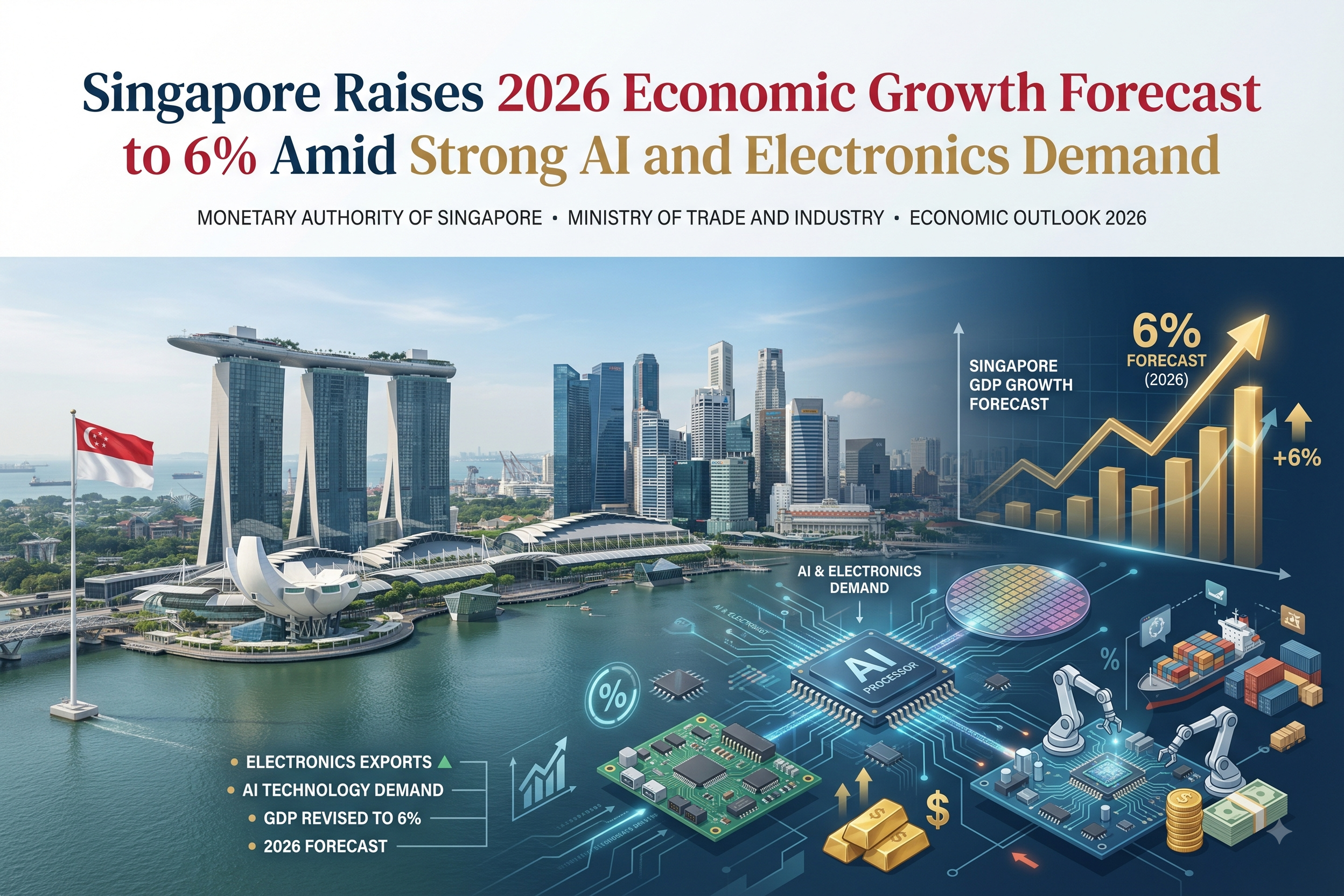
Singapore has upgraded its 2026 economic growth forecast to approximately 6%, reflecting stronger-than-expected global demand for artificial intelligence (AI) products, electronics and manufacturing exports. The upward revision highlights the country’s strong position in global technology supply chains and its ability to benefit from rising investment in digital infrastructure.
The revised forecast, announced by Singapore’s Ministry of Trade and Industry (MTI) on November 24, 2026, represents an improvement from its earlier projection of 4.5% to 5.5%. The development signals growing confidence in Singapore’s economic performance despite ongoing geopolitical tensions, international trade uncertainty and changing global financial conditions.
The latest outlook also demonstrates how artificial intelligence is becoming an increasingly important driver of international trade, manufacturing activity and economic growth.
Strong GDP Performance Drives Forecast Upgrade
Singapore’s economic performance during the third quarter of 2026 played an important role in the revised growth outlook.
The country’s gross domestic product (GDP) expanded by 6.1% year-on-year during July-September, exceeding the earlier advance estimate of 5.4%. On a seasonally adjusted quarter-on-quarter basis, the economy recorded growth of 1.5%.
For the first nine months of 2026, Singapore’s economy expanded by 6.2% compared with the corresponding period a year earlier. These figures provided a stronger foundation for the government to revise its full-year growth expectations.
The performance reflects the contribution of manufacturing, wholesale trade and financial services, with technology-related demand providing significant support.
Artificial Intelligence Becomes a Major Growth Driver
One of the most important factors behind Singapore’s economic momentum is the rapid expansion of global AI investment.
Businesses worldwide are increasing expenditure on data centres, advanced computing infrastructure, semiconductor technology and high-performance electronic equipment. These investments are creating additional demand for specialised machinery, electronic components and precision-engineered products.
Singapore is well positioned to benefit from this trend because of its established electronics manufacturing ecosystem, advanced industrial infrastructure and strategic role in international trade.
The expansion of data-centre infrastructure is also creating opportunities for companies involved in technology equipment, engineering, telecommunications and specialised services.
As businesses continue adopting AI across industries, demand for computing hardware and supporting infrastructure could remain an important source of export growth.
However, the sustainability of this expansion will depend on whether global technology investment continues at its current pace.
Electronics and Manufacturing Exports Strengthen
The electronics and precision engineering industries have become important contributors to Singapore’s economic performance.
Global demand for semiconductors, advanced electronic components and specialised machinery has supported manufacturing activity and international exports.
Singapore’s manufacturing sector benefits from its integration into international supply chains, particularly those connected with electronics, semiconductor equipment and advanced industrial technology.
Wholesale trade has also gained from stronger demand for machinery, equipment and supplies associated with global technology investment.
The country’s export outlook has improved alongside these developments. Enterprise Singapore reportedly upgraded its 2026 non-oil domestic exports growth forecast to 30%–32%, reflecting strong performance and continued AI-related demand.
This highlights the growing importance of technology-driven exports in supporting Singapore’s position as a major international trading and manufacturing centre.
Financial Services and International Investment
Apart from manufacturing and exports, Singapore’s financial services industry continues to contribute to economic activity.
The country is an important international financial centre, attracting banks, investment institutions, insurance companies and multinational businesses.
Growth in credit activity and fee-generating financial services has supported the sector’s performance. Singapore’s established regulatory framework, business environment and regional connectivity also help attract international capital.
A stronger economy can encourage additional business investment, increase demand for financial services and create opportunities across banking, asset management and insurance.
Nevertheless, global financial conditions remain important. Changes in international interest rates, currency movements and investor sentiment can influence capital flows and financial market activity.
Challenges Despite the Positive Outlook
Although the revised growth forecast reflects encouraging economic conditions, Singapore continues to face several challenges.
As a highly trade-dependent economy, the country remains exposed to changes in international demand, geopolitical tensions and disruptions to global supply chains.
Rising energy costs can increase operating expenses for manufacturers and transportation companies. Trade restrictions and changes in international technology regulations may also affect access to important markets and components.
Another concern is the sustainability of the global AI investment cycle. If businesses reduce spending on data centres and advanced computing infrastructure, demand for electronics and specialised machinery could weaken.
The Singapore government has therefore projected a more moderate GDP growth range of 2.5% to 4.5% for 2027, reflecting expectations of slower growth among major trading partners and a possible moderation in new AI investment.
Opportunities for Singapore’s Future Economy
The improved economic outlook creates opportunities for Singapore to strengthen its position in the global technology and manufacturing ecosystem.
Continued investment in semiconductor production, AI infrastructure, advanced engineering and digital services could support long-term productivity.
The country can also benefit from expanding regional trade relationships and attracting multinational companies seeking reliable locations for manufacturing, research and distribution.
Investment in workforce development will remain equally important. As industries adopt automation and AI technologies, employees will require new technical and digital skills.
Strengthening these capabilities can help Singapore maintain its competitiveness and ensure that economic growth creates opportunities across different sections of society.
The Worldonomics Times View
Singapore’s decision to raise its 2026 economic growth forecast to approximately 6% reflects the powerful influence of technology investment and international trade on modern economies.
The strong demand for AI products, electronics and manufacturing equipment has created significant opportunities for Singapore, demonstrating the importance of its advanced industrial ecosystem and global economic connectivity.
However, rapid growth driven by a particular industry can also create vulnerabilities. Heavy dependence on the global technology investment cycle may expose the economy to sudden changes in demand and international market sentiment.
The Worldonomics Times believes that Singapore should use its current economic momentum to strengthen industrial diversification, encourage technological innovation and develop a highly skilled workforce.
Continued investment in research, digital infrastructure, advanced manufacturing and financial services will be essential for maintaining long-term competitiveness.
The country must also remain prepared for external challenges, including geopolitical tensions, trade restrictions and fluctuations in global demand.
Strong economic growth is encouraging, but sustainable development requires a balance between technological advancement, economic diversification and financial stability.
Conclusion
Singapore’s decision to upgrade its 2026 GDP growth forecast to approximately 6% highlights the positive impact of global AI demand, electronics production and manufacturing exports.
Strong third-quarter economic performance and improved export prospects have strengthened confidence in the country’s near-term outlook.
Nevertheless, the expected moderation in growth during 2027 indicates that global economic uncertainty and changes in technology investment remain important considerations.
For Singapore, the priority will be to convert the current AI-driven growth opportunity into sustainable economic progress through innovation, diversification and continued investment in its industrial and financial capabilities.