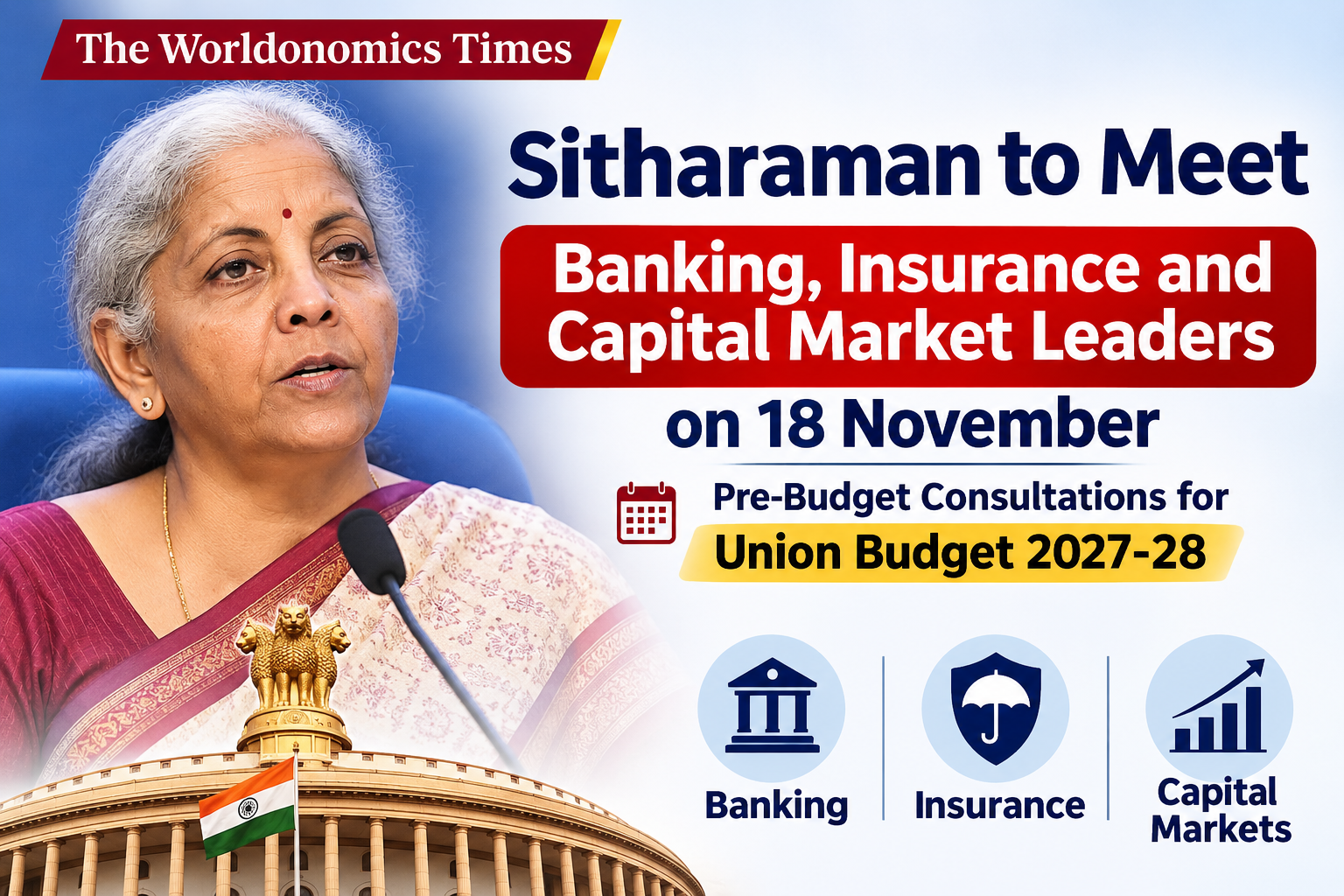
Finance Minister Nirmala Sitharaman is scheduled to meet representatives from the capital market, banking and insurance sectors on 18 November 2026 as part of consultations ahead of the Union Budget 2027-28. The discussions are expected to focus on financial-sector priorities, investment, credit growth, insurance penetration and reforms to strengthen India’s economic ecosystem.
The Government of India has started preparations for the Union Budget 2027-28, with Finance Minister Nirmala Sitharaman scheduled to hold consultations with key financial-sector stakeholders on 18 November 2026.
The meeting is expected to bring together representatives from the capital market, banking and insurance industries to discuss their expectations and policy recommendations for the upcoming Budget.
Pre-Budget consultations are an important part of the annual budget-making process. They provide an opportunity for industry participants, financial institutions and other stakeholders to communicate sector-specific concerns and suggest measures that could support economic growth.
According to Business Today, the upcoming meeting will provide a platform for stakeholders to raise their key demands and policy concerns ahead of the next Union Budget. Business Today
Banking Sector Expectations
The banking sector is expected to highlight several important issues concerning credit availability, financial inclusion and the overall health of the banking system.
Banks play a central role in supporting India’s economic growth by providing finance to businesses, households, infrastructure projects and government initiatives.
Some of the key areas likely to attract attention include:
- Strengthening credit availability for MSMEs.
- Improving access to affordable business finance.
- Enhancing digital banking infrastructure.
- Managing asset quality and credit risks.
- Supporting infrastructure and productive-sector lending.
- Expanding financial inclusion in rural and underserved areas.
Access to affordable credit remains particularly important for MSMEs, which frequently face financing constraints despite their contribution to employment, manufacturing and exports.
Capital Markets Seek a Stronger Investment Ecosystem
The capital market sector is another important participant in the consultation process.
India’s capital markets have become increasingly important for mobilising household savings and channelising investments into businesses.
Stakeholders may discuss measures to encourage long-term investments, improve market participation, strengthen investor protection and simplify capital-raising processes.
A stronger capital market ecosystem can help Indian companies access equity financing and reduce excessive dependence on traditional bank borrowing.
The development of corporate bond markets, improved market liquidity and wider participation by domestic investors are also important considerations for India’s financial-sector growth.
Insurance Sector: Expanding Coverage and Financial Protection
The insurance industry is expected to highlight the importance of increasing insurance penetration and improving financial protection across India.
Insurance plays an important role in protecting households and businesses against financial risks arising from health emergencies, accidents, property damage and other unexpected events.
Some key priorities for the sector include:
- Expanding life and health insurance coverage.
- Improving insurance accessibility in rural India.
- Encouraging affordable insurance products.
- Strengthening digital insurance distribution.
- Simplifying claims settlement and customer services.
- Promoting insurance awareness among MSMEs and small businesses.
Greater insurance penetration can strengthen household financial security and improve the resilience of India’s economy.
Union Budget 2027-28: Key Economic Priorities
The upcoming Union Budget will be important for maintaining India’s economic growth momentum while addressing emerging fiscal and financial challenges.
Several broad policy areas are likely to remain significant:
1. Infrastructure Investment: Continued public investment in roads, railways, ports, power and urban infrastructure can support long-term economic growth.
2. MSME Financing: Improved access to credit, technology and government procurement opportunities can strengthen smaller businesses.
3. Banking Reforms: Strengthening financial institutions and improving credit delivery will remain important for supporting investment.
4. Capital Market Development: Policies encouraging long-term savings and investment can support business expansion and capital formation.
5. Insurance Penetration: Greater financial protection can support inclusive economic development.
6. Digital Financial Services: Continued development of digital payments, fintech and financial infrastructure can improve efficiency and accessibility.
India’s Economic Growth and Budget Outlook
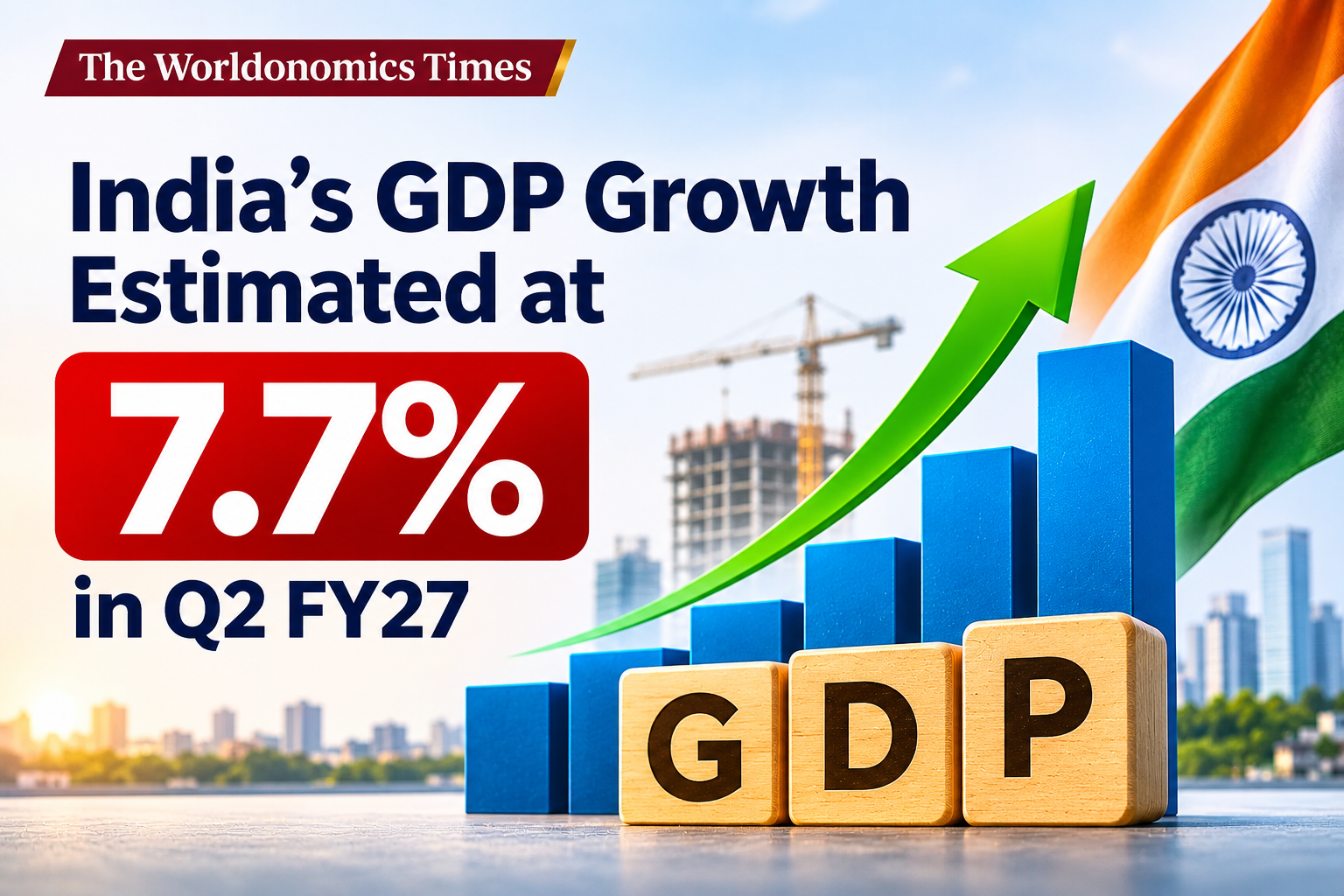
India’s economy is estimated to have grown by 7.7% in Q2 FY2026-27, according to an Economic Times poll of economists. The full-year growth estimate in the poll stands at 7.3%.
However, rising inflation remains an important concern. Retail inflation reached 6.09% in October 2026, crossing the RBI’s upper tolerance limit.
The government will therefore need to balance economic expansion, price stability, infrastructure investment and fiscal discipline while preparing the next Budget.
Why These Consultations Matter for Businesses
Pre-Budget consultations provide an opportunity for industry representatives to communicate practical challenges directly to policymakers.
For businesses, the Union Budget can influence taxation, financing costs, investment decisions, regulatory requirements and overall economic confidence.
MSME associations, professional institutions, banks, insurance companies and industry chambers can contribute by presenting recommendations supported by industry data and research.
Greater consultation between the government and the private sector can help ensure that budgetary measures address actual business requirements.
Conclusion
The Finance Minister’s proposed meeting with capital market, banking and insurance representatives on 18 November 2026 marks an important step in the preparation of Union Budget 2027-28.
The discussions will provide an opportunity for financial-sector stakeholders to present their expectations and policy recommendations.
As India continues its economic expansion, the upcoming Budget will be closely watched for measures supporting investment, credit availability, financial inclusion, MSME development and long-term economic competitiveness.
The Worldonomics Times | Economics, Banking & Government Policy