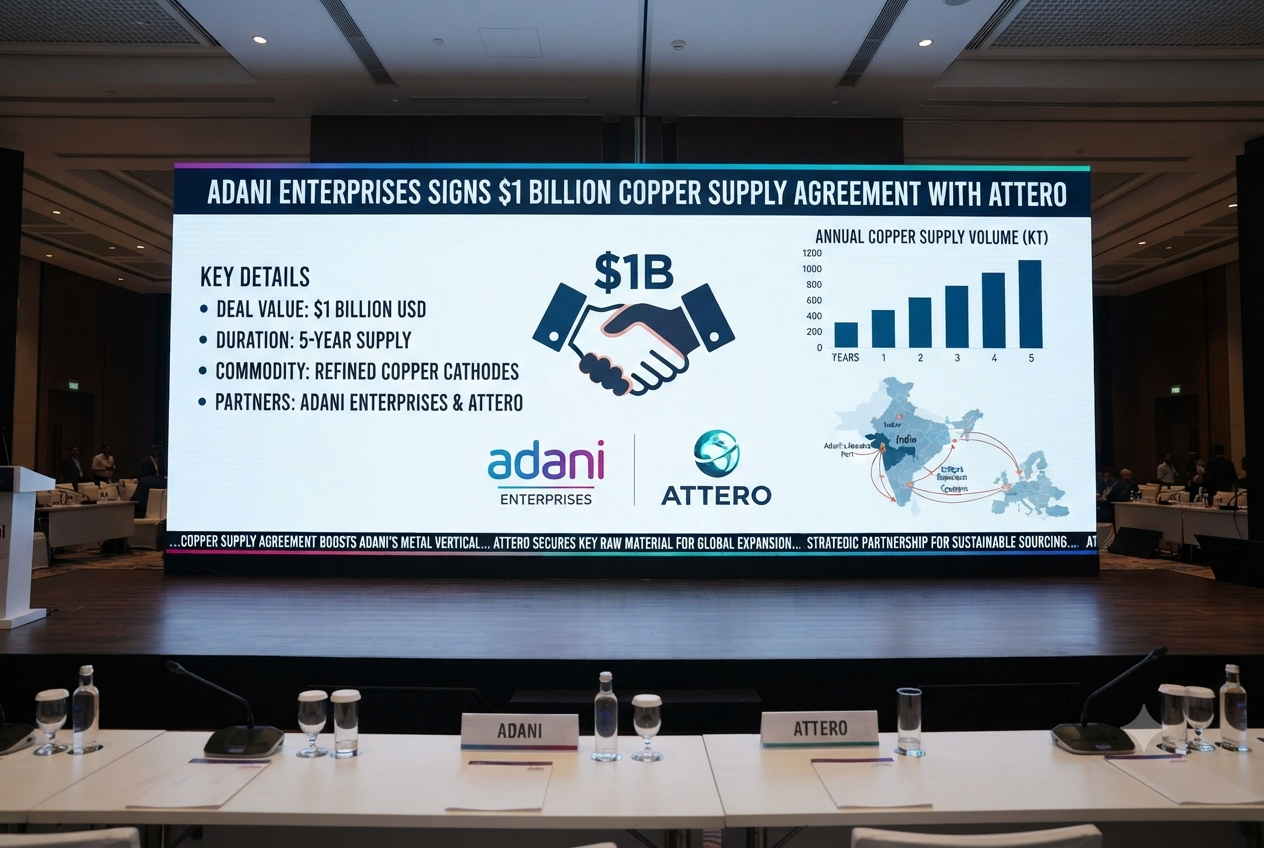
Adani Enterprises has reportedly entered into a three-year copper supply agreement worth approximately $1 billion with Indian recycling company Attero, securing an additional domestic source of copper anode for its Kutch Copper operations in Mundra, Gujarat. The agreement is expected to strengthen raw material availability, reduce dependence on imported copper feedstock and support the company’s plans to expand its copper manufacturing capacity.
According to a Reuters report published on November 24, 2026, the agreement requires Kutch Copper to purchase approximately 2,000 metric tonnes of copper anode every month from Attero. The estimated contract value is based on prevailing copper prices, with the information attributed to two people familiar with the arrangement. The agreement was reportedly signed around three months before its disclosure. Neither company had publicly announced the arrangement at the time of the report.
The development highlights the growing importance of domestic recycling and alternative raw material sourcing as India seeks to strengthen its position in the copper industry.
Key Details of the $1 Billion Copper Agreement
The reported agreement establishes a long-term supply arrangement between Adani’s Kutch Copper operations and Attero, a Noida-based company specialising in electronic waste and battery recycling.
Under the reported terms, Attero will supply 2,000 tonnes of copper anode per month over a three-year period. This translates into approximately 24,000 tonnes annually and 72,000 tonnes over the full contract duration, assuming deliveries continue at the stated rate.
The agreement is estimated to be worth around $1 billion at current market prices. However, the final value may vary with copper prices and the commercial terms governing deliveries.
A particularly important aspect is the expected reduction in Kutch Copper’s dependence on imported feedstock. The monthly supply arrangement is estimated to reduce the facility’s import reliance by approximately 5%, providing an additional domestic sourcing channel.
Attero to Supply Copper Recovered from Electronic Waste
The agreement also reflects the expanding role of recycling in India’s industrial raw material ecosystem.
Attero is expected to recover copper from discarded electronic equipment and used batteries and process the recovered material into copper anode for Kutch Copper.
Electronic waste contains valuable metals that can be recovered and reused through specialised recycling processes. Copper is particularly important because of its extensive use in electrical equipment, power infrastructure, construction, electronics and industrial machinery.
By converting discarded materials into usable industrial feedstock, recycling companies can help reduce the need for primary raw material extraction and improve resource efficiency.
For Adani, sourcing copper anode through Attero provides an opportunity to diversify its supply base. It also connects the company’s large-scale copper manufacturing operations with India’s developing circular economy and electronic waste recycling sector.
Kutch Copper Expansion Raises the Importance of Raw Material Security
Adani Enterprises began production at its Kutch Copper facility in Mundra, Gujarat, in 2025. The plant has an annual production capacity of approximately 500,000 tonnes.
The company has plans to double the facility’s capacity. If implemented, the expansion would significantly increase its requirement for reliable copper feedstock and strengthen its position in the domestic and international copper markets.
Large copper smelting and refining operations require consistent supplies of raw materials. Any disruption in sourcing can affect production schedules, operating costs and capacity utilisation.
The reported agreement with Attero therefore forms part of a broader effort to diversify procurement channels and establish more predictable access to copper-bearing materials.
However, the 2,000-tonne monthly supply represents only a portion of the facility’s overall material requirements. Imported concentrates and other raw material sources will continue to play an important role in supporting production.
India Continues to Depend on Imported Copper Feedstock
The agreement comes at a time when India is seeking to strengthen its domestic copper supply chain.
According to figures cited in the Reuters report, India has nearly 1.3 million tonnes of annual copper refining capacity. However, the country continues to depend on imported copper concentrates and refined metal, while some processing facilities operate below capacity.
India produced approximately 704,000 tonnes of refined copper during the financial year beginning April 2025, compared with around 573,000 tonnes in the previous financial year.
The country’s copper imports remained substantial. According to data from commodities consultancy BigMint cited by Reuters, India’s total copper imports stood at 859,509 tonnes in 2025–26, marginally lower than the previous year.
These figures demonstrate the gap between domestic processing capacity and the availability of suitable raw materials.
Copper is a strategically important industrial metal because it is essential for electricity transmission, renewable energy installations, electric vehicles, electronics, telecommunications and infrastructure development. As these industries expand, the requirement for dependable copper supplies is expected to remain significant.
Adani’s Broader Strategy to Secure Copper Resources
The Attero agreement is not the only development in Adani’s efforts to strengthen its copper sourcing strategy.
Earlier in November 2026, Adani signed an agreement with Chile’s state-owned copper producer Codelco to invest in developing the Kaburkaala copper exploration project in Chile’s Antofagasta region.
The proposed project could provide another potential source of long-term copper supply, complementing the company’s domestic sourcing arrangements.
Together, the reported Attero agreement and the Chile exploration partnership indicate an effort to diversify supply across recycling, domestic procurement and international resource development.
Such diversification may become increasingly important as competition for copper intensifies globally. Demand from renewable energy, electric mobility, data centres and power infrastructure is increasing the strategic importance of the metal.
Opportunities and Challenges for the Copper Industry
The reported agreement could create benefits for both companies.
For Adani Enterprises, a domestic recycling-based supply arrangement offers an additional source of copper anode and may help reduce exposure to international supply disruptions. It also supports the company’s longer-term expansion ambitions.
For Attero, the agreement provides a large industrial customer for copper recovered through its recycling operations. A predictable demand channel could support investments in processing capacity, technology and electronic waste collection.
Nevertheless, several factors will determine the long-term effectiveness of the arrangement. These include the availability of sufficient electronic waste, the quality and consistency of recovered copper, processing costs, logistics and fluctuations in global copper prices.
Recycling can improve resource security, but it cannot independently meet the entire raw material requirement of a large copper smelter. A combination of domestic production, imports, recycling and international sourcing will remain important.
The Worldonomics Times View
Adani Enterprises’ reported $1 billion copper supply agreement with Attero reflects an important shift towards diversified and recycling-based industrial procurement. By sourcing copper anode recovered from electronic waste and batteries, the company is seeking to strengthen raw material availability while reducing a portion of its dependence on imported feedstock.
The agreement also highlights the growing commercial importance of India’s recycling industry. As demand for copper rises across renewable energy, electric mobility, electronics and infrastructure, recovering valuable metals from discarded products could become an increasingly important part of the country’s industrial supply chain.
However, the reported 5% reduction in import dependence should be viewed in perspective. The arrangement is a supplementary supply source rather than a complete solution to India’s copper feedstock requirements. Its long-term impact will depend on reliable deliveries, competitive processing costs and the ability of recycling companies to scale operations.
Conclusion: Adani Enterprises’ reported three-year copper supply agreement with Attero, estimated at approximately $1 billion, marks a significant development in India’s copper and recycling industries. With monthly supplies of around 2,000 tonnes of recycled copper anode, the arrangement is expected to support Kutch Copper’s operations and reduce its reliance on imported feedstock by approximately 5%. Alongside its planned capacity expansion and international sourcing initiatives, the agreement reflects Adani’s broader strategy to strengthen its position in the copper sector.