For decades, corporate performance has largely been evaluated through financial statements, profitability, revenue growth and shareholder returns.
But is financial performance alone enough to determine whether a company is truly successful?
In today’s business environment, investors, regulators, customers and other stakeholders increasingly want to understand how companies impact the environment, treat their employees, manage resources and maintain ethical business practices.
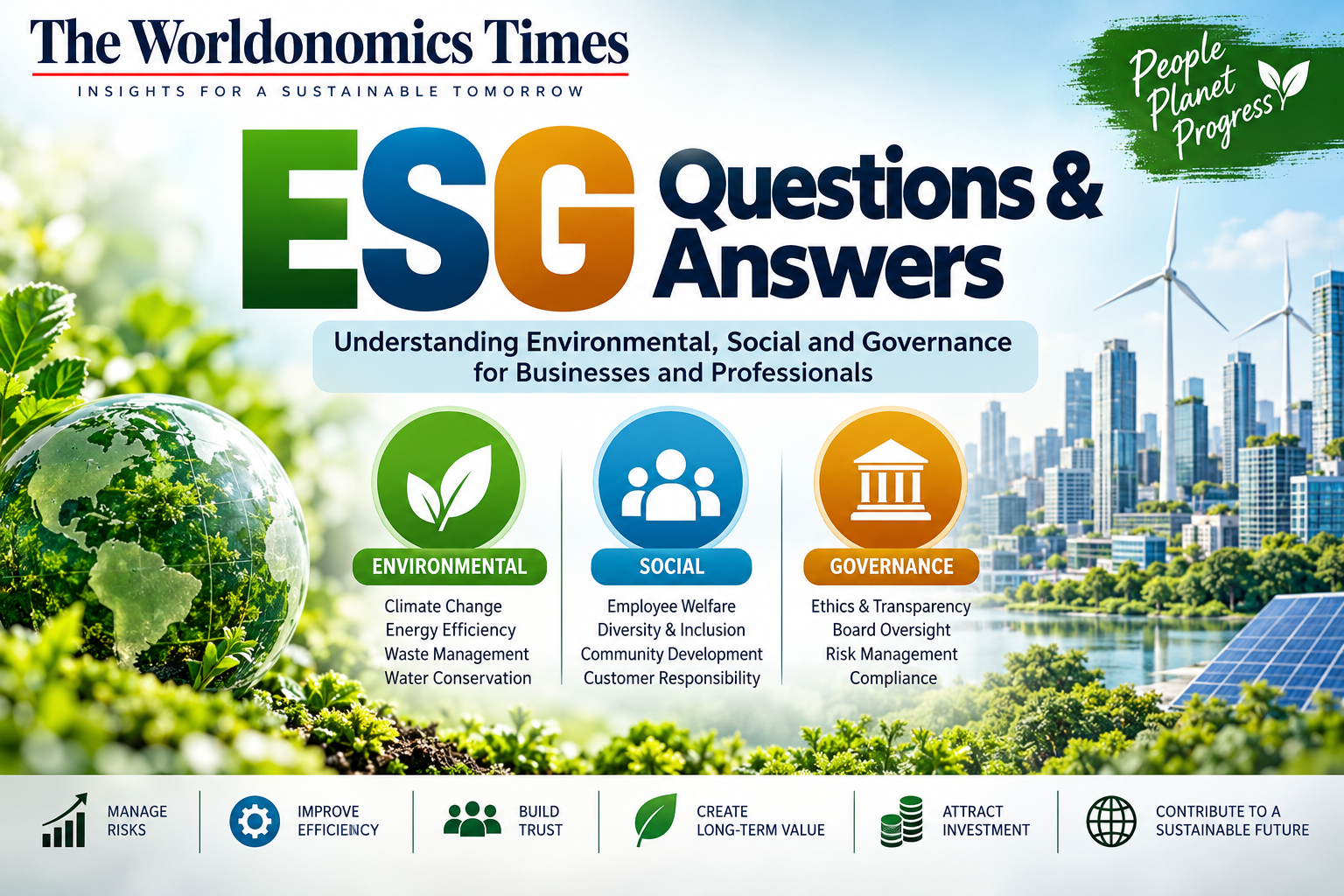
This shift has brought Environmental, Social and Governance (ESG) considerations into the centre of corporate reporting.
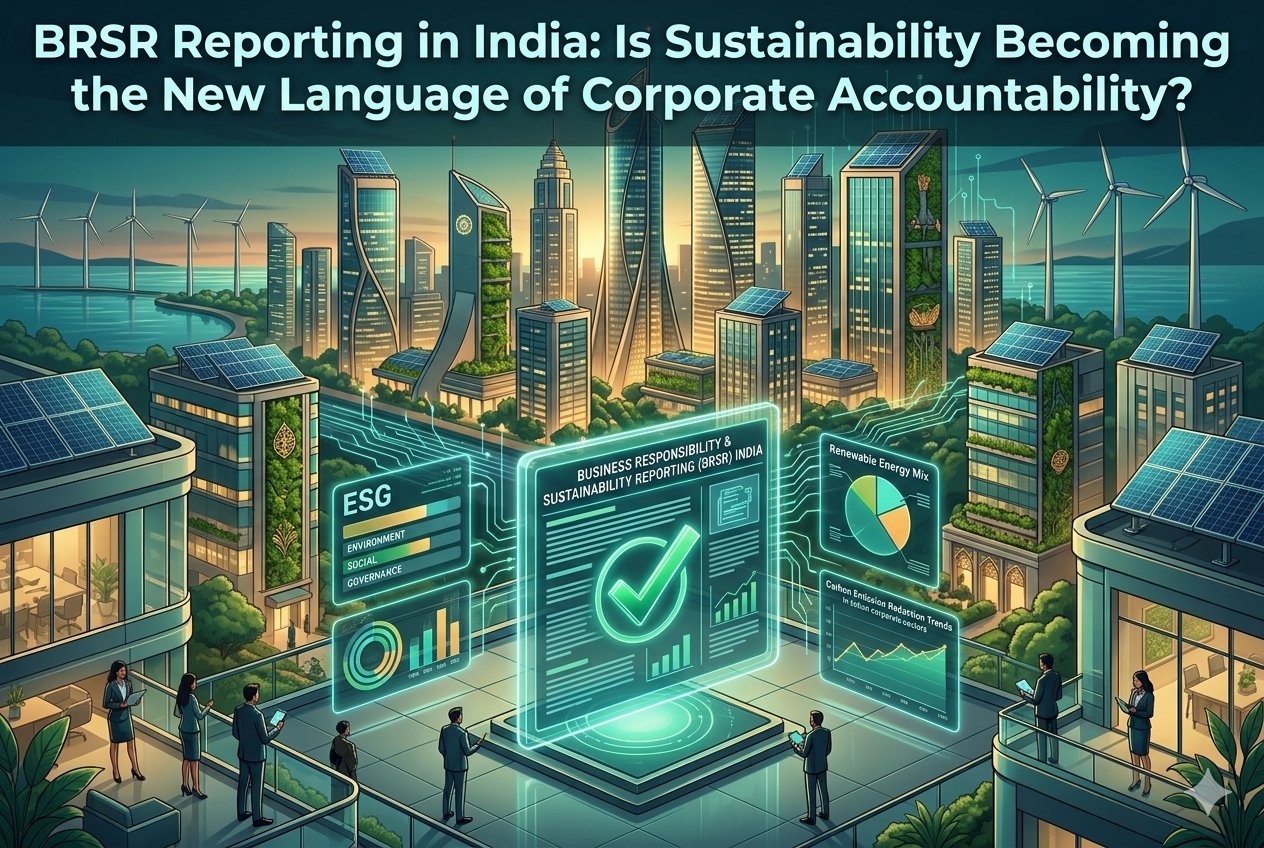
In India, one important step in this direction is the introduction of Business Responsibility and Sustainability Reporting (BRSR) by the Securities and Exchange Board of India (SEBI).
BRSR is transforming the way listed companies communicate their sustainability performance and broader responsibilities towards society.
1. What Is BRSR?
Business Responsibility and Sustainability Reporting (BRSR) is a reporting framework introduced by SEBI to encourage listed companies to disclose information about their environmental, social and governance performance.
It replaced the earlier Business Responsibility Report (BRR) framework and is aligned with the National Guidelines on Responsible Business Conduct (NGRBC).
The framework aims to improve transparency, accountability and consistency in sustainability-related disclosures.
In simple terms, BRSR helps stakeholders understand not only how much profit a company generates, but also how responsibly it conducts its business.
2. Who Is Required to File BRSR in India?
SEBI initially introduced BRSR on a voluntary basis for the top 1,000 listed entities by market capitalisation for FY 2021–22.
It became mandatory from FY 2022–23 for the top 1,000 listed entities.
These companies are required to include their BRSR disclosures in their annual reports under Regulation 34(2)(f) of the SEBI (Listing Obligations and Disclosure Requirements) Regulations, 2015.
This requirement places sustainability reporting alongside other important corporate disclosures.
3. Understanding the Nine Principles of BRSR
The BRSR framework is based on the nine principles of the National Guidelines on Responsible Business Conduct.
Principle 1: Ethics, Transparency and Accountability
Businesses should conduct themselves with integrity and ensure transparent and accountable governance.
Principle 2: Sustainable Products and Services
Companies should provide goods and services in a manner that is sustainable and safe throughout their life cycle.
Principle 3: Employee Well-being
Businesses should respect and promote the well-being of employees, including workers across their value chains.
Principle 4: Stakeholder Engagement
Companies should respect the interests of all stakeholders and respond to their concerns.
Principle 5: Human Rights
Businesses should respect and promote human rights throughout their operations.
Principle 6: Environmental Protection
Companies should respect and make efforts to protect and restore the environment.
Principle 7: Responsible Public Policy Advocacy
Businesses should engage responsibly with public and regulatory policy.
Principle 8: Inclusive Growth
Companies should promote inclusive growth and equitable development.
Principle 9: Consumer Value
Businesses should provide value to consumers responsibly while protecting their interests.
Together, these principles establish a broader approach to responsible corporate conduct.
4. Understanding the Structure of BRSR
BRSR is designed to provide structured information about a company’s sustainability performance.
Its reporting format broadly consists of three sections:
Section A – General Disclosures
This section covers basic organisational information, business activities, employee details, operational locations and other relevant company information.
Section B – Management and Process Disclosures
This section explains how the company integrates the nine principles into its policies, procedures, governance structure and business operations.
Section C – Principle-wise Performance Disclosures
This section contains essential and leadership indicators relating to the company’s performance against each of the nine principles.
These disclosures help stakeholders evaluate whether a company’s sustainability commitments are reflected in its actual business practices.
5. What Is BRSR Core and Why Is It Important?
To strengthen the reliability and comparability of sustainability information, SEBI introduced BRSR Core in July 2023.
BRSR Core is a subset of BRSR containing selected key performance indicators (KPIs) and metrics across nine ESG attributes.
It focuses on measurable information, including areas such as:
- Greenhouse gas emissions.
- Water consumption and recycling.
- Energy consumption.
- Waste management.
- Employee health and safety.
- Gender diversity and wages.
- Responsible business conduct.
- Employment generation in smaller towns.
An important feature is the requirement for third-party assessment or assurance of BRSR Core disclosures according to the applicable regulatory framework.
This helps improve the credibility of reported sustainability information and reduces the risk of misleading environmental claims.
BRSR Core: Applicability Timeline
SEBI has introduced a phased implementation approach based on market capitalisation.
| Financial year | Applicable listed entities |
|---|---|
| FY 2023–24 | Top 150 |
| FY 2024–25 | Top 250 |
| FY 2025–26 | Top 500 |
| FY 2026–27 | Top 1,000 |
The revised framework permits third-party assessment or assurance, as applicable, rather than making assurance the only route.
6. ESG Reporting Across the Value Chain
A company’s sustainability performance does not depend only on its direct operations.
Suppliers, distributors, logistics providers and other business partners can also influence its environmental and social impact.
Recognising this, SEBI introduced ESG disclosures for the value chain of the top 250 listed entities.
Under the revised framework introduced in March 2025:
- Value-chain ESG disclosures are voluntary from FY 2025–26.
- Assessment or assurance of these disclosures is voluntary from FY 2026–27.
- The framework focuses on significant upstream and downstream partners, subject to the applicable thresholds and reporting provisions.
This encourages companies to look beyond their own operations and consider sustainability throughout their business relationships.
7. Challenges in Implementing BRSR
Although BRSR represents an important development in corporate reporting, its implementation presents several challenges.
Data Collection and Accuracy
Companies need reliable information from multiple departments and operational locations. Collecting accurate ESG data can be difficult, particularly where systems are not integrated.
Cost of Compliance
Measuring emissions, monitoring resource consumption and obtaining third-party assessments can increase compliance costs.
Greenwashing Risks
Companies may present their sustainability initiatives more positively than their actual performance. Reliable assessment and transparent reporting are essential to address this risk.
Value-Chain Transparency
Collecting reliable sustainability information from suppliers and smaller business partners can be challenging.
Lack of Technical Expertise
Organisations need professionals who understand sustainability metrics, reporting standards, regulatory requirements and data verification.
8. What Does BRSR Mean for Finance Professionals?
BRSR creates an important opportunity for finance and accounting professionals.
Traditionally, financial reporting has focused on monetary transactions and financial performance. Sustainability reporting introduces additional dimensions that require systematic measurement, documentation and verification.
Finance professionals can contribute by:
- Establishing internal controls over ESG data.
- Monitoring environmental and social performance indicators.
- Evaluating sustainability-related financial risks.
- Analysing energy costs and resource efficiency.
- Supporting BRSR disclosures and regulatory compliance.
- Coordinating with independent assessment and assurance professionals.
For Cost Accountants in particular, areas such as cost measurement, energy efficiency, resource utilisation and performance analysis provide valuable opportunities to contribute.
The future of corporate reporting will increasingly require professionals who can understand both financial and non-financial information.
9. The Road Ahead: From Compliance to Corporate Responsibility
BRSR should not be treated merely as another regulatory filing.
Its real purpose is to encourage companies to integrate responsible business practices into their strategies and decision-making processes.
A company may report impressive revenue growth and profitability, but its long-term success also depends on how efficiently it uses resources, treats its workforce, manages risks and maintains stakeholder trust.
Sustainability reporting can help bridge the gap between corporate promises and measurable performance.
Conclusion
The meaning of corporate success is evolving.
Financial profitability remains important, but businesses are increasingly expected to demonstrate responsibility towards the environment, employees, society and other stakeholders.
Through BRSR, India is taking an important step towards making sustainability an integral part of corporate accountability.
The challenge now is to ensure that these disclosures represent genuine performance rather than simply fulfilling regulatory requirements.
Because the future of corporate success will not be determined only by how much a company earns, but also by how responsibly it creates that wealth.
In the evolving world of business, transparency builds trust, accountability strengthens governance, and sustainability creates long-term value.