Introduction
The Central Board of Direct Taxes (CBDT) has introduced a new regulatory framework governing the merger of charitable and non-profit organisations through the Income-tax (Eighth Amendment) Rules, 2026, notified vide Notification No. 139/2026 dated 30 October 2026.
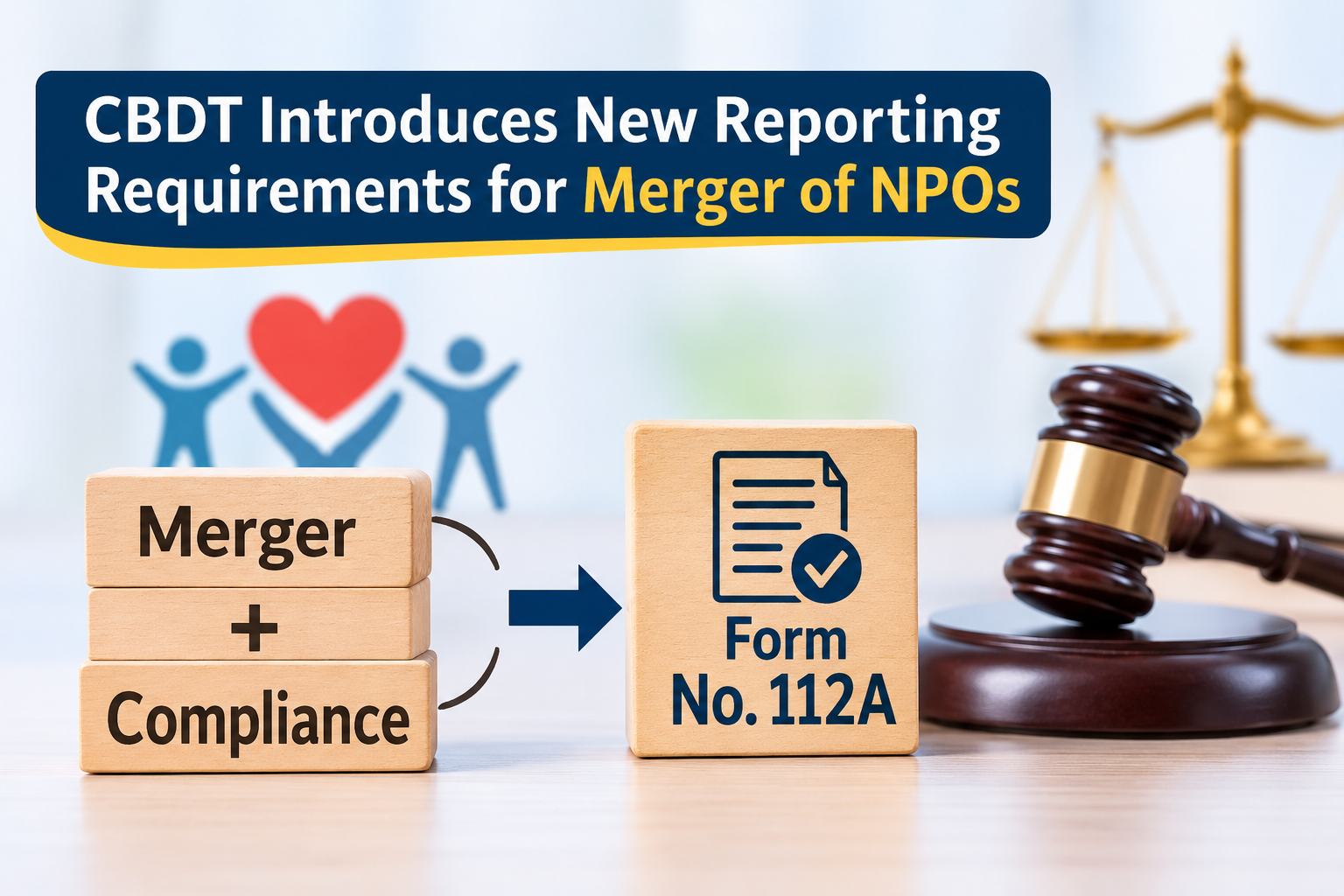
The amendment introduces Rule 189A and Form No. 112A, prescribing a mechanism for intimating the merger of registered non-profit organisations having identical or similar objectives.
This development is particularly significant for charitable trusts, societies, Section 8 companies and other eligible non-profit institutions seeking to consolidate their operations, resources and charitable activities under a common organisational structure.
1. Background and Need for the Amendment
Charitable and non-profit organisations often undertake activities in similar fields, such as education, healthcare, poverty alleviation, environmental protection and social welfare. In certain situations, two or more organisations may decide to merge to improve administrative efficiency, avoid duplication of activities and utilise their financial and human resources more effectively.
However, such mergers involve important income-tax considerations, particularly concerning the transfer of assets, accumulated income, liabilities and continuity of registration under the Income-tax Act.
The newly introduced framework seeks to provide a prescribed procedure for reporting such mergers and ensuring that the consolidation takes place in accordance with the applicable income-tax requirements.
2. Introduction of Rule 189A
The amendment introduces Rule 189A, which provides the prescribed framework for intimating the merger of eligible registered non-profit organisations.
The provision is intended to regulate the reporting of mergers where the organisations have identical or similar charitable or non-profit objectives.
The introduction of this rule brings greater procedural clarity and provides a formal mechanism for communicating merger-related information to the Income-tax Department.
3. Introduction of Form No. 112A
One of the significant features of the amendment is the introduction of Form No. 112A, which is prescribed for furnishing information regarding the merger of eligible non-profit organisations.
The form provides a standardised reporting mechanism through which the relevant merger particulars can be communicated to the Income-tax Department.
Organisations undertaking such mergers should carefully examine the prescribed form and ensure that the required particulars and supporting information are furnished accurately within the applicable time limit.
4. Key Aspects of the New Framework
The important features of the amendment can be summarised as follows:
- Prescribed merger procedure: A formal mechanism has been introduced for intimating the merger of eligible non-profit organisations.
- Similar objectives: The framework covers organisations having identical or similar objectives.
- Mandatory reporting mechanism: Form No. 112A has been introduced for merger-related reporting.
- Regulatory compliance: Eligible organisations must examine the applicable conditions and procedural requirements before undertaking a merger.
- Greater transparency: The prescribed reporting framework is intended to improve transparency regarding organisational restructuring and consolidation.
5. Practical Implications for Charitable Trusts and NGOs
The amendment is particularly relevant for charitable institutions planning organisational restructuring or consolidation.
Before proceeding with a merger, organisations should carefully evaluate the following aspects:
- Registration status: Verify the eligibility and registration status of the organisations under the applicable provisions of the Income-tax Act.
- Objects and activities: Examine whether the charitable objects of the merging organisations are identical or sufficiently similar.
- Assets and liabilities: Properly document the transfer of assets, liabilities and other financial obligations.
- Accumulated income: Evaluate the tax implications associated with accumulated income and its utilisation or transfer.
- Regulatory compliance: Ensure that the merger is supported by appropriate resolutions, legal documentation and prescribed intimations, including Form No. 112A wherever applicable.
It is important to note that merely filing a merger intimation should not be assumed to automatically transfer or preserve the tax registration or exemption status of the merging organisations. The applicable statutory conditions must be independently examined.
6. Conclusion
The introduction of Rule 189A and Form No. 112A through the Income-tax (Eighth Amendment) Rules, 2026 represents an important procedural development for charitable trusts, NGOs and other non-profit organisations.
The amendment provides a structured reporting framework for mergers between eligible organisations having identical or similar objectives. It is expected to facilitate greater transparency and compliance in the process of organisational consolidation.
Charitable institutions contemplating mergers should review the newly prescribed requirements and obtain appropriate professional advice to ensure that the restructuring is undertaken without adversely affecting their income-tax exemptions and regulatory compliance.