By The Worldonomics Times
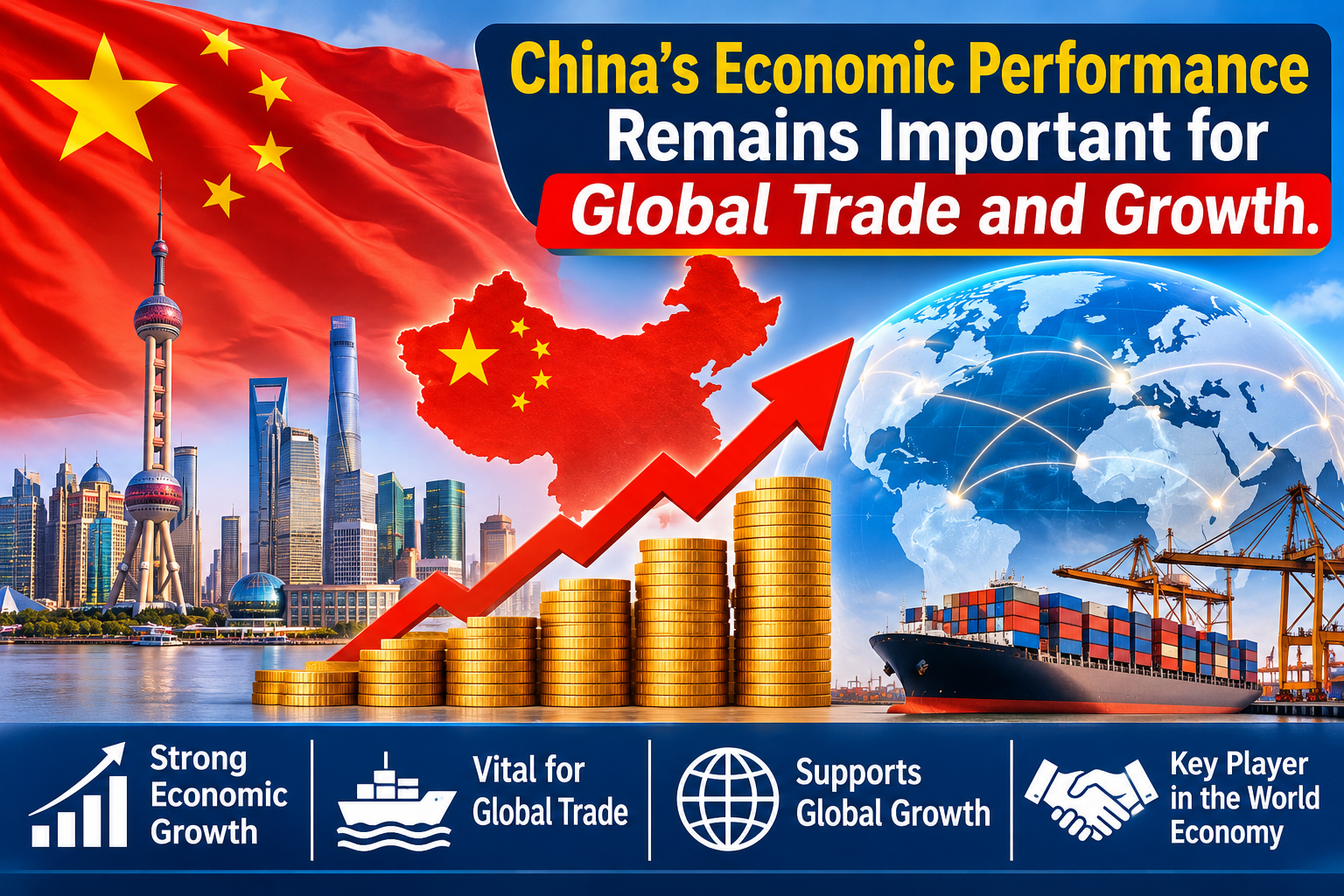
China continues to play a central role in the global economy. As the world’s second-largest economy, a major manufacturing centre and one of the largest participants in international trade, its economic performance has a direct influence on global supply chains, commodity prices, investment decisions and economic growth. Changes in Chinese production, consumption and trade patterns are closely watched by governments, investors and businesses worldwide.
In 2026, China’s economy has demonstrated resilience, supported by strong exports, industrial development and growing demand for advanced technology products. However, challenges related to domestic consumption, property markets and international trade relations continue to shape its economic outlook.
Economic Growth Shows Resilience
China’s economy grew by 4.5% year-on-year in the third quarter of 2026, improving from 4.3% in the second quarter. Growth during the first three quarters reached 4.6%, according to China’s National Bureau of Statistics. Industrial production and services activity remained important contributors, reflecting the country’s continuing shift towards technology-driven and higher-value economic activity.
High-tech manufacturing has emerged as a significant growth driver. Industries connected with industrial robotics, batteries, electronics and advanced equipment are expanding, strengthening China’s position in global manufacturing. The services sector has also recorded growth, particularly in information technology, software and business services.
Nevertheless, the recovery remains uneven. Consumer spending has been relatively subdued, while the property sector continues to face significant pressure. These conditions highlight the importance of strengthening household confidence and encouraging more balanced sources of economic growth.
International Trade Remains a Major Strength
China’s trade performance has been one of the strongest features of its economy in 2026. According to official customs figures, the country’s total imports and exports reached 44.81 trillion yuan during the first ten months of the year, representing a 20% increase compared with the same period in 2025.
Imports grew by 23.6%, while exports increased by 17.6%. Strong demand for electronic components, machinery and technology-related products contributed to export growth. Integrated circuits and memory components were among the categories recording particularly rapid expansion.
China’s trade with ASEAN countries, the European Union and other developing economies also reflects its extensive international commercial relationships. These connections make the country’s economic performance important not only for its immediate trading partners but also for businesses operating across wider global supply networks.
However, strong export performance also creates challenges. Large trade surpluses and growing competition in sectors such as electric vehicles, batteries and industrial equipment can increase trade tensions. Governments in several major markets are increasingly examining the impact of Chinese exports on domestic manufacturers and employment.
Global Supply Chains and Commodity Markets
China’s position as a major manufacturing and industrial centre means that changes in its economic activity can influence production costs and supply availability worldwide. Industries including electronics, automobiles, renewable energy, machinery, chemicals and consumer goods depend on Chinese manufacturing capacity or components sourced from the country.
When Chinese industrial production expands, demand for energy, metals and other raw materials can increase, influencing international commodity markets. Conversely, a slowdown in manufacturing or construction can reduce demand for industrial commodities and affect exporters in resource-dependent economies.
China’s growing role in clean-energy technologies is also significant. Its production of electric vehicles, lithium-ion batteries and solar-related products contributes to the global energy transition. At the same time, competition in these industries is encouraging other countries to strengthen their own manufacturing capabilities and diversify supply chains.
Challenges Could Influence the Global Outlook
Despite its strong trade performance, China faces several structural and economic challenges. Weak domestic demand remains a concern, as cautious household spending can limit the contribution of consumption to overall growth. The prolonged adjustment in the property sector has also affected investment, business confidence and household wealth.
Official data showed that retail sales of consumer goods increased by only 1.1% in the first three quarters of 2026, while investment in real estate development declined by 20.6%. These figures underline the gap between the strength of external trade and the slower pace of some domestic economic activities.
International uncertainties add another layer of pressure. Trade restrictions, geopolitical tensions and changes in global demand could affect export-oriented industries. The World Bank has highlighted the importance of strengthening household consumption and social protection to support a more balanced growth model.
The International Monetary Fund’s October 2026 outlook also points to a challenging global environment, with projected world economic growth of 3.1% for the year. In such conditions, developments in a major economy such as China can have substantial consequences for international business confidence and trade.
Implications for India
China’s economic performance has important implications for India. The two countries are connected through trade in electronics, machinery, chemicals, industrial components and other manufactured goods. Changes in Chinese production and export prices can influence the cost and availability of inputs for Indian manufacturers.
Strong Chinese demand can also create opportunities for Indian exporters, particularly in sectors supplying raw materials, agricultural products and selected industrial goods. However, competition from Chinese manufacturers remains an important consideration for Indian businesses seeking to expand domestic production and international market share.
For India, the key priority is to strengthen manufacturing capacity, improve logistics, encourage research and development and diversify international supply-chain partnerships. Initiatives supporting electronics manufacturing, renewable energy, infrastructure and industrial investment can help Indian companies become more competitive while reducing excessive dependence on any single source of supply.
The Worldonomics Times View
China’s economic performance remains a major influence on the direction of the global economy. Its strong trade figures, advanced manufacturing capabilities and expanding technology industries demonstrate its continued importance in international commerce. At the same time, domestic demand challenges, property-sector weakness and trade tensions show that maintaining sustainable growth will require further economic adjustment.
For the global economy, a stable and balanced Chinese recovery would support trade, investment and industrial activity across multiple regions. However, long-term stability will depend on more than export growth. Stronger household consumption, productive investment, transparent trade relations and cooperation with international partners will be equally important.
The Worldonomics Times believes that China’s next phase of growth will be significant not only for its domestic economy but also for the future of global trade. Countries that understand these changes, diversify their economic relationships and invest in competitive industries will be better positioned to benefit from opportunities while managing the risks associated with an evolving global economic landscape.