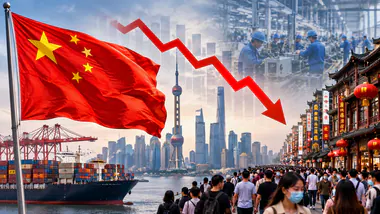
China’s economy continues to demonstrate strength in manufacturing, international trade and technological development. However, weaker domestic consumption, cautious household spending and structural economic challenges are raising questions about the sustainability of its growth model.
China remains one of the world’s most influential economic powers, playing a central role in global manufacturing, international trade and technological innovation. Despite its significant industrial capabilities and strong export presence, the country faces an important economic challenge: strengthening domestic demand.
While exports and technology-related investments continue to support economic activity, weaker household consumption is creating an imbalance in the country’s growth structure. The government faces the difficult task of encouraging domestic spending while maintaining industrial competitiveness and navigating an increasingly complicated international economic environment.
The situation is particularly significant because China’s economic performance has substantial implications for global supply chains, commodity markets, international investment and the broader outlook for emerging economies.
Export Strength Continues to Support Growth
International trade remains a major pillar of China’s economic model. The country has established itself as a leading manufacturing and exporting hub, supplying products ranging from electronics and machinery to automobiles, industrial equipment and consumer goods.
Chinese manufacturers benefit from extensive industrial infrastructure, established supply chains, competitive production capabilities and significant investment in technology. These advantages have helped the country maintain an important position in international markets.
Exports also provide employment opportunities, support industrial production and contribute to economic activity across manufacturing regions.
However, greater reliance on overseas demand creates vulnerabilities. Changes in global consumer spending, trade restrictions, tariffs and geopolitical tensions can affect export performance. Increasing competition from other manufacturing economies also presents challenges for Chinese businesses.
Consequently, strengthening domestic consumption has become increasingly important for achieving a more balanced and sustainable economic structure.
Weak Domestic Consumption Remains a Concern
One of the most significant challenges facing China’s economy is relatively cautious household spending.
Consumer confidence can be influenced by several factors, including employment expectations, income growth, property-market conditions and household financial security. When consumers feel uncertain about their future economic prospects, they may prefer saving rather than making discretionary purchases.
China’s property-sector difficulties have also affected household confidence. Real estate represents an important component of household wealth, and prolonged weakness in the housing market can influence consumer sentiment, investment decisions and spending behaviour.
Additionally, concerns about employment opportunities and future income stability can encourage households to maintain higher savings.
This situation creates a challenge for policymakers because consumer spending is essential for supporting domestic businesses, stimulating service-sector activity and reducing excessive dependence on exports and investment.
Technology Investment Becomes a Strategic Priority
While domestic consumption remains relatively weak, China continues to prioritise investment in advanced technology and industrial development.
Artificial intelligence, electric vehicles, semiconductor manufacturing, robotics, renewable energy and advanced electronics have become important areas of strategic investment.
The country is attempting to strengthen its technological capabilities, improve industrial productivity and reduce dependence on foreign technology in critical sectors.
China’s electric vehicle industry and renewable energy manufacturing capabilities demonstrate the scale of its industrial transformation. Investments in automation and digital infrastructure are also helping businesses modernise production processes and improve efficiency.
However, technology-related investment alone cannot guarantee balanced economic growth. Long-term success will depend on whether innovation generates sustainable employment, improves household incomes and creates stronger domestic demand.
Property Sector and Financial Confidence
The property sector remains an important consideration in China’s economic outlook.
For many households, residential property represents a major component of personal wealth. Weakness in property prices and construction activity can therefore affect consumer confidence and spending decisions.
The sector’s difficulties can also influence local government finances, employment and demand for construction materials, steel and other industrial products.
Policymakers have introduced various measures aimed at stabilising the property market and supporting economic activity. However, restoring confidence requires time and sustained improvements in market conditions.
A stable property sector would help reduce uncertainty among households, investors and businesses.
Global Trade Implications and International Competition
China’s economic challenges extend beyond its domestic market. As a major exporter, changes in its manufacturing output and trade strategy influence businesses and consumers worldwide.
Strong export performance can provide international markets with competitively priced products, while also increasing competition for manufacturers in other countries.
Trade tensions and concerns regarding industrial overcapacity may encourage additional tariffs, restrictions and changes in international sourcing strategies.
For emerging economies, China’s changing economic priorities create both opportunities and challenges. Countries such as India may benefit from supply-chain diversification and opportunities to attract manufacturing investment, while also facing competition in international markets.
The future of global trade will depend partly on how China balances export competitiveness with domestic economic development.
The Road Ahead: Rebalancing the Growth Model
China’s long-term economic prospects will depend on its ability to strengthen household consumption, improve consumer confidence and encourage sustainable private-sector investment.
Measures supporting employment, income growth, social security, healthcare and household financial stability could encourage consumers to spend more confidently.
At the same time, continued investment in technology, infrastructure and industrial innovation will remain important for maintaining competitiveness.
A more consumption-driven economic model would help China reduce its dependence on external demand and create a stronger foundation for sustainable growth.
The Worldonomics Times View
China stands at an important turning point in its economic development. Its manufacturing strength, technological capabilities and global trade presence remain significant advantages. However, an economy cannot depend indefinitely on exports and investment without developing a strong domestic consumption base.
The Worldonomics Times believes that strengthening household confidence must become a central economic priority for Chinese policymakers. Improving employment opportunities, supporting household incomes, stabilising the property market and expanding social protection could encourage greater consumer spending.
Technology investment should continue, but its benefits must translate into broader economic opportunities, productivity improvements and stronger purchasing power.
China’s economic transition also carries important lessons for other developing economies: sustainable growth requires a healthy balance between exports, investment and domestic consumption.
Ultimately, China’s next phase of economic success will depend not only on how much it produces and exports, but also on how confidently its own people participate in the economy. A stronger domestic consumer market could provide the foundation for more balanced growth and greater long-term economic stability.