The Worldonomis Times
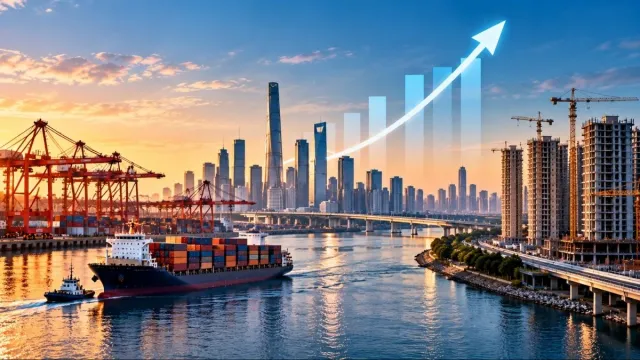
Developing economies across the world are increasingly focusing on attracting international investment, strengthening financial institutions, and building resilient economic systems to support long-term growth. As global markets face uncertainty from changing interest rates, currency fluctuations, geopolitical tensions, and evolving trade policies, emerging nations are recognising the importance of stable financial conditions and sustainable investment.
Countries across Asia, Africa, Latin America, and the Middle East are working to improve their investment environments, modernise infrastructure, expand industrial capabilities, and encourage private-sector participation. These efforts are aimed at generating employment, improving living standards, strengthening domestic industries, and increasing their participation in international trade.
However, achieving these objectives requires more than attracting foreign capital. Developing economies must also address structural challenges such as infrastructure gaps, public debt, inflation, limited access to finance, and regulatory uncertainty.
Foreign Investment Becomes a Growth Priority
Foreign investment plays an important role in the economic development of emerging nations. International capital can support infrastructure projects, manufacturing facilities, technology development, renewable energy, and industrial expansion.
Foreign direct investment (FDI) is particularly valuable because it can provide long-term financial resources, technical expertise, management capabilities, and access to international markets.
Governments are therefore introducing investment-friendly policies, simplifying business regulations, developing industrial zones, and improving infrastructure to attract multinational companies.
Several emerging economies are also focusing on sectors such as electronics, pharmaceuticals, automobiles, renewable energy, information technology, and advanced manufacturing.
However, investors increasingly evaluate factors such as political stability, taxation policies, infrastructure quality, workforce capabilities, and regulatory transparency before committing substantial capital.
Countries that provide predictable business environments and strong institutional frameworks are better positioned to attract sustainable investment.
Financial Stability Remains a Major Challenge
Despite growing investment opportunities, developing economies continue to face financial vulnerabilities.
Currency depreciation, rising external borrowing costs, inflation, and volatile international capital flows can place pressure on national budgets and financial systems.
Countries with significant foreign currency debt may experience higher repayment obligations when their domestic currencies weaken. Similarly, sudden capital outflows can reduce foreign exchange liquidity and create instability in domestic financial markets.
High public debt can also limit the ability of governments to invest in infrastructure, education, healthcare, and industrial development.
Maintaining financial stability therefore requires responsible fiscal management, effective monetary policies, adequate foreign exchange reserves, and stronger financial institutions.
Infrastructure Development Drives Economic Expansion
Infrastructure remains one of the most important foundations for sustainable economic growth.
Developing economies require reliable roads, railways, ports, airports, electricity networks, telecommunications systems, and modern logistics facilities to support industrial activity and international trade.
Insufficient infrastructure can increase transportation expenses, delay business operations, discourage foreign investment, and reduce export competitiveness.
Governments are consequently encouraging public-private partnerships and international financing arrangements to accelerate infrastructure development.
Investment in renewable energy, smart cities, digital connectivity, and modern transportation systems is also gaining importance.
Improved infrastructure can reduce business costs, create employment opportunities, and strengthen connections between domestic industries and global markets.
India Strengthens Its Position as an Investment Destination
India is an important example of a developing economy seeking to combine economic expansion with financial stability.
Its large domestic market, expanding digital economy, growing manufacturing sector, skilled workforce, and infrastructure investment provide significant opportunities for domestic and international investors.
Government initiatives supporting manufacturing, infrastructure development, digital services, and renewable energy are helping create new investment opportunities.
Sectors such as electronics, automobiles, pharmaceuticals, engineering, information technology, and renewable energy are particularly important to India’s development strategy.
However, maintaining investor confidence will require continued improvements in logistics, access to affordable financing, regulatory efficiency, workforce development, and the ease of doing business.
India’s ability to strengthen domestic production while expanding international trade partnerships will remain important for its long-term economic competitiveness.
Small and Medium Enterprises Need Greater Financial Support
Small and medium-sized enterprises (SMEs) are essential contributors to employment, manufacturing, exports, and local economic development.
However, many businesses in developing economies face difficulties obtaining affordable credit and accessing international markets.
Limited collateral, high borrowing costs, complex documentation, and inadequate financial infrastructure can restrict their ability to expand operations.
Governments and financial institutions must therefore improve access to business financing, promote digital lending systems, strengthen credit guarantee programmes, and support entrepreneurship.
Greater financial inclusion can help smaller businesses participate more effectively in economic growth and international supply chains.
Digital Transformation Creates New Opportunities
Digital technology is becoming an important driver of financial stability and economic development.
Digital payment systems, mobile banking, financial technology platforms, and electronic government services can improve financial access and reduce transaction costs.
Artificial intelligence, cloud computing, and data analytics are also helping businesses improve productivity and manage financial risks.
For developing economies, digital transformation offers an opportunity to modernise financial systems without relying entirely on traditional banking infrastructure.
However, stronger cybersecurity measures, data protection standards, and digital literacy programmes are necessary to ensure that technological development remains inclusive and secure.
Renewable Energy and Sustainable Investment Gain Importance
Developing economies are increasingly recognising the importance of sustainable investment in supporting long-term economic development.
Growing energy demand, environmental concerns, and dependence on imported fossil fuels are encouraging investment in solar power, wind energy, hydropower, energy storage, and modern electricity infrastructure.
International climate financing and green investment can provide additional resources for developing countries seeking to modernise their energy systems.
However, access to affordable financing remains a major challenge, particularly for countries with limited fiscal capacity.
Strengthening public-private partnerships and attracting responsible international investment will be essential for accelerating the transition towards sustainable energy.
International Cooperation Supports Financial Resilience
Global financial institutions and development organisations play an important role in supporting developing economies.
Institutions such as the International Monetary Fund (IMF), World Bank, and regional development banks provide financial assistance, technical expertise, infrastructure financing, and policy support.
International cooperation can also improve access to technology, strengthen trade relationships, and encourage responsible investment.
Developing countries must