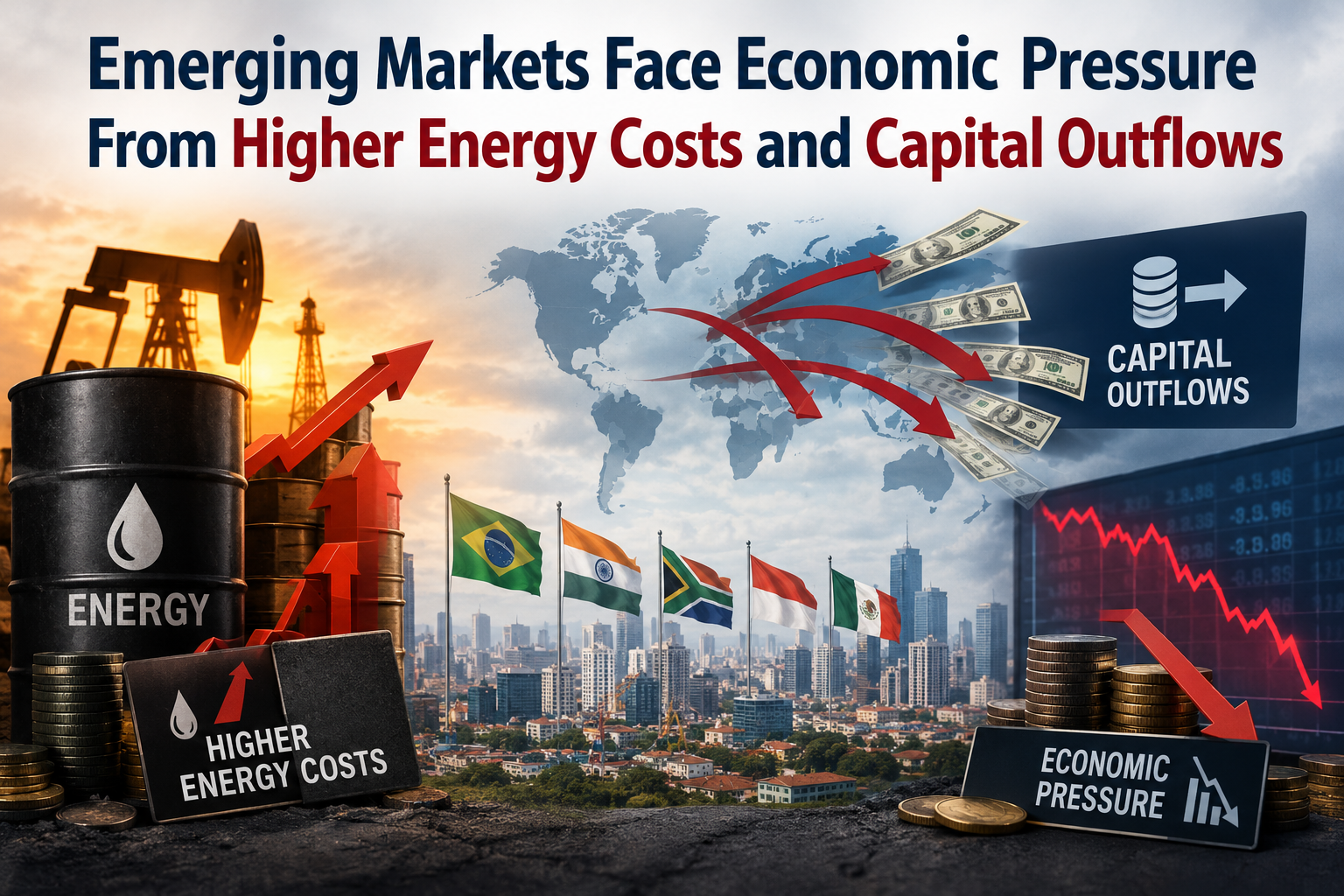
Developing countries are navigating a difficult economic environment as expensive borrowing, currency fluctuations, rising import bills and persistent inflation put pressure on government finances, businesses and household budgets.
Emerging and developing economies are facing renewed financial challenges as global economic uncertainty, elevated interest rates and rising external debt obligations restrict their ability to maintain stable growth. Although some countries have regained access to international financial markets, the cost of borrowing remains high, particularly for nations with weaker credit ratings and limited financial resources.
The World Bank’s International Debt Report 2026, released on November 5, highlights the growing scale of the problem. External debt held by developing countries increased by 5.5% to a record $9.4 trillion in 2025. The report also shows that low- and middle-income countries paid approximately $1.4 trillion in principal and interest during the year.
These developments underline a major concern for the global economy: developing nations must finance their growth and essential public services while managing increasingly expensive debt.
Rising Borrowing Costs Increase Financial Pressure
Higher borrowing costs are among the most significant challenges facing developing economies.
Governments frequently depend on international loans, bond markets and multilateral financial institutions to fund infrastructure, healthcare, education and other development priorities. However, higher interest rates and changing investor expectations have made access to affordable financing more difficult.
According to the World Bank, countries eligible for concessional financing through the International Development Association (IDA) paid an average interest rate of 8.2% on new private-creditor commitments in 2025, the highest level since 1989. Their new bond borrowing carried an average rate of 9.4%.
Such expensive financing can create long-term difficulties. Governments that borrow at high interest rates must allocate a greater share of future revenue towards debt repayment, leaving fewer resources for productive investment.
The problem is particularly serious for countries with weak tax collection systems, limited foreign-exchange reserves and substantial external financing requirements.
External Debt Reaches Record Levels
The World Bank’s latest findings demonstrate how debt obligations are becoming a growing constraint on development.
Developing countries’ external debt reached $9.4 trillion in 2025, while low- and middle-income countries paid $1.4 trillion in principal and interest. Payments to bondholders alone climbed to $363 billion.
Between 2022 and 2025, developing countries paid $436 billion more in debt service than they received in new financing.
This imbalance reduces the financial resources available for long-term development. Governments may be forced to postpone infrastructure projects, reduce public investment or redirect spending away from essential services.
Debt itself is not necessarily harmful. Responsible borrowing can support economic transformation when funds are invested in productive projects. However, debt becomes a serious concern when repayment costs rise faster than government revenue and economic output.
Currency Volatility Adds to Economic Uncertainty
Exchange-rate fluctuations create another layer of pressure for emerging economies.
Many developing countries borrow in US dollars or other foreign currencies while collecting most government revenue in their domestic currencies.
When a domestic currency depreciates against the dollar, the local-currency cost of servicing foreign debt increases. Governments must therefore spend more domestic resources to repay the same amount of foreign-currency debt.
Currency weakness can also increase the cost of imported oil, natural gas, food, machinery and industrial materials.
This creates a difficult combination of rising import expenses and inflationary pressure. Businesses may pass higher input costs on to consumers, while households experience reduced purchasing power.
The World Bank’s debt report also highlights the importance of currency movements in reported debt levels. More than a quarter of the $303 billion increase in public and publicly guaranteed debt during 2025 reflected the weaker US dollar, which raised the dollar value of debt denominated in other currencies.
Inflation and Rising Import Expenses Affect Households
Inflation remains a significant challenge for many developing economies, particularly those that depend heavily on imported essential commodities.
Higher energy prices increase transportation, electricity and manufacturing expenses. Rising food and fertiliser costs can also affect agricultural production and household budgets.
The International Monetary Fund’s October 2026 World Economic Outlook projects global headline inflation at 4.7% in 2026, before easing to 4.1% in 2027.
Although inflation differs considerably across countries, renewed commodity price increases and geopolitical disruptions could make the situation more difficult for import-dependent economies.
Central banks face a complicated policy choice. Raising interest rates can help control inflation and support currencies, but it may also increase borrowing costs for businesses and households. Keeping rates lower may support economic activity but could create additional pressure on exchange rates and prices.
Impact on Businesses and Employment
Financial pressure on governments can spread throughout the private sector.
Higher interest rates increase the cost of business loans, making it more difficult for companies to finance expansion, purchase equipment and maintain working capital.
Small and medium-sized enterprises are especially vulnerable because they often have limited access to affordable credit.
Rising import expenses can also reduce profit margins for manufacturers that depend on foreign raw materials, machinery and energy.
When businesses delay investment or reduce production, employment opportunities and economic activity may weaken.
This creates a wider development challenge: countries need investment and job creation to strengthen their economies, but expensive financing makes those goals harder to achieve.
Policy Reforms and International Cooperation Become Essential
Governments must adopt responsible financial strategies to manage debt and reduce vulnerability to external shocks.
Improving tax collection, controlling inefficient expenditure and strengthening public financial management can help create more sustainable government budgets.
Countries should also diversify financing sources by developing domestic capital markets, attracting long-term investment and accessing affordable financing from multilateral development institutions.
Central banks can strengthen financial stability through credible monetary policies, adequate foreign-exchange reserves and effective regulation.
International institutions also have an important role in supporting vulnerable countries through concessional lending, technical assistance and transparent debt-restructuring arrangements.
The Worldonomics Times View
The growing debt and inflation pressures facing emerging economies represent more than a temporary financial challenge. They raise fundamental questions about how developing nations can finance economic growth while protecting their long-term financial stability.
In our view, the biggest concern is the growing amount of public revenue being directed towards debt servicing instead of development priorities. Countries cannot build competitive economies if rising interest payments consistently restrict investment in infrastructure, education, healthcare and employment.
We believe governments must move beyond short-term borrowing solutions and focus on building stronger domestic financial systems. Improving productivity, expanding exports, strengthening tax administration and investing in energy and food security can reduce dependence on expensive external financing.
For India and other emerging economies, maintaining macroeconomic stability while supporting manufacturing, infrastructure and employment will be particularly important. Currency resilience, disciplined public spending and diversified international trade relationships can help reduce exposure to external financial shocks.
International lenders must also recognise that sustainable development requires access to affordable, predictable and long-term financing.
Our position is clear: debt should support development, not restrict it. Responsible borrowing, stronger institutions and international financial cooperation are essential to ensuring that emerging economies can manage today’s pressures without sacrificing tomorrow’s growth.
Ultimately, the strength of the global economy will depend not only on the performance of advanced nations but also on whether developing countries have the financial capacity to create jobs, improve living standards and achieve sustainable economic progress.