By Worldonomics Times | Global Economy
Date: October 27, 2026
Introduction
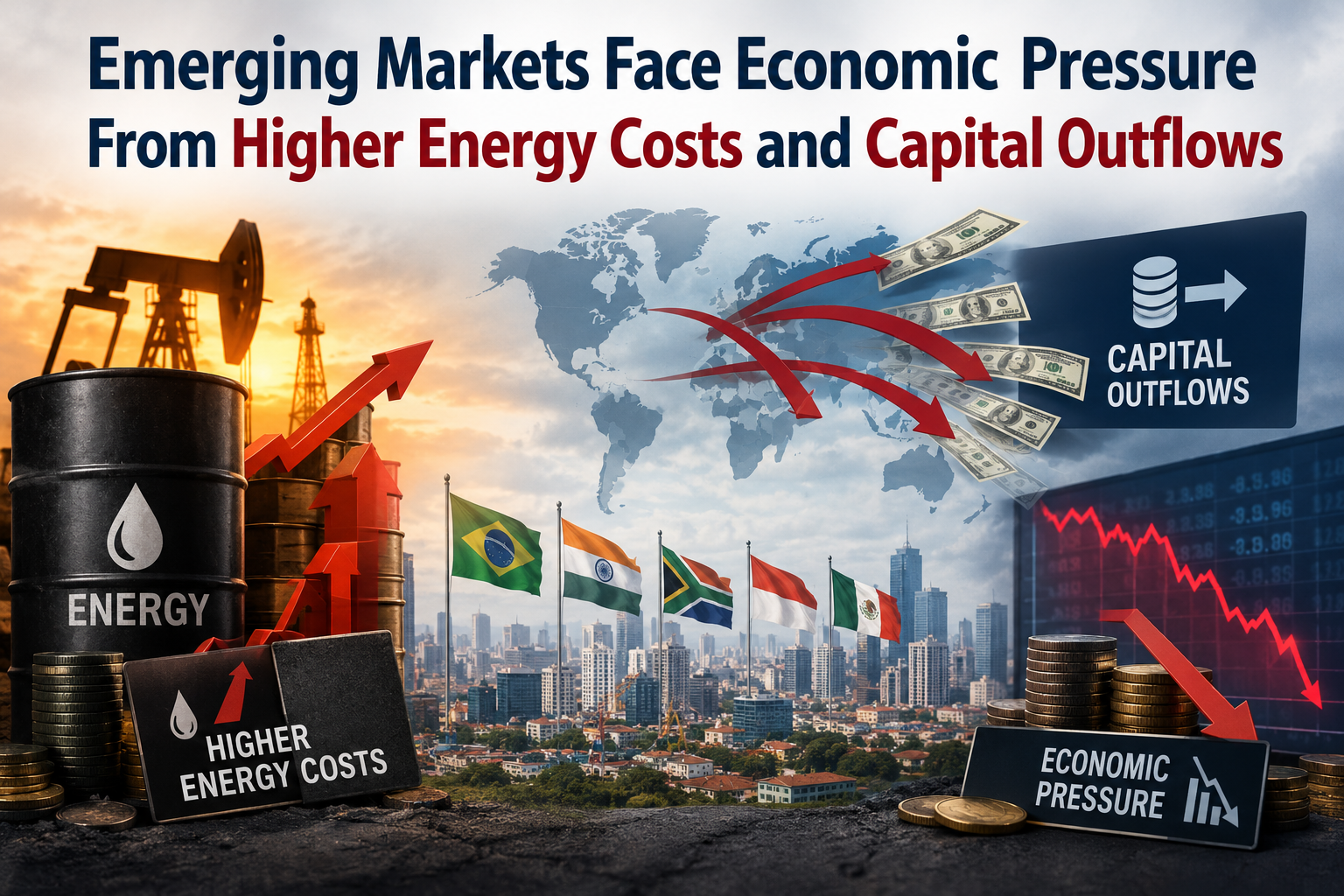
Emerging markets are facing renewed economic pressure as higher energy costs, volatile financial markets and capital outflows create challenges for growth and financial stability. Countries that depend heavily on imported oil and gas are experiencing rising import bills, while uncertainty in global markets is making foreign investment less predictable.
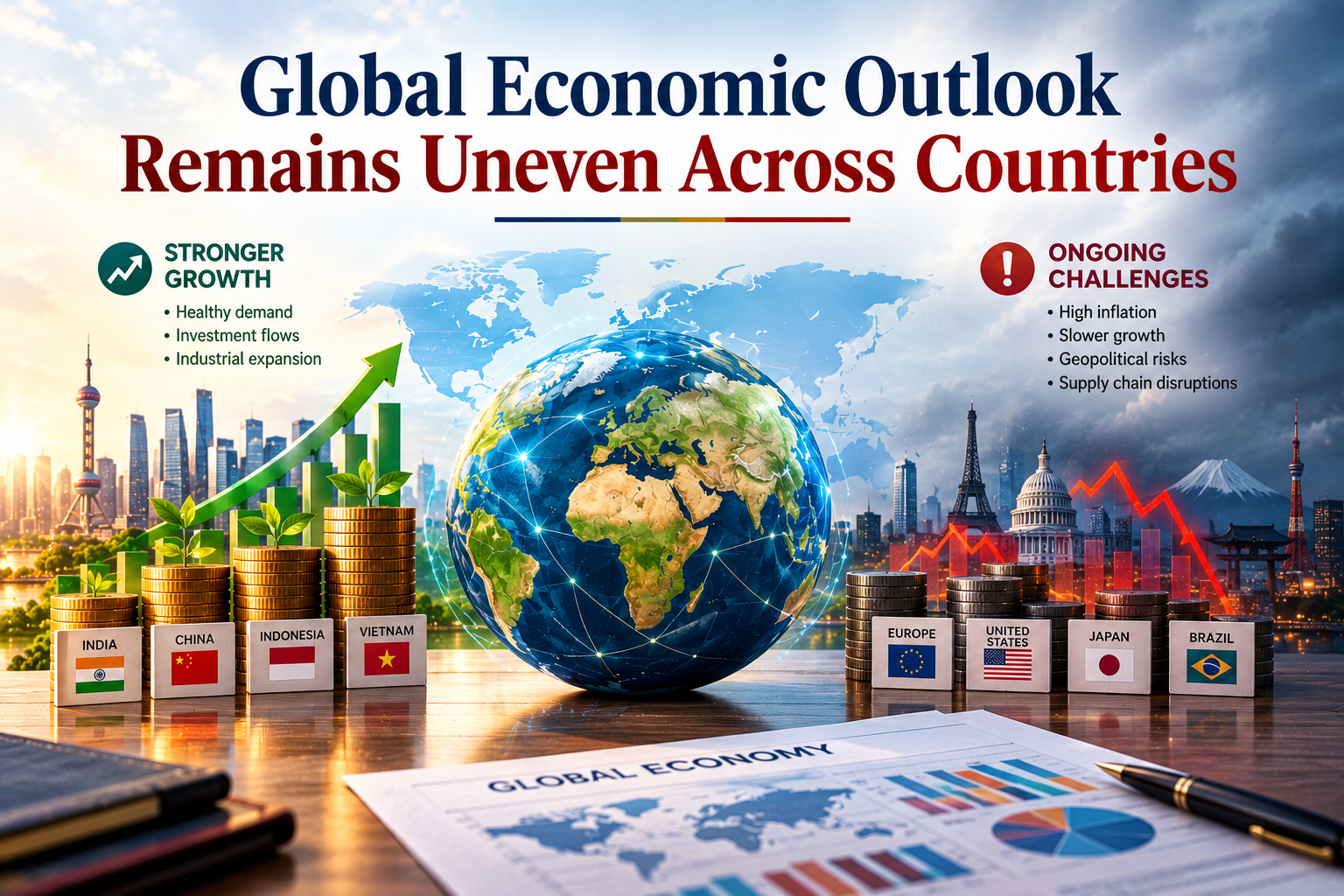
The International Monetary Fund (IMF), in its October 2026 World Economic Outlook, warned that the global economy faces an increasingly uneven outlook. Global growth is projected at 3.1% in 2026, while inflation is expected to rise to 4.7% before easing in 2027. Energy-importing economies outside the technology value chain face particularly difficult conditions.
For emerging economies, the combination of expensive energy and changing investor sentiment presents a double challenge: managing immediate inflationary pressures while preserving the capital needed for long-term development.
Higher Energy Prices Increase Economic Pressure
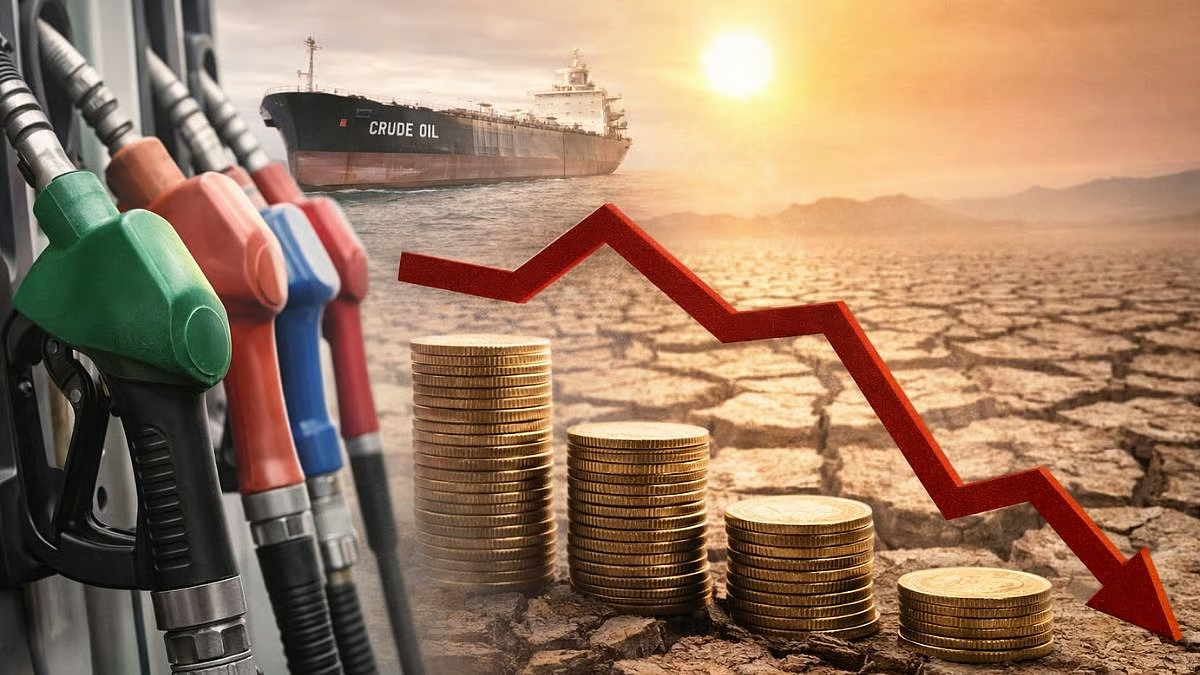
Energy prices have become a major source of concern for emerging markets, many of which rely on imported petroleum and natural gas to support transportation, manufacturing, electricity generation and agriculture.
When international fuel prices rise, governments and businesses must spend more to secure essential supplies. These additional costs can widen trade deficits, weaken current-account balances and place pressure on foreign-exchange reserves.
The effects are particularly significant in economies where energy imports account for a large share of domestic consumption. Countries may face difficult choices between allowing higher fuel costs to pass through to consumers and providing subsidies that protect households but increase public expenditure.
The Organisation for Economic Co-operation and Development (OECD) has highlighted the vulnerability of emerging-market economies to energy supply disruptions and tighter financial conditions. Its June 2026 Economic Outlook noted that many economies in Asia are especially exposed because of their reliance on imported energy.
Higher fuel prices can also spread through the wider economy. Transport operators, manufacturers and food distributors may increase prices to compensate for rising expenses. As a result, households face a reduction in purchasing power, while businesses contend with weaker demand and higher operating costs.
Capital Outflows Put Pressure on Currencies
Alongside higher energy costs, capital outflows are creating additional challenges for emerging financial markets. During periods of heightened uncertainty, international investors may reduce exposure to riskier assets and move funds towards investments they consider safer.
Changes in global interest-rate expectations, geopolitical tensions and concerns about economic growth can accelerate these movements. When investors sell domestic shares or bonds, local financial markets may experience falling asset prices, higher borrowing costs and increased currency volatility.
The IMF’s April 2026 analysis of non-bank investment flows found that portfolio financing has become an increasingly important source of funding for emerging-market companies and governments. However, this greater dependence can also expose countries to sudden reversals when investor sentiment deteriorates.
Currency depreciation can intensify the effects of capital outflows. A weaker domestic currency makes imported fuel, machinery and other internationally traded goods more expensive. It can also increase the local-currency cost of repaying debt denominated in foreign currencies.
Central banks may respond by using foreign-exchange reserves, adjusting interest rates or allowing exchange rates to absorb some of the pressure. Each option involves trade-offs, particularly for economies already facing weak growth or elevated inflation.
Inflation Creates a Difficult Policy Balance
Higher energy costs can complicate monetary policy by increasing inflation even when domestic economic demand is relatively weak. Central banks must determine whether price increases are temporary or likely to spread into wages, services and broader inflation expectations.
Raising interest rates can help support currency stability and restrain inflationary pressures. However, tighter monetary policy also makes borrowing more expensive for households, businesses and governments. Investment may slow, consumer spending may weaken and economic growth may lose momentum.
Keeping interest rates too low, on the other hand, could increase the risk of currency depreciation and further imported inflation if financial outflows intensify.
Governments face a similar dilemma. Fuel subsidies and broad price controls can offer immediate relief but may strain public finances and encourage excessive consumption. Targeted, temporary assistance for vulnerable households can provide support at a lower fiscal cost while allowing market prices to reflect underlying supply conditions.
The policy response must therefore balance price stability, economic growth and social protection.
Developing Economies Face Unequal Risks
Not all emerging markets are equally vulnerable. Countries with strong foreign-exchange reserves, manageable external debt, diversified exports and credible policy frameworks are generally better positioned to withstand financial volatility.
By contrast, economies with persistent current-account deficits, substantial foreign-currency borrowing and limited fiscal capacity may have fewer options when energy prices rise and capital becomes harder to access.
Higher debt-servicing costs can also reduce the resources available for infrastructure, healthcare, education and climate resilience. If governments are forced to prioritise immediate financing needs, important development projects may be delayed.
Nevertheless, periods of global economic uncertainty can also create opportunities. Countries that improve regulatory transparency, strengthen infrastructure and maintain stable economic policies may attract longer-term investment in manufacturing, renewable energy, digital services and supply-chain diversification.
Building investor confidence requires more than short-term financial measures. It depends on institutions, predictable rules and a credible commitment to sustainable economic management.
Strategies to Strengthen Economic Resilience
Emerging-market governments can reduce their exposure to external shocks by diversifying energy sources, expanding renewable power, improving energy efficiency and strengthening regional supply networks.
Maintaining adequate foreign-exchange reserves and monitoring short-term external debt can help authorities prepare for periods of financial volatility. Transparent fiscal policies and credible monetary frameworks can also reduce uncertainty for investors.
Governments should encourage a broader range of long-term funding sources rather than relying excessively on volatile portfolio investment. Strong domestic capital markets can help businesses and public institutions access financing even when international conditions deteriorate.
International cooperation remains important as well. Multilateral financial institutions can support countries facing severe external financing pressures, while coordinated efforts to maintain predictable trade and energy supplies can reduce the likelihood of further disruptions.
The Worldonomics Times View
Emerging markets are confronting a complex economic challenge in which energy-price shocks and volatile capital flows reinforce one another. Higher import costs can weaken currencies and fuel inflation, while capital outflows can increase borrowing costs and limit the resources available for economic development.
The Worldonomics Times believes that strengthening economic resilience must become a priority for emerging-market policymakers. Governments should focus on credible fiscal management, stable monetary frameworks, diversified energy supplies and stronger domestic financial markets.
Short-term support for vulnerable households remains important, but lasting stability will require structural reforms that reduce dependence on external financing and imported energy. Businesses must also strengthen risk management and diversify supply chains to navigate an uncertain global environment.
Ultimately, emerging markets will be better positioned to withstand future shocks if they combine responsible economic policies with productive investment and international cooperation. Protecting financial stability today is essential to sustaining inclusive growth and development in the years ahead.