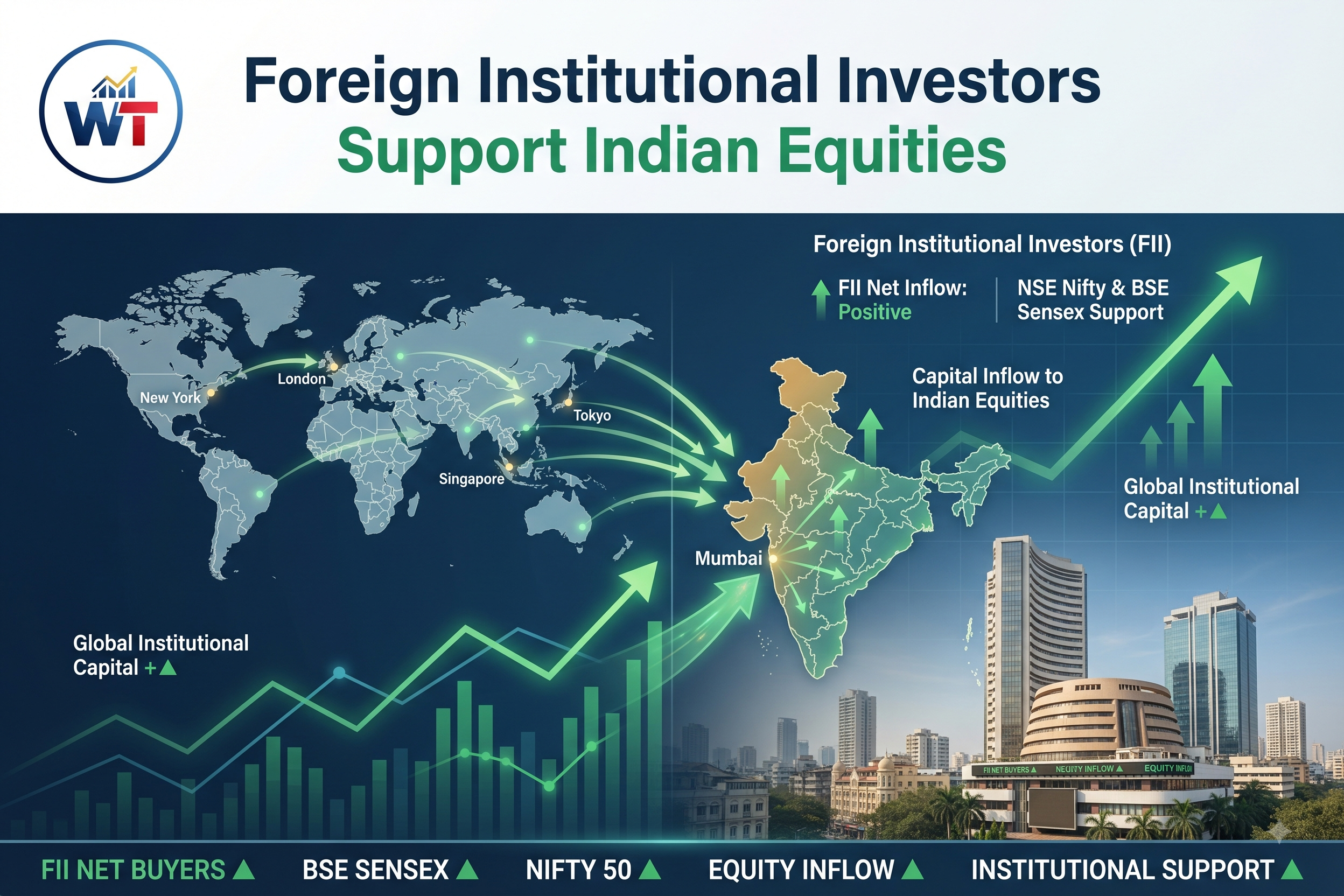
Indian equity markets received a significant boost in investor confidence on November 26, as foreign institutional investors (FIIs) returned as strong net buyers of domestic shares. According to provisional exchange data, foreign investors recorded net purchases worth ₹5,843.33 crore, reflecting continued interest in Indian equities.
The buying activity provided additional support to domestic market sentiment at a time when investors were closely monitoring global economic developments, international trade policies, crude oil prices and interest-rate expectations.
Domestic institutional investors (DIIs) also maintained their buying momentum, recording net purchases of ₹5,630.72 crore on the same day. Together, foreign and domestic institutions invested a net ₹11,474.05 crore in Indian equities, creating a strong flow of institutional capital into the market.
The development is particularly encouraging because foreign investor participation plays an important role in determining liquidity, market direction and confidence in emerging-market assets.
Strong Institutional Buying Supports Market Sentiment
The latest figures highlight the strength of institutional participation in the Indian stock market.
FIIs purchased equities worth approximately ₹17,879.74 crore during the November 26 session, while their sales amounted to ₹12,036.41 crore. The difference resulted in net buying of ₹5,843.33 crore.
DIIs recorded gross purchases of ₹24,352.87 crore and sales of ₹18,722.15 crore, resulting in net buying of ₹5,630.72 crore.
The simultaneous participation of foreign and domestic institutions is an encouraging development. While foreign investors bring international capital and influence global investment sentiment, domestic institutions provide an important source of liquidity and stability.
The combined buying activity suggests that institutional investors were willing to increase their exposure to Indian equities despite continuing uncertainty in international financial markets.
Indian Benchmark Indices Record Modest Gains
Despite substantial institutional buying, the benchmark indices recorded relatively moderate gains on November 26.
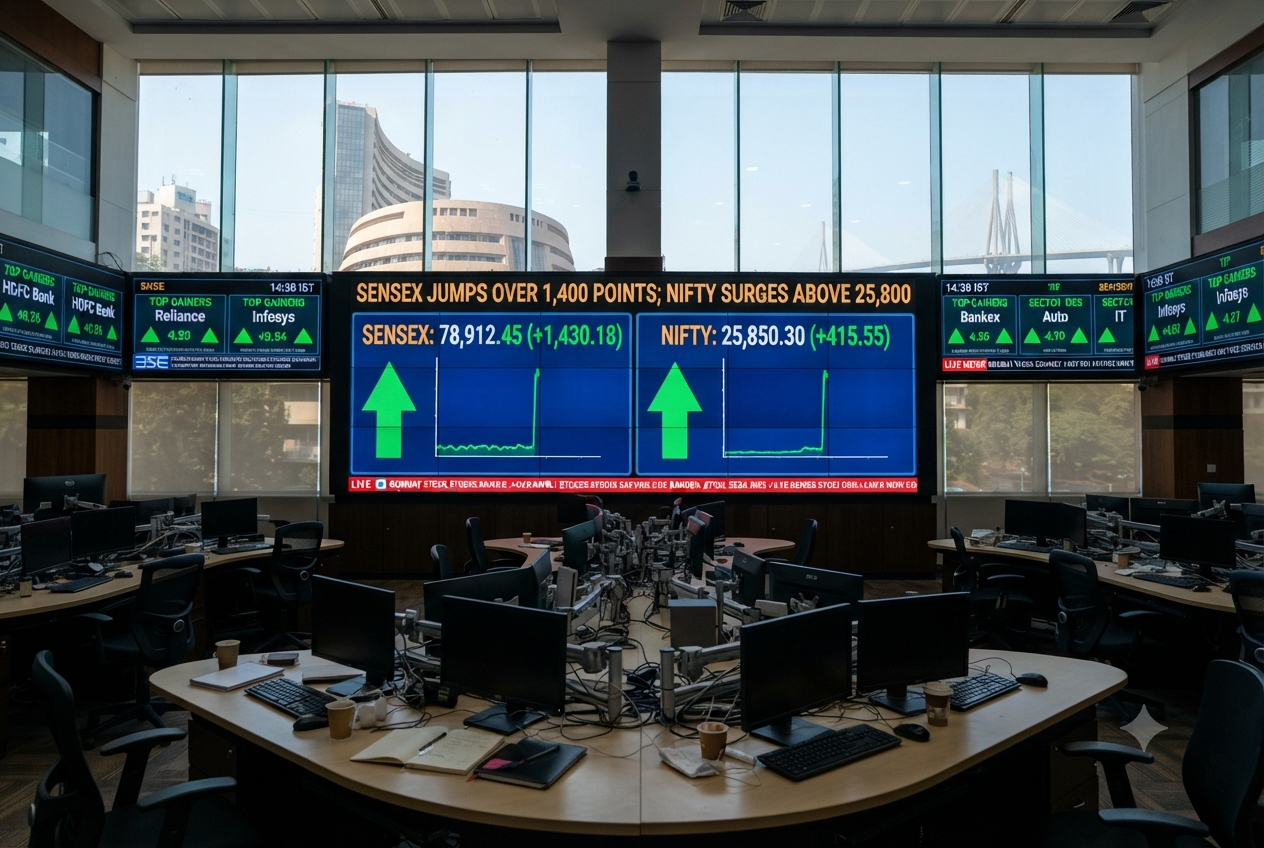
The BSE Sensex closed at 84,328.59, rising 390.31 points, or 0.46%. The NSE Nifty 50 finished at 25,884.50, gaining 65.25 points, or 0.25%.
The difference between strong institutional inflows and modest index gains indicates that investors remained selective. Buying interest was present, but concerns surrounding global economic conditions prevented a stronger market-wide advance.
Information technology and metal stocks were among the sectors attracting attention, supported by improving overseas technology sentiment and recovering metal prices. Meanwhile, some consumer and automobile stocks faced pressure.
This mixed performance demonstrates that institutional buying does not automatically translate into a broad-based rally. Market direction also depends on sectoral performance, corporate earnings, valuations and investor expectations.
Foreign Investor Participation Gains Importance
Foreign institutional investors are closely watched because their investment decisions can influence the direction of Indian equity markets.
International investors generally evaluate several factors before allocating capital to India, including economic growth, corporate earnings, inflation, currency movements, interest rates and valuations compared with other emerging markets.
When foreign investors increase their exposure to Indian shares, it can improve market liquidity and strengthen confidence among other participants. Sustained inflows may also support large-cap companies and sectors that attract international investment.
The latest purchases are particularly relevant amid changing global investment conditions. Investors are assessing the impact of US trade policies, international interest-rate expectations and geopolitical developments on financial markets.
India’s relatively strong domestic consumption, infrastructure investment and expanding digital economy continue to provide long-term investment opportunities. These factors may help maintain international interest in Indian equities, although short-term capital flows can change quickly.
Domestic Institutions Provide Additional Market Support
The contribution of domestic institutional investors is equally important.
Mutual funds, insurance companies, pension funds and other domestic institutions have become significant participants in Indian financial markets. Their investments can help absorb selling pressure when foreign investors reduce their exposure.
On November 26, DIIs recorded net purchases of ₹5,630.72 crore, reinforcing the positive impact of foreign buying.
The participation of both investor groups provides a stronger foundation for market liquidity than foreign inflows alone. It also demonstrates the growing importance of domestic savings and institutional investment in supporting India’s equity market.
However, the balance between foreign and domestic participation remains important. If foreign investors turn cautious, continued domestic buying may help limit volatility, but it may not always be sufficient to prevent market corrections.
Global Factors Continue to Influence Investor Decisions
Despite encouraging institutional inflows, several external factors could influence the near-term performance of Indian equities.
Uncertainty surrounding US trade policy remains an important concern for global investors. Any escalation in tariff-related tensions could affect international trade, corporate profitability and global economic growth.
Crude oil prices are another major consideration for India. As a significant importer of energy, India is sensitive to changes in international oil prices. Higher crude prices can increase import costs, place pressure on inflation and affect the profitability of energy-intensive businesses.
Interest-rate expectations in the United States also influence foreign investment decisions. Higher US yields can make American financial assets more attractive and potentially reduce the appeal of emerging-market equities.
Currency movements, inflation data and upcoming corporate earnings will therefore remain important indicators for investors evaluating the Indian market.
Outlook for the Indian Stock Market
The latest institutional buying provides an encouraging signal for the Indian equity market, but investors will need to assess whether the inflow trend can continue.
Sustained foreign participation could improve liquidity and support benchmark indices, particularly if domestic economic conditions and corporate earnings remain favourable.
Investors will also monitor the performance of banking, information technology, infrastructure, automobile and pharmaceutical stocks to identify sectors capable of attracting further institutional investment.
However, market participants should remain cautious about interpreting a single session of strong buying as confirmation of a sustained upward trend. Institutional flows can fluctuate in response to global developments, valuations and changes in risk appetite.
The coming trading sessions will be important in determining whether the latest buying activity develops into a broader improvement in market momentum.
The Worldonomics Times View
The return of strong foreign institutional buying is a positive development for Indian equities. Net purchases of approximately ₹5,843 crore, combined with substantial domestic institutional investment, demonstrate that confidence in the Indian market remains meaningful despite global uncertainty.
However, sustainable market growth requires more than large capital inflows. Strong corporate earnings, stable macroeconomic conditions, reasonable valuations and consistent economic growth are essential to maintaining investor confidence.
India’s long-term investment prospects remain supported by domestic demand, infrastructure development, financial-sector expansion and technological progress. These structural strengths can continue attracting international capital.
Investors should nevertheless distinguish between short-term market movements and long-term fundamentals. The latest FII buying offers encouragement, but its sustainability will depend on global liquidity conditions and India’s economic performance.
For now, the combined participation of foreign and domestic institutions provides a constructive signal for the market and reinforces India’s position as an important destination for global investment.