By The Worldonomics Times | Global Economy
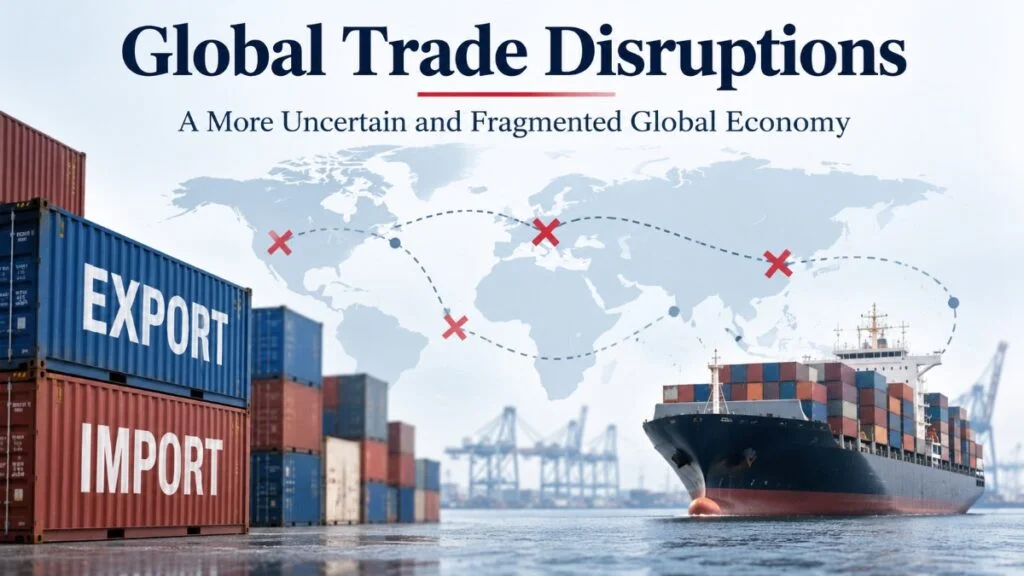
International trade remains a major driver of economic growth, industrial development, employment, and global business expansion. However, the global trading environment is facing growing uncertainty as governments introduce trade restrictions, reconsider tariff policies, and respond to geopolitical tensions. These developments are creating new challenges for businesses that depend on international suppliers, export markets, and interconnected production networks.
From manufacturing and electronics to agriculture, energy, and logistics, companies are reassessing how they source materials, transport products, and manage international operations. Although global trade has demonstrated resilience, changing trade policies and supply-chain disruptions are making international business planning increasingly complex.
Trade Restrictions and Tariff Uncertainty Increase Business Costs
Tariffs and trade restrictions have become important instruments in international economic policy. Governments use them to protect domestic industries, address trade imbalances, support strategic sectors, and respond to geopolitical developments.
However, frequent changes in tariff policies can create uncertainty for exporters, importers, manufacturers, and investors. When businesses cannot accurately predict future import duties, they may struggle to calculate production costs, determine selling prices, and negotiate long-term supply agreements.
Higher tariffs can increase the cost of imported raw materials, components, and finished products. Companies may respond by passing additional expenses to consumers, absorbing lower profit margins, or searching for alternative suppliers.
The impact is particularly significant for industries that depend on international production networks, including automobiles, electronics, pharmaceuticals, machinery, and textiles.
The World Trade Organization’s 2026 World Trade Report highlights how unilateral trade restrictions can generate wider economic costs. When countries respond to one another with additional barriers, exporters may lose market access, consumers face higher prices, and international trade becomes less predictable.
Supply-Chain Disruptions Challenge International Businesses
Modern manufacturing depends on complex global supply chains. A single product may involve raw materials from one country, components manufactured in another, assembly in a third location, and distribution across several international markets.
This interconnected system improves efficiency and allows businesses to access specialised suppliers. However, it also creates vulnerabilities when geopolitical conflicts, shipping disruptions, natural disasters, or regulatory changes interrupt the movement of goods.
Recent disruptions affecting important maritime routes have demonstrated how quickly transportation delays can influence international commerce. Longer shipping journeys, higher insurance premiums, rising fuel expenses, and congestion at ports can increase delivery times and operating costs.
Businesses that depend on just-in-time inventory systems are particularly exposed because even a temporary shortage of essential components can interrupt production.
As a result, companies are increasingly reconsidering their sourcing strategies and placing greater importance on supply-chain visibility, inventory management, and alternative procurement arrangements.
Geopolitical Tensions Reshape Global Trade Routes
Geopolitical developments are becoming an increasingly important influence on international trade. Strategic competition between major economies, economic sanctions, export controls, and regional conflicts can affect access to markets, technologies, energy supplies, and essential raw materials.
The Middle East is particularly important because of its role in global energy supplies and international shipping. Disruptions to major maritime routes can affect oil, gas, fertiliser, and other commodity shipments, creating cost pressures across multiple industries.
Technology trade is also facing greater scrutiny. Restrictions involving advanced semiconductors, specialised equipment, and critical technologies are encouraging countries to strengthen domestic manufacturing capabilities and reduce dependence on selected foreign suppliers.
The International Monetary Fund’s 2026 analysis of global trade highlights how geopolitical tensions and changing trade relationships are reshaping investment decisions and supply-chain structures.
Businesses Accelerate Supply-Chain Diversification
In response to rising uncertainty, international companies are increasingly exploring strategies such as nearshoring, friendshoring, and multi-country sourcing.
Nearshoring involves moving production or procurement closer to the final consumer market. Friendshoring focuses on building supply relationships with countries considered reliable economic partners, while multi-country sourcing reduces dependence on a single supplier or manufacturing location.
These strategies can improve resilience and reduce exposure to sudden trade disruptions. However, they may also increase costs because alternative suppliers might offer different production capacities, infrastructure standards, labour costs, and delivery arrangements.
For multinational companies, the objective is therefore to balance operational efficiency with supply-chain security.
Digital technologies are also becoming important. Artificial intelligence, predictive analytics, and real-time tracking systems can help businesses monitor shipments, forecast demand, identify potential shortages, and respond more quickly to unexpected disruptions.
Impact on Emerging Economies and India
Emerging economies face both opportunities and challenges as global trade patterns change.
Countries with competitive manufacturing sectors, skilled workforces, and improving infrastructure may attract investment from businesses seeking to diversify production locations. India, Vietnam, Indonesia, and other Asian economies have opportunities to strengthen their participation in international supply chains.
India, in particular, has the potential to expand its role in electronics, pharmaceuticals, textiles, automotive components, engineering goods, and industrial manufacturing. Government initiatives supporting domestic production and infrastructure development may help improve the country’s export competitiveness.
However, Indian businesses also face challenges involving imported raw materials, logistics costs, regulatory compliance, and changing tariff arrangements in major export markets.
Smaller exporters may be especially affected because they often have fewer resources to manage complex customs procedures, changing product standards, and international documentation requirements.
Strengthening trade infrastructure, simplifying regulations, improving port efficiency, and expanding access to international markets will be important for increasing India’s participation in global commerce.
The Worldonomics View
At The Worldonomics Times, we believe that the changing global trade environment requires businesses and governments to move beyond traditional cost-focused strategies and give greater attention to long-term resilience.
Trade restrictions may support specific domestic policy objectives, but unpredictable and escalating barriers can create costs that extend far beyond the countries introducing them. International businesses need stable regulations, transparent tariff structures, reliable logistics networks, and predictable access to overseas markets.
In our view, governments should strengthen international trade cooperation, improve regulatory transparency, and pursue constructive negotiations to resolve trade disputes. Businesses should diversify suppliers, invest in digital supply-chain management, and develop contingency plans for potential disruptions.
For India and other emerging economies, this period presents an opportunity to strengthen manufacturing capabilities, improve export infrastructure, and build deeper trade partnerships.
The Worldonomics perspective is clear: the future of international trade will depend not only on competitive production costs but also on reliability, adaptability, cooperation, and the ability to withstand global disruptions.
Conclusion
Global trade is entering a more complex phase as tariff uncertainty, trade restrictions, geopolitical tensions, and supply-chain disruptions influence international business decisions. These challenges are increasing operating costs and encouraging companies to reconsider their sourcing, manufacturing, and distribution strategies.
Nevertheless, changing trade patterns also create opportunities for countries capable of offering reliable infrastructure, competitive industries, and stable business environments.
Ultimately, sustainable global trade growth will require stronger international cooperation, predictable trade policies, diversified supply chains, and continued investment in technology and logistics. Businesses and economies that adapt to these developments will be better positioned to navigate uncertainty and participate in the next phase of global economic growth.