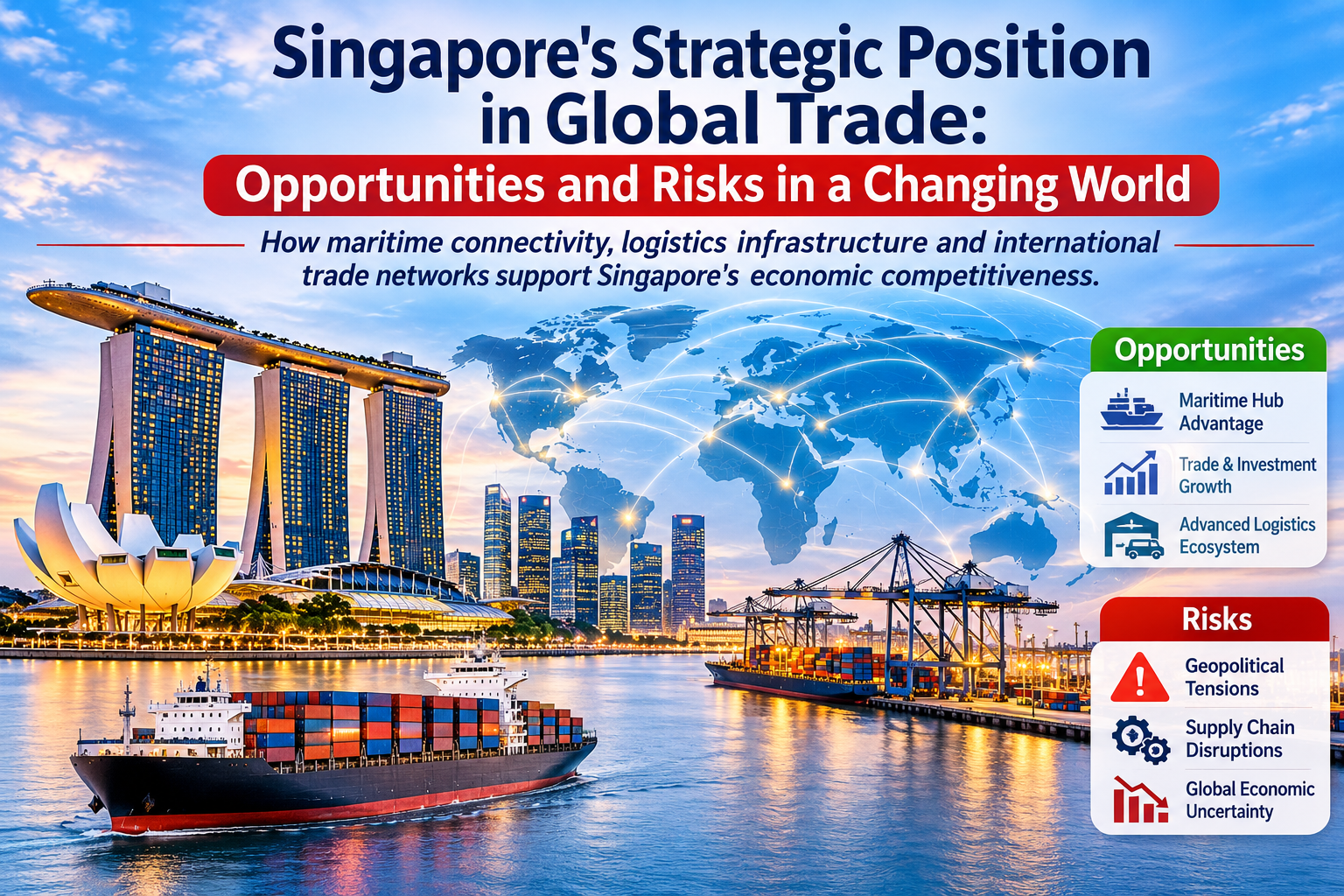
Singapore has emerged as one of Asia’s leading financial and business centres, offering significant opportunities for qualified finance, accounting, taxation and corporate governance professionals. For Indian Chartered Accountants (CA), Cost and Management Accountants (CMA) and Company Secretaries (CS), the country presents an attractive destination to pursue international careers, gain cross-border business exposure and explore professional entrepreneurship.
With its strong regulatory framework, multinational corporate presence, advanced financial services industry and strategic position as a gateway to Southeast Asia, Singapore offers opportunities across accounting, auditing, financial planning and analysis (FP&A), taxation, risk management, corporate governance and business advisory.
However, entering the Singapore market requires more than holding a recognised Indian professional qualification. Candidates must understand local industry expectations, develop relevant technical competencies, establish professional networks and meet applicable employment and regulatory requirements.
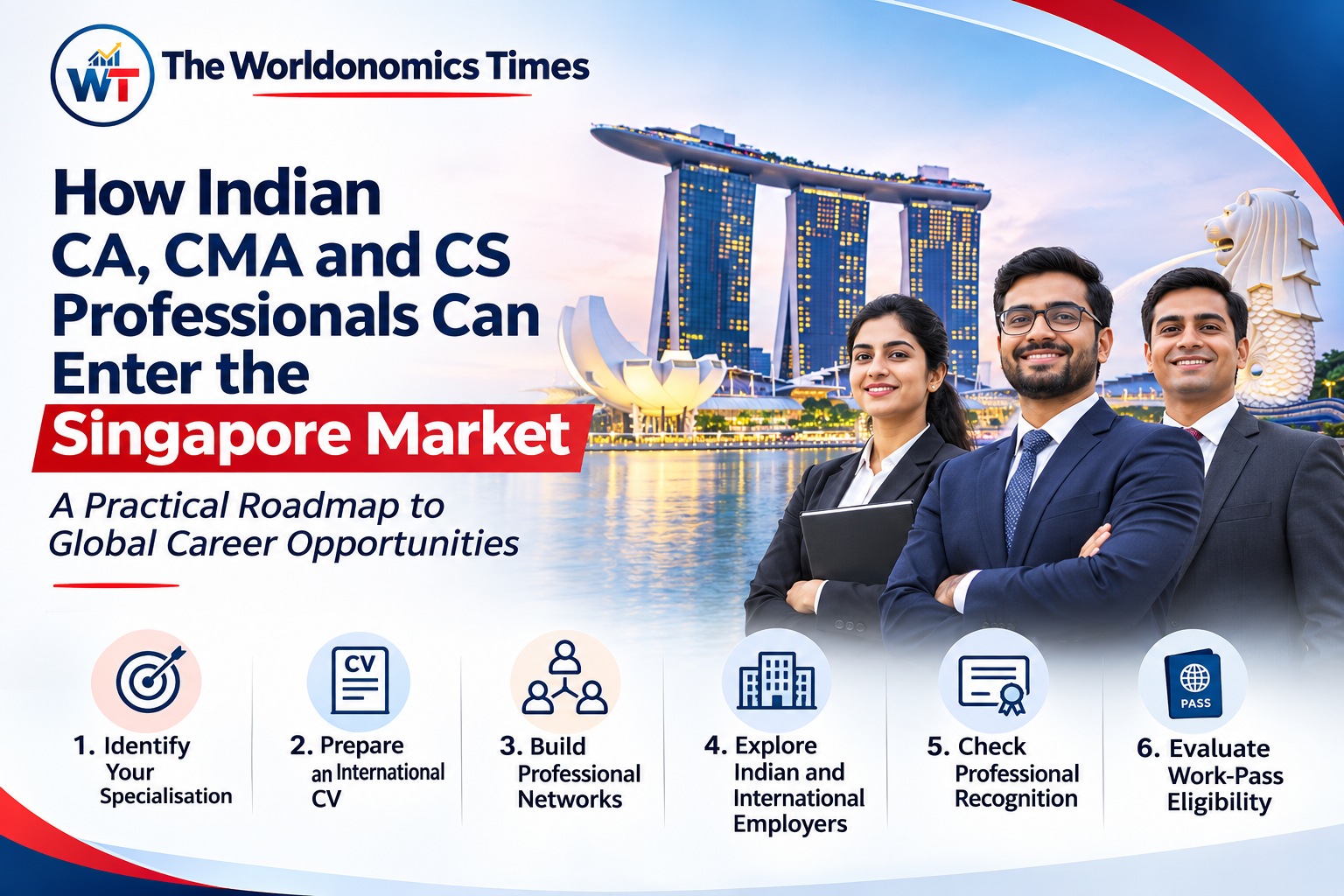
Here is a practical roadmap for Indian CA, CMA and CS professionals aspiring to build their careers in Singapore.
1. Identify Your Professional Specialisation
The first step towards entering Singapore’s professional market is identifying a specific area of expertise. Rather than approaching the market as a general accounting professional, candidates should position themselves according to their qualifications, experience and industry knowledge.
Some of the most promising specialisations include:
Accounting and Financial Reporting: Professionals with experience in financial statements, IFRS, consolidation, financial reporting, statutory reporting and internal controls can explore opportunities with multinational corporations, accounting firms and shared service centres.
Taxation and Transfer Pricing: International taxation, corporate tax, GST, transfer pricing documentation and cross-border tax advisory are relevant areas for professionals interested in international tax practices.
Financial Planning and Analysis: CMA and CA professionals can explore opportunities in budgeting, forecasting, cost management, profitability analysis, financial modelling and strategic decision-making.
Corporate Governance and Compliance: Company Secretaries can explore corporate governance, board administration, statutory compliance, regulatory affairs and corporate secretarial support, subject to Singapore’s applicable regulatory requirements.
Risk Management and Internal Audit: Professionals with expertise in internal audit, enterprise risk management, internal financial controls, AML compliance and regulatory reporting can explore opportunities in banking, financial services and multinational organisations.
Selecting a specialisation helps candidates communicate their professional value to Singapore-based employers.
2. Prepare an Internationally Competitive CV
A well-structured international CV is essential for securing interviews with Singapore-based employers. Indian professionals should move beyond listing qualifications and job responsibilities and demonstrate measurable achievements, technical expertise and business impact.
Important skills and competencies to highlight include:
- International Financial Reporting Standards (IFRS).
- Indian Accounting Standards (Ind AS).
- GST and corporate taxation.
- International taxation and transfer pricing.
- Financial modelling and business valuation.
- Budgeting, forecasting and cost optimisation.
- SAP, Oracle and other enterprise resource planning systems.
- Microsoft Excel, Power BI and financial analytics.
- Internal audit, risk management and corporate governance.
- Leadership, stakeholder management and business communication.
Professionals should quantify their achievements wherever possible. For example, instead of simply mentioning responsibility for cost management, candidates can highlight how they reduced operating expenses, improved financial reporting efficiency or strengthened internal controls.
An internationally oriented CV should generally be concise, achievement-focused and tailored to the particular position.
3. Build Professional Networks in Singapore
Professional networking plays an important role in entering an international employment market. Indian CA, CMA and CS professionals should actively connect with Singapore-based accounting firms, financial institutions, consulting organisations, multinational companies and professional associations.
Some useful networking avenues include:
- Institute of Singapore Chartered Accountants (ISCA).
- ICAI Singapore Chapter.
- Singapore-based professional accounting networks.
- Indian business and professional associations.
- Singapore Indian Chamber of Commerce and Industry.
- Finance and accounting industry conferences.
- LinkedIn professional communities.
Attending industry conferences, webinars, business networking events and professional development programmes can help candidates understand employer expectations and identify potential opportunities.
Professionals should also connect with Indian-origin finance leaders and senior executives working in Singapore. Their experience can provide valuable insights into recruitment practices, career progression and the professional environment.
4. Explore Opportunities with Indian and International Employers
Indian professionals should target employers that value international accounting experience, financial management expertise and cross-border business knowledge.
Potential employment destinations include:
Big Four Accounting Firms: Deloitte, PwC, EY and KPMG offer career opportunities across audit, assurance, taxation, consulting, risk advisory and financial services, subject to role requirements.
Multinational Corporations: Global companies with regional headquarters in Singapore recruit finance professionals for financial reporting, regional accounting, treasury, budgeting, business control and finance leadership roles.
Banking and Financial Institutions: Banks, investment companies, insurance organisations and fintech businesses require professionals in financial control, risk management, compliance, internal audit and regulatory reporting.
Consulting and Advisory Firms: Professionals can explore opportunities in transaction advisory, business restructuring, financial due diligence, management consulting and corporate advisory.
Shared Service Centres: International organisations operating regional finance and accounting centres offer opportunities in record-to-report, financial planning, accounts payable, accounts receivable and management reporting.
Candidates should regularly monitor employer career portals and international recruitment platforms rather than relying exclusively on recruitment consultants.
5. Understand Professional Recognition and Singapore Qualifications
Indian CA, CMA and CS qualifications provide a strong foundation for international careers. However, professional recognition and the right to undertake regulated activities in Singapore depend on the nature of the work and applicable local regulations.
Indian Chartered Accountants can explore membership and professional development opportunities through the Institute of Singapore Chartered Accountants (ISCA). They should examine the applicable eligibility requirements and available pathways towards the Singapore Chartered Accountant designation.
Similarly, CMA professionals can strengthen their profiles through management accounting, strategic finance and internationally recognised professional development programmes.
Company Secretaries can explore Singapore’s corporate governance and compliance environment, including the requirements governing company secretarial services and statutory responsibilities.
Additional expertise in IFRS, international taxation, transfer pricing, financial analytics, sustainability reporting and risk management can further improve employability.
It is important to remember that Indian professional qualifications do not automatically provide a Singapore practising licence. Statutory public accountancy and certain corporate services are subject to separate local regulatory requirements.
6. Evaluate Singapore Employment Pass Requirements
Understanding immigration and work authorisation requirements is essential before accepting an overseas employment opportunity.
The Employment Pass (EP) is a major work-pass route for foreign professionals seeking employment in Singapore. Applications are generally submitted by the prospective employer or an appointed employment agent.
Applicants must satisfy the applicable minimum qualifying salary requirements, which vary according to age and sector. Most applicants are also assessed under Singapore’s Complementarity Assessment Framework (COMPASS), unless exempt.
Professionals should consider the following:
- Check the latest Employment Pass qualifying salary.
- Understand the COMPASS assessment framework.
- Evaluate whether the proposed salary meets the applicable requirements for their age and industry.
- Confirm that the employer is prepared to sponsor the application.
- Review the employment contract and job responsibilities.
- Understand the applicable tax and relocation implications.
Candidates should refer to the Singapore Ministry of Manpower website for the latest requirements before making relocation decisions.
Official website: https://www.mom.gov.sg/
7. Develop Skills Relevant to Singapore’s Business Environment
Singapore is a highly competitive professional market. Employers generally seek candidates who can combine technical knowledge with commercial understanding, technology skills and international business exposure.
Indian professionals should focus on developing the following capabilities:
International Financial Reporting: Practical understanding of IFRS and Singapore Financial Reporting Standards (International), where relevant.
Technology and Automation: Knowledge of SAP, Oracle, cloud accounting, Power BI, financial automation and data analytics.
International Taxation: Familiarity with cross-border transactions, transfer pricing, corporate tax and applicable GST rules.
Business Communication: Strong written and spoken English, presentation skills and the ability to work with international stakeholders.
Strategic Finance: Understanding business performance, financial forecasting, working capital management and strategic decision-making.
A combination of professional qualifications, technical expertise and commercial experience can create a stronger competitive advantage.
8. Explore Entrepreneurship and Independent Consulting
Entering Singapore does not necessarily mean pursuing employment alone. Experienced Indian professionals may also explore entrepreneurial opportunities, subject to immigration, business registration and professional licensing requirements.
Potential business models include:
- Accounting and bookkeeping support.
- Financial planning and virtual CFO services.
- Business management consultancy.
- India–Singapore market-entry advisory.
- Financial due diligence and business valuation.
- MSME business development consultancy.
- Professional education and corporate training.
- Cross-border business coordination.
One particularly interesting opportunity is India–Singapore business advisory.
Indian professionals understand India’s taxation, financial reporting, regulatory framework and business environment. By combining this knowledge with an understanding of Singapore’s business ecosystem, they can help Indian companies explore Singapore and Singapore-based businesses identify opportunities in India.
However, providing regulated accounting, public accountancy or corporate services requires careful assessment of Singapore’s licensing and registration framework.
9. A Six-Month Action Plan for Indian Professionals
A structured preparation programme can make the transition more practical.
Month 1 – Career Assessment: Identify your professional specialisation, evaluate your experience and shortlist suitable Singapore-based industries and employers.
Month 2 – CV and Professional Profile: Prepare an international CV, update your LinkedIn profile and highlight relevant technical competencies and measurable achievements.
Month 3 – Skill Development: Strengthen IFRS, international taxation, financial analytics, ERP systems and other skills relevant to your target positions.
Month 4 – Professional Networking: Connect with ISCA, ICAI Singapore Chapter, recruiters, finance professionals and industry associations.
Month 5 – Employment Applications: Apply to relevant vacancies across accounting firms, banks, multinational companies, consulting firms and shared service centres.
Month 6 – Interviews and Relocation Planning: Prepare for technical interviews, assess employment offers, verify work-pass eligibility and evaluate the financial implications of relocation.
This six-month framework is a preparation roadmap, not a guarantee of employment or work-pass approval.
Conclusion
Singapore offers Indian CA, CMA and CS professionals an opportunity to expand their careers into an international business environment. Its position as a financial centre, regional headquarters destination and gateway to Southeast Asia creates opportunities across accounting, taxation, corporate finance, governance, compliance and strategic management.
However, success requires a planned approach. Professionals must identify their specialisation, develop international competencies, build strong networks, understand local regulatory requirements and pursue suitable employment or business opportunities.
For Indian professionals, the objective should not simply be to secure an overseas job but to build a sustainable international career with long-term professional and entrepreneurial potential.
With the right preparation, Indian CA, CMA and CS professionals can become valuable contributors to Singapore’s financial and business ecosystem while strengthening economic and professional connections between India and Singapore.
The future belongs to professionals who combine strong technical qualifications with international exposure, technology-driven expertise and a global business perspective.