How the Government’s Export Support Initiative Aims to Strengthen Trade Resilience Amid West Asia’s Geopolitical and Logistics Challenges
Introduction
The Government of India has extended the operational timeline of Component II of the Resilience & Logistics Intervention for Export Facilitation (RELIEF) scheme until 31 March 2027, providing additional support to Indian exporters facing international trade uncertainties. The extension, announced by the Department of Commerce under the Ministry of Commerce and Industry on 26 October 2026, is an important development for India’s export-oriented businesses, particularly Micro, Small and Medium Enterprises (MSMEs).
The decision comes amid continuing geopolitical disruptions in West Asia, which have affected maritime transportation, increased freight expenses and created uncertainty in international shipping and insurance markets. For Indian exporters, especially small businesses operating with limited financial resources, these challenges can significantly affect profitability, working capital and business continuity.
The RELIEF initiative is designed to strengthen export resilience by encouraging exporters to obtain insurance protection through the Export Credit Guarantee Corporation of India (ECGC).
What Is the RELIEF Scheme?
RELIEF stands for Resilience & Logistics Intervention for Export Facilitation. It is a targeted government intervention introduced under India’s Export Promotion Mission (EPM) and launched on 19 March 2026.
The initiative was introduced to support Indian exporters dealing with extraordinary increases in freight costs, higher insurance premiums and war-related export risks arising from disruptions in the Gulf and wider West Asian maritime corridor.
Through the scheme, the government seeks to reduce the financial burden associated with international shipping and encourage exporters to continue their overseas business operations despite geopolitical uncertainties.
The scheme is particularly relevant for MSMEs involved in manufacturing, engineering, textiles, chemicals, pharmaceuticals, food processing, leather goods and other export-oriented industries.
Government Extends Component II Until March 2027
According to the Department of Commerce, the timeline under Component II of RELIEF has been extended until 31 March 2027.
The extension was notified through DGFT Notification No. 37/2026-27 dated 30 September 2026. It amends the earlier notifications governing the initiative and extends the eligibility and validity period under the specified provisions of Component II.
The primary objective is to improve the utilisation of the scheme and facilitate trade resilience during continuing disruptions affecting maritime logistics across West Asia and the Gulf region.
This extension gives eligible exporters additional time to access the support mechanism and plan their international shipments with greater confidence.
Key Benefits Under Component II
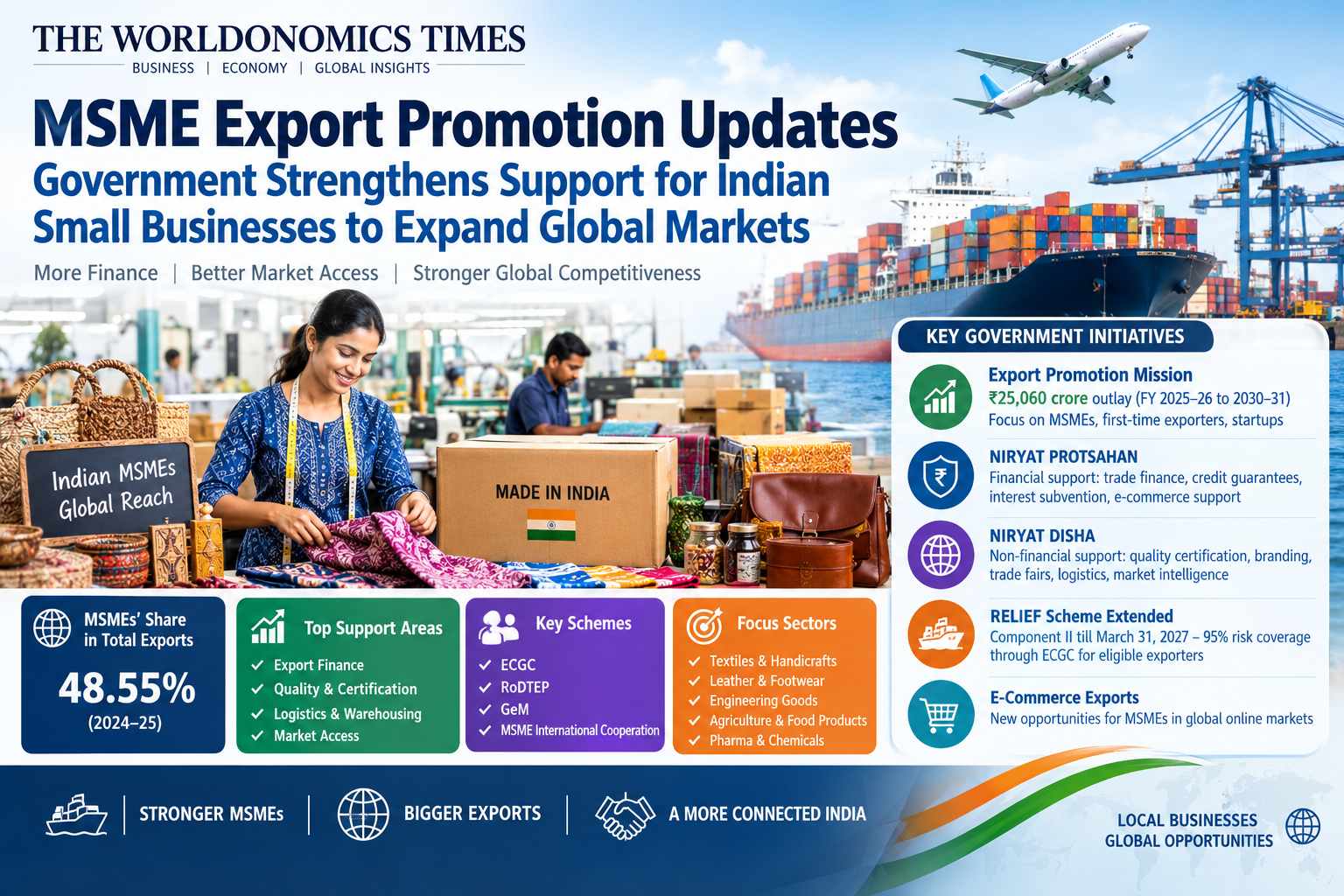
One of the most important features of Component II is the provision of 95% risk coverage to encourage exporters to obtain ECGC insurance protection for eligible upcoming shipments.
The major provisions include:
1. Enhanced Risk Coverage: The initiative provides 95% risk coverage through the government-supported mechanism associated with ECGC cover, helping strengthen protection for eligible export shipments.
2. Protection Against Rising Insurance Premiums: Eligible exporters are protected against increases in insurance premiums beyond pre-disruption levels during the applicable period.
3. ECGC Insurance Support: The benefit is available for eligible Standalone Policies and Whole Turnover Policies obtained on or after 16 March 2026.
4. Cargo Coverage: Eligible cargo categories include Full Container Load (FCL), Less than Container Load (LCL) and refrigerated (reefer) container shipments. Energy shipments are excluded under Component II.
5. Extended Eligibility: The applicable eligibility and validity timeline has now been extended until 31 March 2027, subject to the scheme’s prescribed conditions.
Why Is This Scheme Important for MSMEs?
MSMEs contribute significantly to India’s manufacturing capacity, employment generation and international trade. However, smaller exporters often face greater difficulties managing unexpected increases in shipping expenses, insurance costs and international payment risks.
Unlike large corporations, many MSMEs operate with limited financial reserves and have less flexibility to absorb sudden increases in operating costs.
The RELIEF scheme can help address some of these challenges by encouraging access to ECGC insurance protection and supporting eligible shipments.
For example, a small engineering company exporting machinery components to an eligible West Asian destination may experience higher insurance premiums and shipping-related risks because of regional disruptions. Access to the applicable RELIEF benefits can improve its ability to manage those risks and maintain export operations.
The extension may therefore benefit small manufacturers, merchant exporters, export houses and other eligible businesses engaged in international trade.
Role of ECGC in Supporting Exporters
The Export Credit Guarantee Corporation of India plays an important role in India’s export ecosystem by providing insurance and risk-mitigation solutions to exporters.
Under the RELIEF initiative, ECGC serves as the implementing agency for the relevant insurance support mechanism.
Eligible exporters seeking benefits under the initiative must follow the prescribed registration, policy and documentation procedures through the ECGC customer portal.
Exporters are advised to review the applicable policy conditions, eligibility requirements and claim submission procedures before making shipments.
How Can Exporters Avail the Benefits?
Businesses interested in accessing the RELIEF initiative should take the following steps:
- Check the latest DGFT notifications and applicable RELIEF scheme guidelines.
- Verify whether the destination country and proposed shipment qualify under the scheme.
- Obtain the eligible ECGC Standalone Policy or Whole Turnover Policy, as applicable.
- Complete the required exporter registration and documentation.
- Submit claims and supporting documents through the ECGC customer portal.
- Maintain shipment records, insurance documents and other relevant evidence.
Businesses should consult ECGC or the relevant export promotion council for clarification regarding their individual eligibility.
Conclusion: Strengthening India’s Export Competitiveness
The extension of Component II of the RELIEF scheme until 31 March 2027 represents an important step towards strengthening India’s export resilience. At a time when geopolitical uncertainties and maritime disruptions are affecting international trade, government-backed risk coverage can provide valuable support to eligible exporters.
For India’s MSME sector, the initiative offers an opportunity to manage export-related uncertainties, improve access to insurance protection and maintain business continuity in challenging international markets.
However, long-term export competitiveness will also depend on diversification of markets, efficient logistics, better technology, quality improvements and stronger financial management.
As India moves towards expanding its global trade presence, initiatives such as RELIEF can contribute to building a more resilient, competitive and internationally connected MSME ecosystem.
The message is clear: supporting exporters means strengthening MSMEs, protecting employment and advancing India’s ambition to become a stronger global manufacturing and trading nation.