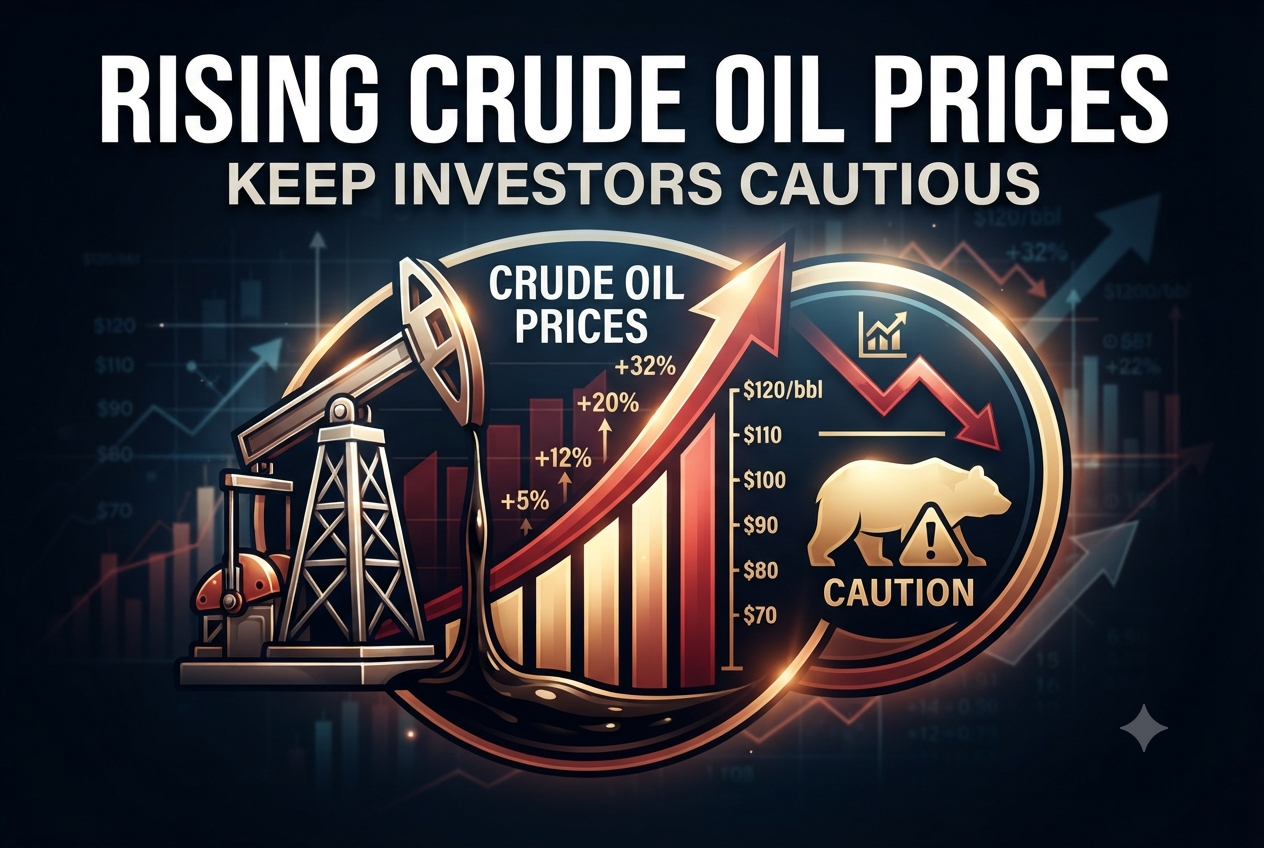
Global financial markets faced renewed uncertainty on November 27 as crude oil prices remained elevated amid growing concerns about supply disruptions in the Middle East. Attacks on oil tankers, shipping routes and energy infrastructure raised fears that exports from the region could face further interruptions, pushing crude prices close to their highest levels of the month.
Brent crude futures traded around $96.61 per barrel on Friday, while US West Texas Intermediate (WTI) crude stood near $85.78. The increase followed a strong advance during the previous session and put oil prices on course to end a three-week losing streak.
The development has attracted considerable attention from investors because higher energy prices can influence inflation, transportation costs, corporate profitability and central bank policy. With global equity markets already navigating uncertainty surrounding interest rates, economic growth and international trade, rising crude prices have added another challenge to the investment outlook.
Middle East Tensions Increase Supply Concerns
The latest increase in crude prices was driven primarily by concerns about the security of energy infrastructure and shipping routes in the Middle East.
Reports of attacks on vessels in the Strait of Hormuz raised concerns about the movement of oil exports through one of the world’s most strategically important energy corridors. The Iran-aligned Houthi group also claimed attacks on Saudi facilities, including the Ras Tanura refinery complex.
A separate projectile strike on Saudi Arabia’s Jazan refinery temporarily halted some operations and resulted in a worker’s death, according to reports. These developments increased concerns about the possibility of further disruptions to regional energy production and transportation.
The Strait of Hormuz is particularly important because a substantial share of internationally traded oil passes through the narrow waterway. Any prolonged interruption could affect supplies to major importing economies across Asia, Europe and other regions.
Although not every reported attack results in a lasting reduction in oil production, the possibility of disrupted shipments can increase the risk premium built into crude prices.
Brent and WTI Prices Reflect Market Uncertainty
Oil markets responded to the latest developments with strong price movements.
Brent crude gained nearly $2 during Thursday’s session, settling at approximately $96.57 per barrel. Friday trading saw the benchmark remain close to $97, despite a small early decline in some market quotations.
WTI also advanced compared with its previous settlement, trading around $85.78 on Friday. US markets had been closed for Thanksgiving on Thursday, meaning WTI did not record a regular settlement during that session.
The movement in both benchmarks indicates that traders are increasingly considering geopolitical risks when assessing the global oil supply outlook.
Analysts have suggested that Brent could move above $100 per barrel if there is clearer evidence that available supplies are becoming constrained. However, such a move would depend on the scale and duration of actual disruptions rather than geopolitical concerns alone.
Oil Price Volatility Creates Challenges for Global Equities
Rising crude oil prices can influence stock markets through several economic channels.
For energy-producing companies, higher oil prices may improve revenue and profitability, particularly when production costs remain stable. However, the impact is less favourable for industries that depend heavily on fuel and transportation.
Airlines, logistics companies, shipping operators, automobile manufacturers and chemical producers can face increased operating expenses when energy prices rise. If businesses cannot pass these costs on to customers, profit margins may come under pressure.
Higher oil prices can also affect consumer spending. When households spend more on petrol, diesel, heating and transportation, they may have less disposable income for other goods and services.
For investors, these factors create uncertainty about future corporate earnings. As a result, markets may become more cautious when crude prices rise sharply, particularly if the increase is accompanied by concerns about inflation and slower economic growth.
Inflation and Interest-Rate Expectations Remain Important
Energy prices are an important component of inflation because they influence transportation, manufacturing, electricity generation and the cost of several essential goods.
A sustained increase in crude prices could make it more difficult for central banks to bring inflation under control. If higher energy costs spread across the economy, policymakers may need to maintain restrictive interest rates for longer than investors currently expect.
Higher borrowing costs can affect businesses by increasing financing expenses and reducing the attractiveness of future investments. They can also place pressure on equity valuations, particularly in sectors whose market prices depend heavily on expected future earnings.
However, the impact of a short-term oil price increase may be limited if supplies recover quickly and energy prices subsequently decline.
Investors will therefore focus on whether the latest geopolitical developments produce a lasting increase in energy costs or only a temporary market reaction.
OPEC+ Decisions Add to the Market Outlook
The upcoming OPEC+ meeting is another important factor influencing oil market expectations.
Producers are expected to discuss their output strategy for 2027, with market participants watching for indications about whether existing production targets will remain unchanged during the first quarter.
A decision to maintain current output targets could provide continuity to the supply outlook. However, any unexpected adjustment could influence prices depending on the broader balance between global production and consumption.
The market is also weighing geopolitical supply risks against expectations of adequate global production in the coming months. This creates two competing forces: the possibility of immediate disruptions and the potential for sufficient supply to limit a sustained price increase.
The direction of crude prices will depend on how these factors develop.
India Remains Sensitive to Higher Oil Prices
India is particularly exposed to changes in international crude prices because it imports a substantial share of its oil requirements.
Higher crude prices can increase the country’s import expenditure and place pressure on its trade balance. They may also affect domestic fuel pricing, transportation expenses and manufacturing costs.
Oil marketing companies, airlines, paint manufacturers, chemicals producers and logistics businesses are among the sectors that investors may monitor closely during periods of rising energy prices.
If crude remains elevated for an extended period, the impact could also influence inflation expectations and the Reserve Bank of India’s monetary policy considerations.
For Indian equity markets, the relationship between oil prices, the rupee and foreign investment flows will remain important. Higher energy import costs could create additional pressure on the currency and influence international investors’ assessment of India’s economic outlook.
Outlook for Global Oil Markets
The near-term direction of crude prices will largely depend on developments in the Middle East, the security of shipping routes and the extent of any damage to energy infrastructure.
If tensions escalate and exports face prolonged disruption, oil prices could experience further upward pressure. On the other hand, improved shipping conditions, restored production and expectations of sufficient global supply could limit gains.
Investors will also monitor OPEC+ decisions, international inventory data and global demand forecasts for signs of a changing supply-demand balance.
For equity markets, the key issue is whether higher crude prices become a sustained economic burden or remain a temporary response to geopolitical uncertainty.
The Worldonomics Times View
Rising crude oil prices highlight the close relationship between geopolitical developments and global financial markets. The latest supply concerns demonstrate how quickly uncertainty surrounding energy infrastructure and shipping routes can influence commodity prices and investor confidence.
For major oil-importing economies such as India, prolonged increases in crude prices could create challenges for inflation, trade balances and corporate profitability. Businesses with high energy and transportation costs may face additional pressure, while energy producers could benefit from stronger selling prices.
However, investors should avoid assuming that every geopolitical risk will translate into a lasting oil supply shortage. Actual production levels, export movements, inventories and decisions by major producers will remain essential indicators.
The coming weeks will be important in determining whether crude prices continue rising or stabilise as supply conditions become clearer. Until greater certainty emerges, energy market volatility is likely to remain an important consideration for global equity investors.