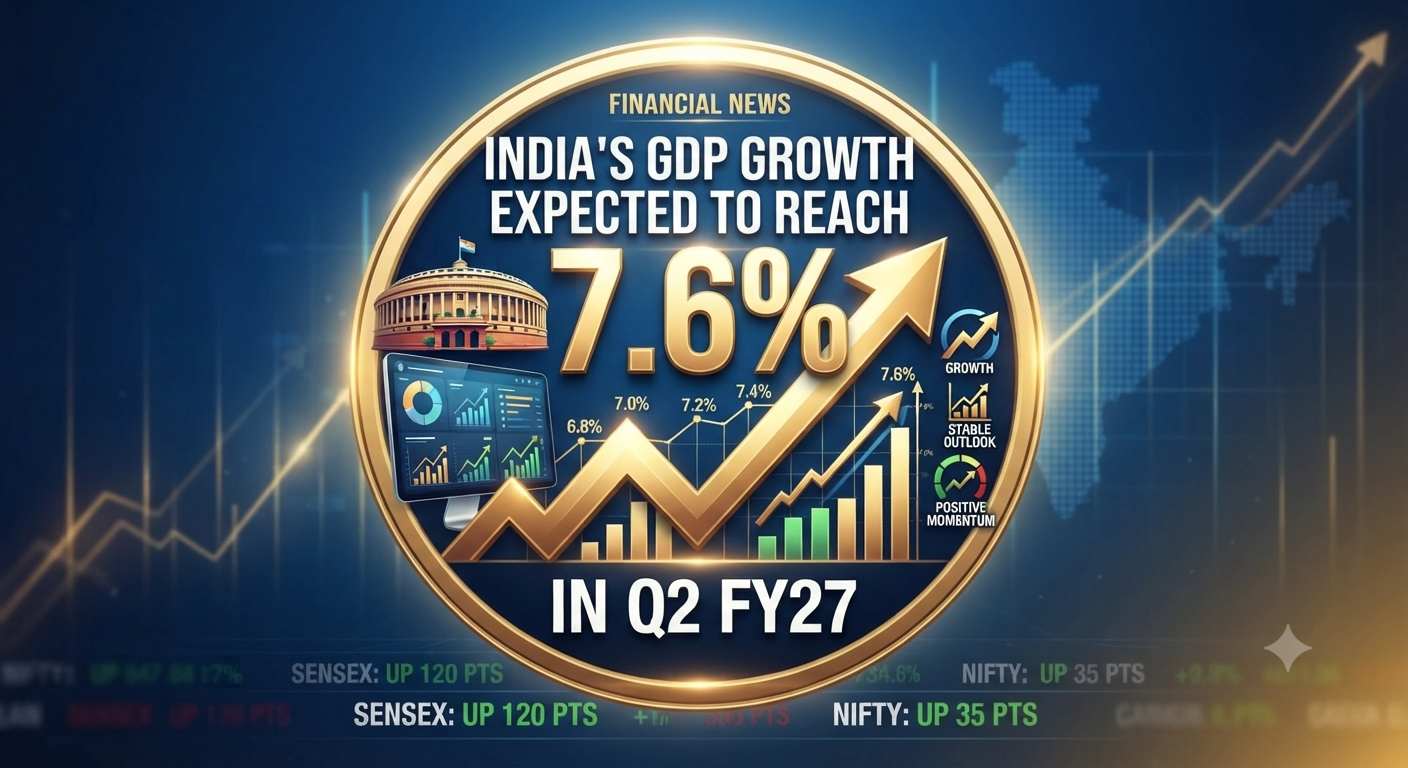
India’s economy is expected to maintain strong growth momentum during the second quarter of the 2026–27 financial year, with gross domestic product (GDP) projected to expand by approximately 7.6% year-on-year. Resilient manufacturing and services activity, improving investment conditions and steady domestic demand are expected to support economic performance despite global uncertainties and pressure from higher energy prices.
The projection, based on a Reuters poll of 43 economists, suggests that India will continue to outperform several major economies. The estimate also reflects the resilience of domestic economic activity amid international trade uncertainty, geopolitical tensions and uneven global growth.
India’s GDP had expanded by 7.8% in the April–June quarter of FY27. If the latest projections are confirmed, growth will remain strong, although slightly below the previous quarter’s performance. Official GDP figures for July–September are scheduled to be released on November 30, 2026.
Investment Activity Provides a Major Growth Boost
Investment is expected to remain one of the most important contributors to India’s economic expansion.
According to India Ratings and Research (Ind-Ra), gross fixed capital formation, which measures investment in fixed assets such as buildings, machinery and infrastructure, is estimated to have increased by 10.5% year-on-year during the second quarter.
The improvement reflects continued spending on infrastructure, industrial capacity and business expansion. Government investment in roads, railways, power infrastructure and logistics has supported economic activity while also encouraging private-sector participation.
Private investment has shown signs of improvement as businesses respond to demand opportunities and expanding production requirements. Increased investment in manufacturing facilities, technology and infrastructure can strengthen productivity and create employment opportunities over the longer term.
However, sustained investment growth will depend on business confidence, financing conditions and expectations of future consumer demand.
Manufacturing and Services Maintain Momentum
Manufacturing activity is another important factor supporting India’s growth outlook.
Domestic production has benefited from infrastructure development, industrial investment and demand for manufactured goods. Sectors such as automobiles, electronics, engineering, pharmaceuticals and capital goods continue to contribute to industrial activity.
The services sector also remains an important pillar of economic expansion. Financial services, information technology, telecommunications, transport, tourism and professional services contribute significantly to employment and national income.
The resilience of manufacturing and services has helped offset weakness in some other areas of the economy. Economists surveyed by Mint indicated that these sectors remained relatively strong during the July–September quarter, supporting expectations of continued growth.
Domestic Consumption Supports Economic Activity
Domestic consumption remains a major source of strength for the Indian economy.
Household spending on automobiles, consumer goods, housing, travel and services has supported businesses across several industries. Measures aimed at improving disposable incomes, including tax-related changes and reductions in selected goods and services tax rates, have also helped support demand.
Vehicle sales and bank credit growth have provided additional indications of economic activity. Stronger consumer demand encourages companies to increase production, expand distribution networks and invest in additional capacity.
However, consumption growth may not be equally strong across all income groups and regions. Uneven rural demand and weaker agricultural conditions could affect spending on essential and non-essential goods.
Economists have also cautioned that some of the benefits from recent tax measures may gradually fade, making sustained income growth and employment creation important for maintaining consumption momentum.
Agriculture and Rural Demand Remain Areas of Concern
Despite the positive overall outlook, agriculture remains a potential source of weakness.
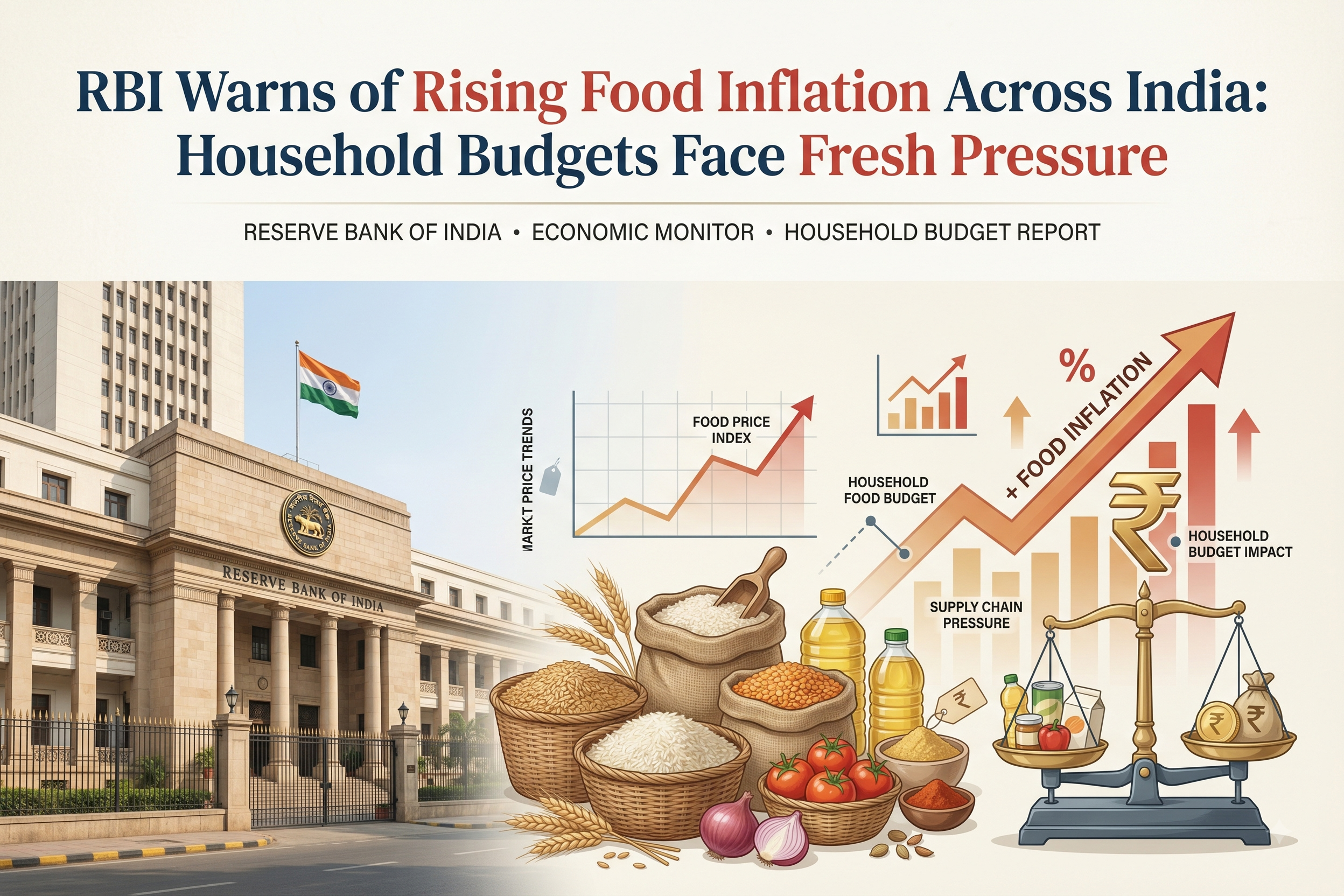
An uneven monsoon and deficient rainfall in some regions could affect agricultural production, rural incomes and demand for consumer products. Lower agricultural output may also influence food prices, creating additional pressure on household budgets.
Rural consumption is particularly important for sectors such as two-wheelers, consumer goods, agricultural equipment and affordable housing. Any sustained weakness in rural purchasing power could affect businesses that depend heavily on these markets.
The performance of agriculture during the second half of FY27 will therefore be important for maintaining balanced economic growth.
Global Risks Could Influence India’s Growth Outlook
India’s economic expansion is taking place against a challenging international environment.
Higher crude oil prices, geopolitical tensions and uncertainty surrounding international trade policies could create pressure on the country’s import bill and production costs.
As a major oil-importing economy, India is particularly sensitive to changes in global energy prices. A prolonged increase in crude prices could affect inflation, transportation expenses and the profitability of energy-intensive businesses.
International interest-rate developments may also influence capital flows, currency movements and domestic financing conditions.
Nevertheless, India’s large domestic market and relatively diversified economic structure provide important support against external disruptions.
Outlook for India’s Economy
The projected 7.6% GDP growth rate indicates that India is expected to retain its position among the faster-growing major economies.
Ind-Ra has raised its full-year FY27 GDP growth estimate to 7.2%, compared with its earlier projection of 7.1%. The Reuters poll also indicated an annual growth expectation of approximately 7.2%.
Looking ahead, infrastructure spending, manufacturing expansion, services activity and domestic consumption are likely to remain central to India’s economic performance.
However, sustaining growth will require continued private investment, stronger employment generation, stable inflation and improvements in rural demand.
The official GDP release on November 30 will provide a clearer picture of the economy’s performance during the second quarter and help investors assess the outlook for the remaining months of FY27.
The Worldonomics Times View
India’s projected 7.6% GDP growth in Q2 FY27 highlights the resilience of its domestic economy at a time when global markets continue to face uncertainty. Investment activity, manufacturing performance and household consumption are providing important support to economic expansion.
However, headline growth figures should be considered alongside the quality and distribution of that growth. Employment generation, rural purchasing power, private-sector investment and productivity improvements will determine how effectively economic expansion translates into broader prosperity.
India must also manage external risks, particularly higher crude oil prices, global trade uncertainty and inflationary pressures.
The upcoming official GDP figures will be an important indicator of the economy’s direction. If the projections are confirmed, India will enter the second half of FY27 with a strong growth foundation. Maintaining that momentum will depend on balanced development, sustained investment and continued improvement in domestic demand.