New Delhi | November 25, 2026
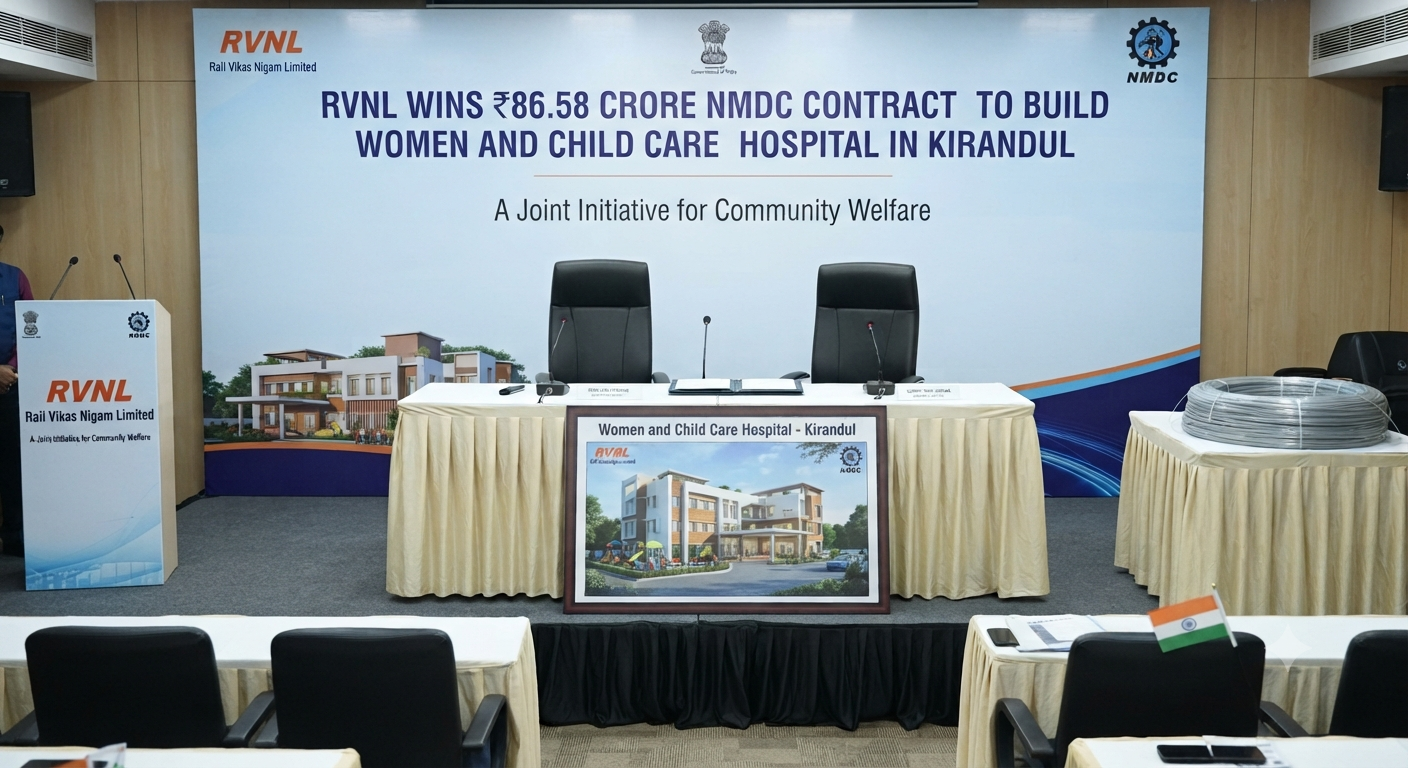
Rail Vikas Nigam Limited (RVNL) has secured a contract from state-owned mining major NMDC Limited for the construction of a super-speciality hospital dedicated to women and child care at Kirandul in Chhattisgarh. The project, valued at ₹86.58 crore including Goods and Services Tax (GST), is expected to strengthen healthcare infrastructure in the region and expand access to specialised medical facilities.
RVNL disclosed that it had received the Letter of Award of Contract (LAC) from NMDC on November 23, 2026, through a regulatory filing under Regulation 30 of the SEBI Listing Obligations and Disclosure Requirements Regulations, 2015. The contract is part of RVNL’s normal course of business. The reported execution period is 14 months.
The project brings together two major public sector enterprises in an initiative that connects infrastructure development with the delivery of essential healthcare services.
A Specialised Healthcare Facility for Kirandul
The proposed hospital will be developed at Kirandul, an important mining and industrial centre in Chhattisgarh associated with NMDC’s iron ore operations. The facility is intended to focus on women’s healthcare and child care, addressing medical requirements that often call for specialised infrastructure, trained professionals and dedicated treatment facilities.
A super-speciality hospital can support a wider range of services than a general healthcare centre, depending on its final design, staffing and clinical facilities. For women and children, access to appropriate medical care is particularly important for maternal health, childbirth, newborn care, paediatric treatment and the management of specialised health conditions.
The development is expected to add to the region’s healthcare infrastructure. Residents in and around Kirandul could benefit from improved access to specialised services, although the actual range of treatments and operational capacity will depend on the facilities established by the project authorities.
Contract Details and Execution Timeline
The contract has been awarded by NMDC to RVNL for the construction of the Super-Speciality Hospital for Women and Child Care at Kirandul, Chhattisgarh.
The reported order value stands at ₹86.58 crore, inclusive of 18% GST. RVNL is expected to complete the work within 14 months. The company has classified the project as a domestic contract awarded in the normal course of its business.
The award adds another institutional infrastructure project to RVNL’s portfolio. While the company is widely associated with railway infrastructure development, its capabilities also extend to civil construction and other infrastructure-related assignments.
For NMDC, the project forms part of its broader role as a public sector enterprise with a significant operational presence in the region. Investment in healthcare and community infrastructure can complement industrial activity by helping improve access to essential services for employees and surrounding populations.
RVNL Expands Its Infrastructure Portfolio
RVNL was established to undertake railway infrastructure projects and has developed experience in the execution of railway lines, bridges, stations, electrification and other major civil engineering works. Over time, the company has also pursued opportunities in sectors beyond its traditional railway project portfolio.
The NMDC hospital contract illustrates how its construction and project-management capabilities can be applied to institutional infrastructure. Such projects require coordination across engineering, procurement, construction, quality management and compliance with technical specifications.
Successful execution will depend on timely mobilisation of resources, effective contractor coordination and adherence to the project schedule. The 14-month timeline makes planning and monitoring important throughout the construction process.
For RVNL, the order also reinforces its relationship with another public sector enterprise. Repeat engagement between government-owned companies can create opportunities to use established institutional capabilities for infrastructure requirements across different sectors.
Why Women and Child Healthcare Infrastructure Matters
Access to specialised healthcare remains an important development priority, particularly in areas located far from major urban medical centres. Women and children may require timely access to obstetric, neonatal, paediatric and other specialised services. Delays in reaching appropriate facilities can create additional challenges for patients and families.
A dedicated hospital in Kirandul could help address some of these geographical barriers by bringing specialised medical infrastructure closer to the local population. It may also reduce the need for certain patients to travel long distances for treatment, depending on the services ultimately provided.
Beyond direct patient care, a well-equipped hospital can contribute to the wider healthcare ecosystem by supporting medical employment, nursing services, diagnostic facilities and related support functions.
However, the construction of a hospital is only one part of healthcare delivery. Its long-term effectiveness will depend on the availability of qualified doctors, nurses, technicians, medicines, equipment and reliable operational funding. Ensuring that the facility is adequately staffed and accessible will be essential to translating the construction investment into meaningful healthcare outcomes.
NMDC’s Role in Regional Development
NMDC is one of India’s major public sector iron ore producers, with important mining operations in Chhattisgarh. Its industrial activities have a significant connection with the economic development of the region.
Infrastructure investment around mining locations can extend beyond production facilities to include housing, roads, education, healthcare and other community services. Such development can help improve living conditions and support the needs of people connected with industrial areas.
The proposed women and child care hospital is an example of investment in social infrastructure alongside industrial activity. Its value will ultimately be reflected in the quality, accessibility and continuity of healthcare services delivered after completion.
The Worldonomics Times View
RVNL’s ₹86.58 crore hospital construction contract from NMDC highlights the growing importance of infrastructure development beyond traditional transport and industrial projects. While RVNL’s core identity is closely associated with railway construction, this assignment demonstrates how its engineering and project-execution capabilities can support essential public infrastructure.
The focus on women and child care is particularly relevant for a region where access to specialised medical services may involve geographical and logistical challenges. A dedicated facility at Kirandul could improve healthcare access for local communities and support the broader development of the area.
Nevertheless, the project’s success should not be measured only by construction completion. The availability of qualified medical professionals, modern equipment, affordable treatment and dependable hospital management will determine its long-term contribution.
The 14-month execution schedule provides a clear construction target, but effective coordination between RVNL, NMDC and relevant authorities will be necessary. Timely delivery, quality standards and a strong operational framework should remain central priorities.
Conclusion: RVNL’s new contract represents an important investment in healthcare infrastructure at Kirandul. If completed on schedule and supported by effective hospital operations, the project could strengthen access to specialised women and child healthcare while adding a meaningful social infrastructure asset to the region.