Published by: The Worldonomics Times
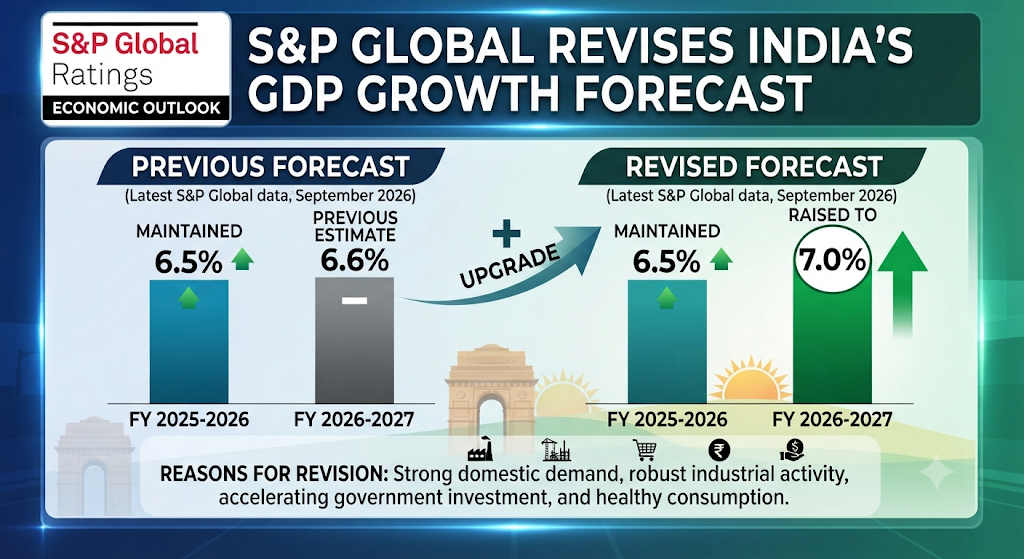
India’s economic growth story continues to attract global attention, with the country maintaining its position among the world’s fastest-growing major economies. However, emerging economic challenges have prompted a reassessment of its growth prospects. S&P Global has revised India’s GDP growth forecast for FY2028 to 7%, while retaining its projection for FY2027 at the same level. The revision highlights growing concerns surrounding inflationary pressures, agricultural performance and the broader economic environment.
Although a projected growth rate of 7% reflects considerable economic resilience, the revised outlook also signals that India may face several challenges in sustaining its growth momentum over the coming years.
India’s Growth Outlook: Strong Fundamentals Amid Emerging Challenges
India has established itself as an important contributor to global economic growth, supported by domestic consumption, infrastructure development, manufacturing expansion and a growing services sector. Government initiatives aimed at improving industrial capacity, attracting foreign investment and strengthening digital infrastructure have further supported the country’s economic ambitions.
However, economic growth is influenced by several interconnected factors, including domestic demand, global trade conditions, commodity prices, monetary policy and investment activity.
S&P Global’s revised FY2028 projection indicates that maintaining high growth rates may become increasingly challenging as economic uncertainties evolve. While the 7% forecast remains encouraging compared with many other major economies, it also underlines the importance of addressing structural and short-term economic risks.
The difference between potential growth and actual economic performance will depend significantly on how effectively India manages these emerging challenges.
Rising Inflation: A Key Concern for Economic Stability
Inflation remains one of the major factors influencing India’s economic outlook. Rising prices of essential commodities, food products, fuel and other everyday necessities can place considerable pressure on household budgets.
When inflation increases, consumers may reduce discretionary spending, affecting demand across sectors such as retail, automobiles, hospitality and consumer goods. This can eventually influence business revenues, investment decisions and overall economic activity.
Persistent inflation also presents challenges for monetary policymakers. The Reserve Bank of India must balance price stability with the objective of supporting economic growth. Higher interest rates can help control inflationary pressures but may also increase borrowing costs for businesses and households.
For industries dependent on credit, including real estate, manufacturing and infrastructure, elevated financing costs can influence expansion plans and investment activity.
Therefore, controlling inflation without significantly weakening economic demand will remain an important priority for India’s policymakers.
Weak Agricultural Output Adds to Economic Uncertainty
Agriculture continues to play a crucial role in India’s economy, supporting rural livelihoods, employment and food security. Consequently, agricultural performance has a direct influence on household incomes, consumption patterns and food prices.
Weak agricultural output can create multiple economic challenges. Lower production may reduce farmers’ earnings, affect rural purchasing power and increase the prices of essential food commodities.
The agricultural sector remains particularly sensitive to unpredictable weather conditions, irregular monsoon patterns, water shortages, changing climatic conditions and fluctuations in input costs.
A weaker agricultural performance can also create additional inflationary pressures, particularly when the supply of essential food items becomes constrained.
Strengthening agricultural productivity through modern farming techniques, irrigation infrastructure, improved storage facilities, supply-chain development and access to agricultural technology will be essential for reducing these risks.
What Does the Forecast Mean for Businesses and Investors?
The revised growth projection has important implications for businesses, investors and financial markets.
For businesses, a stable 7% growth outlook offers opportunities for expansion, particularly in sectors supported by domestic demand, infrastructure investment, technology and manufacturing.
However, companies may need to prepare for higher input costs, changing consumer spending patterns and potential uncertainty in financing conditions.
Investors will also need to monitor inflation trends, interest-rate decisions, government spending and corporate earnings before making long-term investment decisions.
India’s infrastructure, renewable energy, technology, healthcare and manufacturing sectors could continue to offer growth opportunities. Nevertheless, investment performance will depend on broader economic conditions and individual sector fundamentals.
For international investors, India’s large consumer market and long-term development potential remain important attractions. Maintaining policy stability, improving business competitiveness and strengthening economic infrastructure will be essential for sustaining investor confidence.
The Road Ahead: Sustaining India’s Economic Momentum
India’s economic outlook will depend on its ability to manage inflation, improve agricultural productivity and strengthen the foundations of long-term growth.
Policy measures supporting infrastructure development, employment generation, manufacturing competitiveness and private investment can help create additional economic opportunities.
At the same time, improving rural incomes and strengthening agricultural supply chains will be important for maintaining balanced domestic consumption.
The government and policymakers must also continue focusing on fiscal discipline, efficient public expenditure and structural reforms that encourage private-sector participation.
While global uncertainties remain an important consideration, India’s domestic economic strengths provide a foundation for continued expansion.
The revised S&P Global forecast should therefore be viewed as an indication of emerging challenges rather than a signal of economic weakness. India’s ability to respond effectively to these challenges will determine whether it can maintain its growth trajectory and strengthen its position in the global economy.
The Worldonomics Times View
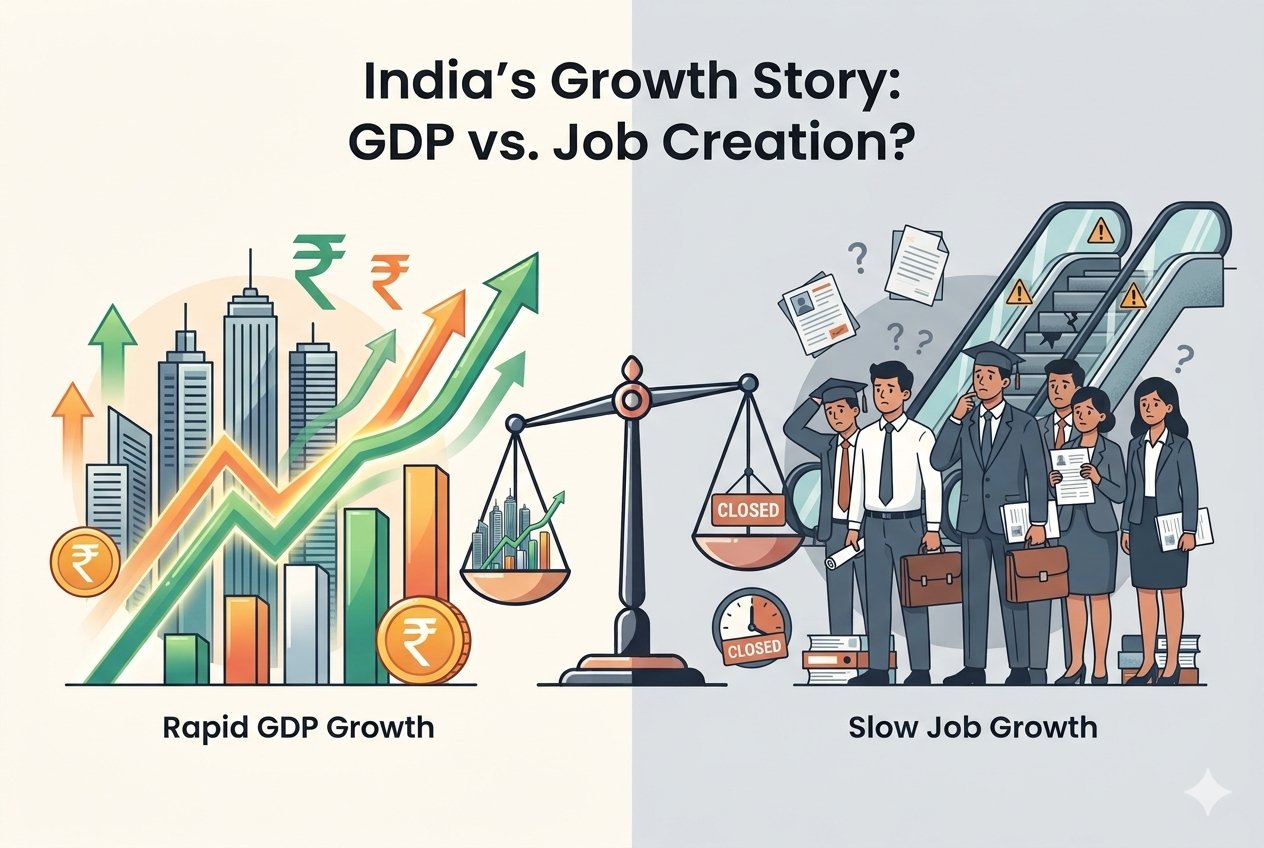
A projected GDP growth rate of 7% demonstrates India’s continuing economic strength, but sustaining this momentum will require more than strong headline growth figures.
Inflation management, agricultural development and investment-led expansion must remain central to India’s economic strategy. Particular attention should be given to rural purchasing power, food supply chains and the cost of doing business.
India has considerable long-term economic potential. However, translating that potential into sustainable and inclusive growth will depend on effective policymaking, productivity improvements and stronger economic fundamentals.
The Worldonomics Times believes that India’s next phase of economic development must focus not only on achieving higher GDP growth but also on ensuring that growth is stable, inclusive and beneficial across all sections of society.
Disclaimer: This article is for informational and economic commentary purposes only. GDP projections and economic outcomes are subject to revision as new data and developments emerge.