Singapore | November 25, 2026
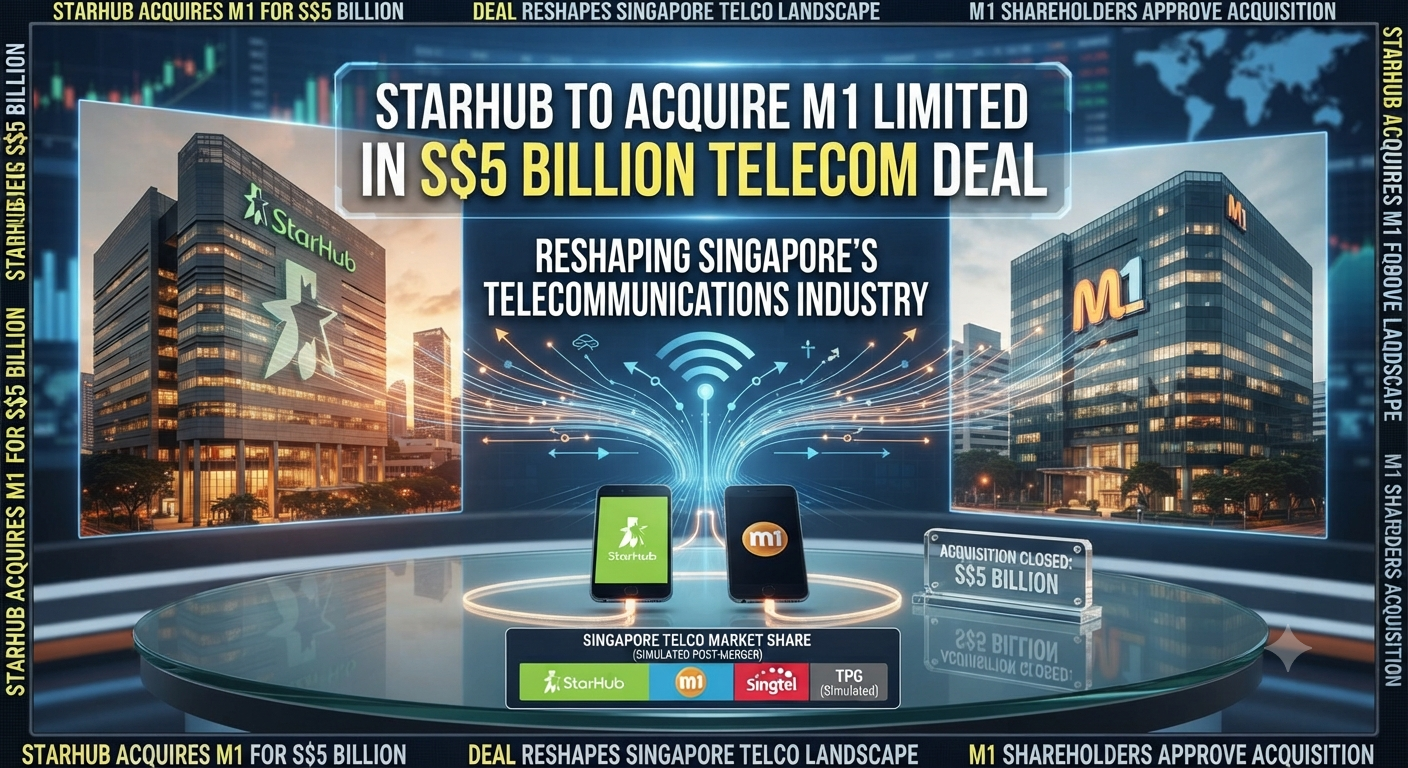
Singapore’s telecommunications industry is set for a major transformation as StarHub has agreed to combine with mobile operator M1 in an all-share transaction that will create a telecommunications group with an estimated enterprise value of S$5 billion. Announced on November 24, 2026, the proposed merger represents a significant development in Singapore’s telecom sector, where operators are increasingly looking to strengthen their market positions, improve operational efficiency and prepare for the next phase of digital infrastructure development.
The transaction brings together two of Singapore’s established telecommunications businesses under a larger corporate structure. M1, which is majority-owned by Keppel, will become a subsidiary of StarHub upon completion. The combined business is expected to serve approximately 4.1 million customers across mobile, broadband, enterprise connectivity and digital services.
The agreement comes at a time when telecommunications companies face rising infrastructure costs, growing competition and increasing demand for faster, more reliable digital connectivity.
A Strategic Move to Strengthen Market Position
The proposed combination is designed to create a stronger telecommunications platform with greater operational scale and financial capacity. By bringing together their respective networks, customer bases and digital capabilities, StarHub and M1 aim to improve service delivery while expanding their ability to compete in Singapore’s evolving connectivity market.
Under the transaction structure, StarHub will issue approximately 651.7 million new shares to M1’s shareholders. These shares will represent around 27.4% of StarHub’s enlarged share capital following completion.
Keppel, which holds an effective interest of approximately 83.9% in M1, is expected to receive an effective 23% stake in the combined company. The remaining 4.4% will be held by M1’s other shareholders.
The transaction values the combined telecommunications group at approximately S$5 billion in enterprise value. Separately, M1’s standalone enterprise value is estimated at approximately S$1.06 billion before the inclusion of the estimated value of future synergies. The implied M1 valuation, including those synergies, is approximately S$1.36 billion.
Operational Efficiency and Cost Synergies
One of the most important motivations behind the merger is the opportunity to achieve substantial operational savings.
The companies estimate that the combination could generate annual operating expenditure synergies of approximately S$110 million by 2030. The estimated net present value of these cost savings stands at around S$1.1 billion.
These efficiencies are expected to come from integrating network infrastructure, optimising technology platforms, consolidating commercial operations and improving information technology systems.
The companies also anticipate opportunities to streamline overlapping functions and allocate resources more effectively. Such measures could help strengthen profitability while creating additional financial capacity for investment in next-generation telecommunications infrastructure.
The combined group is projected to generate approximately S$2.6 billion in revenue and S$500 million in EBITDA, based on the twelve months ended June 2026.
Greater Investment in 5G, AI and Digital Infrastructure
Beyond immediate financial benefits, the merger reflects a broader ambition to strengthen Singapore’s digital infrastructure.
As businesses increasingly adopt artificial intelligence, cloud computing, cybersecurity solutions and data-intensive applications, demand for reliable and high-capacity telecommunications networks continues to grow.
The combined company expects to strengthen investment in 5G networks, fibre infrastructure, cloud services, cybersecurity and AI-ready digital capabilities.
Greater control over network assets could also support improved infrastructure planning and more efficient deployment of advanced technologies.
The consolidation of Antina, the companies’ existing 5G network joint venture, under full ownership is another important element of the proposed transaction. It is expected to support better coordination of spectrum and network resources, improve network efficiency and facilitate future technological upgrades.
What the Deal Means for Customers and Businesses
For consumers, the proposed merger could eventually create opportunities for improved network quality, broader service offerings and more integrated digital solutions.
The combined group intends to bring together premium, digital and value-oriented brands to serve different customer segments. Its expanded capabilities could also strengthen enterprise offerings, particularly in managed connectivity, secure cloud infrastructure, data solutions and digital transformation services.
However, the companies have indicated that customers will retain their existing plans, services and points of contact during the transition. StarHub and M1 will continue operating and competing independently until the proposed transaction is completed.
Businesses could also benefit from a stronger enterprise technology platform, particularly as organisations increasingly require secure connectivity, hybrid cloud infrastructure and advanced cybersecurity services.
Regulatory Approvals and Completion Timeline
Despite the strategic importance of the agreement, the transaction is not yet complete. It remains subject to regulatory approvals, including clearance from Singapore’s Infocomm Media Development Authority and the Ministry of Digital Development and Information.
Shareholder approvals from both StarHub and Keppel will also be required, alongside other applicable transaction conditions.
Subject to the necessary approvals, the companies expect the merger to be completed in the first half of 2027.
Until then, both businesses will continue their existing operations while preparing for the proposed integration.
The deal signals a significant shift in Singapore’s telecommunications landscape and highlights the growing importance of scale, technological investment and operational efficiency in a highly competitive industry.
The Worldonomics Times View
The proposed StarHub-M1 merger represents a strategic turning point for Singapore’s telecommunications industry. In an increasingly digital global economy, telecommunications infrastructure is no longer simply a utility; it has become a critical foundation for economic competitiveness, innovation and business development.
The Worldonomics Times believes that the transaction reflects a growing need for telecommunications companies to achieve greater scale, optimise infrastructure investments and develop new revenue opportunities beyond traditional mobile services.
The estimated S$1.1 billion in operational synergies highlights the financial potential of combining complementary businesses. More importantly, the merger could strengthen Singapore’s ability to support emerging technologies, including artificial intelligence, cloud computing, 5G and advanced cybersecurity.
However, the success of this deal should not be measured exclusively through cost savings and shareholder returns. Maintaining service quality, protecting consumer interests and ensuring competitive pricing will be equally important.
A more consolidated telecommunications market also requires careful regulatory oversight to ensure that competition remains healthy and customers continue to benefit from innovation and choice.
The Worldonomics Times believes that the real value of this merger will depend on how effectively StarHub converts greater market scale into better connectivity, stronger digital infrastructure and sustainable long-term growth. If successfully executed, the deal could become an important milestone in Singapore’s journey towards becoming a leading regional digital economy.
The coming months will therefore be crucial in determining whether this proposed S$5 billion telecom combination can deliver on its strategic ambitions.