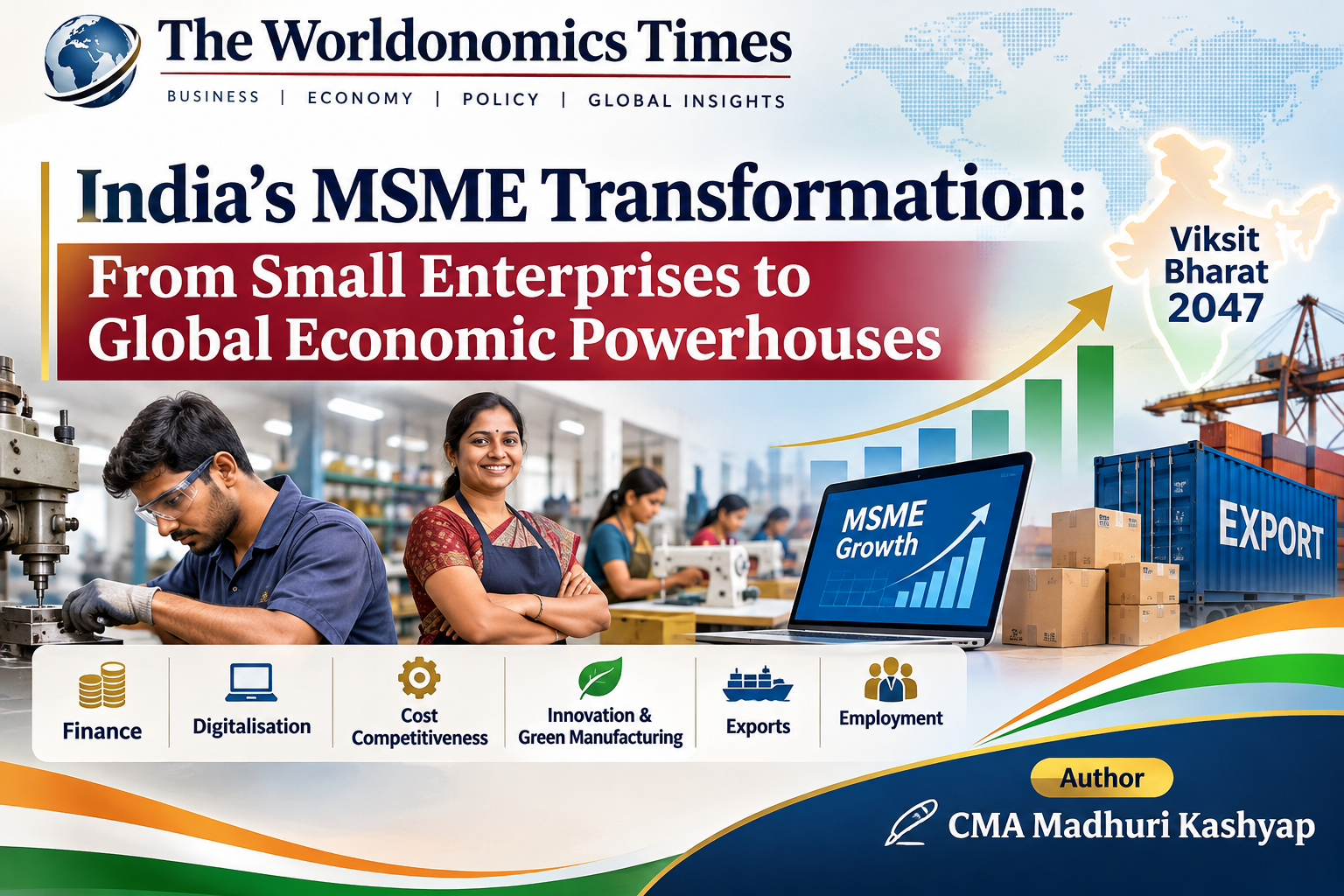
India’s MSME Transformation: From Small Enterprises to Global Economic Powerhouses
How Finance, Technology, Innovation, Cost Competitiveness and Government Policy Can Strengthen India’s MSME Ecosystem and Accelerate Viksit Bharat 2047
India’s journey towards becoming a developed economy by 2047 will depend significantly on the strength, competitiveness and innovation capacity of its Micro, Small and Medium Enterprises (MSMEs). While large corporations contribute substantially to industrial investment and production, MSMEs create employment, support entrepreneurship, strengthen local supply chains and promote balanced regional development.
The MSME sector is no longer merely a supporting segment of the Indian economy. It is increasingly becoming a strategic pillar of manufacturing, international trade, services and economic inclusion.
According to the Economic Survey 2025–26, MSMEs contribute approximately 31.1% of India’s GDP, 35.4% of manufacturing output and 48.58% of total exports. These figures demonstrate the sector’s importance in India’s economic development and its potential to become a stronger participant in global value chains.
1. MSMEs: The Foundation of India’s Economic Growth
India’s MSME ecosystem comprises manufacturers, service providers, traders, artisans, technology enterprises, food-processing units and rural entrepreneurs. These businesses operate across metropolitan cities, industrial clusters, small towns and villages.
One of the most significant contributions of MSMEs is employment generation. The sector provides livelihood opportunities to millions of people and creates avenues for first-generation entrepreneurs, women entrepreneurs and skilled professionals.
Unlike many capital-intensive industries, several MSME activities can generate employment with comparatively lower initial investment. They also encourage local entrepreneurship, promote traditional industries and strengthen economic activities in less-developed regions.
The growth of MSMEs therefore has implications beyond industrial production. It can improve household incomes, reduce regional economic disparities, encourage innovation and strengthen India’s domestic consumption market.
2. Access to Finance: The Foundation of Enterprise Expansion
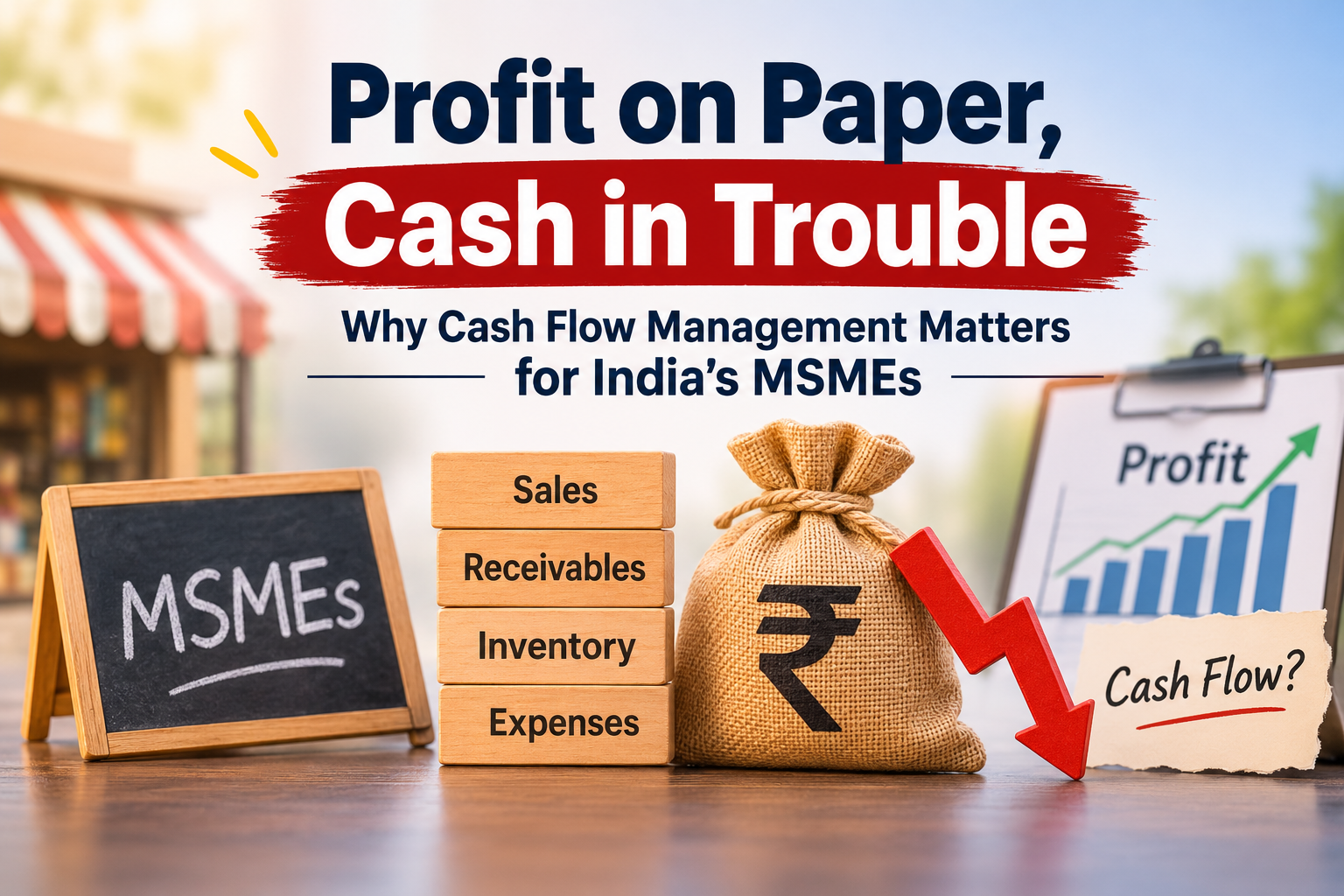
Access to affordable and timely finance remains one of the biggest challenges facing Indian MSMEs.
Many small businesses have viable products, established customers and expansion opportunities but lack adequate working capital. Limited collateral, insufficient credit history, inadequate financial documentation and delayed customer payments often restrict their ability to secure institutional finance.
The Credit Guarantee Scheme, implemented through the Credit Guarantee Fund Trust for Micro and Small Enterprises (CGTMSE), is an important government intervention to improve credit availability.
The enhancement of the credit guarantee ceiling from ₹5 crore to ₹10 crore, effective from April 2025, represents an important step towards supporting the financing requirements of eligible micro and small enterprises.
However, credit availability should not be measured only by the total amount disbursed. Interest costs, repayment capacity, loan processing time and access for first-time entrepreneurs are equally important.
Financial institutions must develop lending models that consider business cash flows, transaction histories, order books and digital financial records. Such an approach can help viable enterprises access credit without excessive dependence on traditional collateral.
3. Digital Transformation: A New Competitive Advantage
Digitalisation is changing how MSMEs operate, manage finances, market products and interact with customers.
Digital payments, cloud accounting, enterprise resource planning (ERP), e-commerce, artificial intelligence and data analytics can help smaller enterprises improve efficiency without making substantial investments in traditional infrastructure.
Several government-supported digital platforms are creating new opportunities:
- Udyam Registration: Facilitates formal registration and recognition of eligible MSMEs.
- Government e-Marketplace (GeM): Provides access to government procurement opportunities.
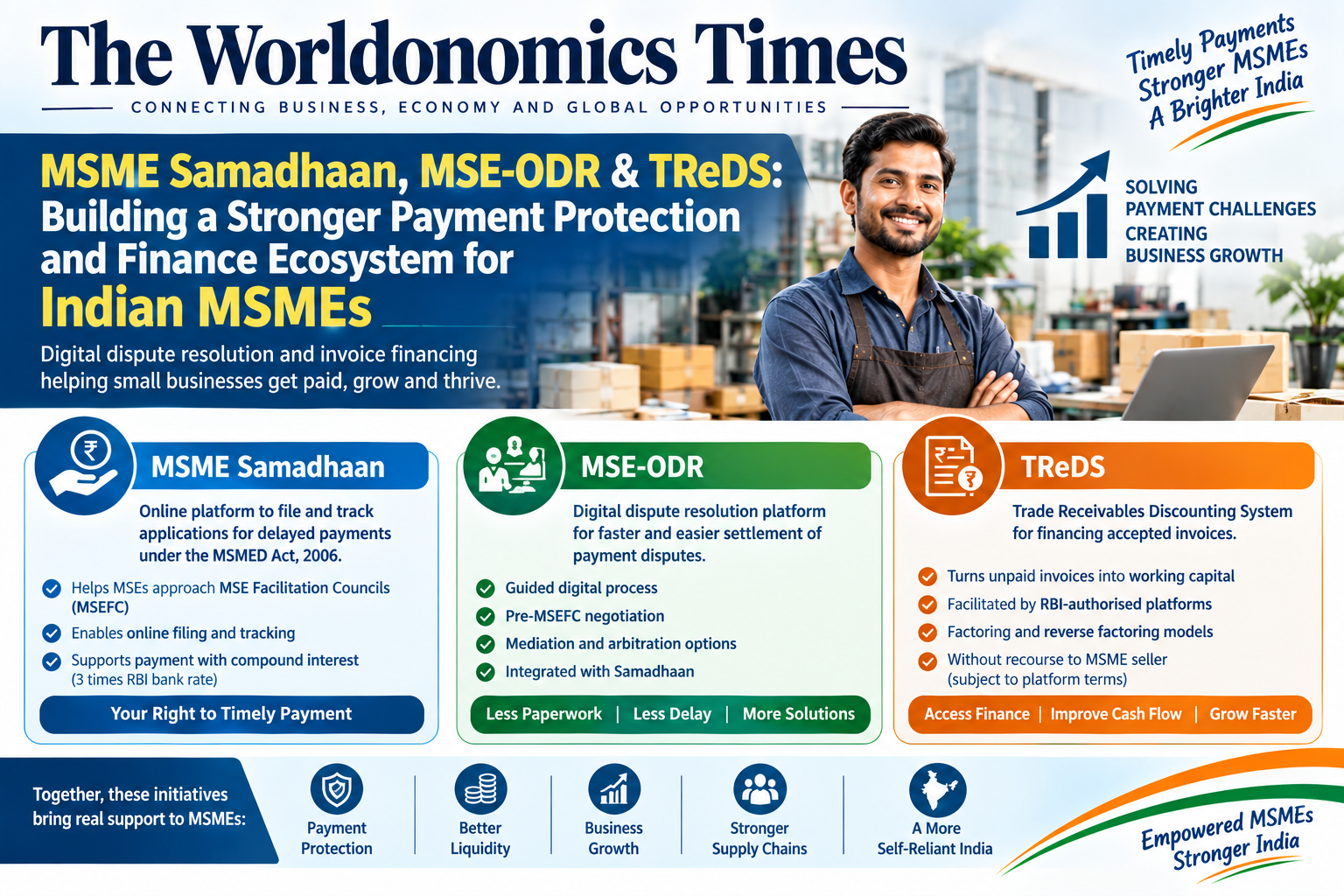
- TReDS: Facilitates financing of eligible trade receivables.
- ONDC: Creates opportunities for digital commerce through an open network.
- Udyam Assist Platform: Supports the formalisation of informal micro enterprises.
These platforms can reduce information gaps, improve transparency and expand market access.
Nevertheless, digital literacy, cybersecurity, technology costs and awareness remain significant challenges. The next phase of MSME development should focus on making digital transformation affordable, accessible and practical, particularly for enterprises in rural and semi-urban areas.
4. Government Procurement and Export Opportunities
Government procurement can become an important growth engine for Indian MSMEs.
Platforms such as GeM provide eligible businesses with opportunities to participate in public procurement. Similarly, TReDS can help eligible suppliers convert approved invoices into liquidity through participating financiers.
The Trade Enablement and Marketing (TEAM) initiative under the Raising and Accelerating MSME Performance (RAMP) programme is another important effort aimed at improving MSME market access, including through digital commerce and ONDC integration.
International markets also offer significant opportunities. Indian MSMEs can expand their presence in engineering products, textiles, pharmaceuticals, food processing, handicrafts, information technology and professional services.
However, entering international markets requires more than competitive pricing. Enterprises must meet international quality standards, maintain consistent production capacity, understand export documentation, comply with product regulations and develop reliable distribution networks.
A coordinated export-development ecosystem involving banks, export promotion councils, industry associations and professional institutions can help MSMEs become globally competitive.
5. Cost Management and Professional Expertise: The Missing Link
One area that deserves greater attention in India’s MSME development strategy is professional financial and cost management.
Many small businesses focus primarily on sales and revenue growth. However, sustainable growth depends equally on profitability, working capital efficiency, cost control and financial discipline.
Scientific costing can help MSMEs identify the actual cost of production, calculate product-wise profitability, control wastage, optimise resource utilisation and establish competitive pricing.
For example, a small manufacturing enterprise may increase its sales substantially but still experience declining profitability because of rising raw material costs, energy expenses, labour costs and inefficient production processes.
The adoption of cost accounting practices, budgeting, variance analysis and internal controls can help businesses identify these problems at an early stage.
Chartered Accountants, Cost Accountants, Company Secretaries and other qualified professionals can contribute significantly by providing financial planning, taxation, compliance, audit, risk management and business advisory services.
MSME development should therefore involve not only access to capital but also access to professional knowledge.
6. Technology, Innovation and Green Manufacturing
The future of MSMEs will increasingly depend on their ability to adopt modern technologies and sustainable production practices.
Automation, artificial intelligence, robotics, advanced manufacturing, energy-efficient equipment and quality-control systems can improve productivity and reduce operating costs.
The RAMP programme, supported by the World Bank, aims to strengthen MSME market access, institutional capacity and competitiveness. Its interventions also include support for green investment and technology transformation.
Green manufacturing is particularly important as international buyers increasingly consider environmental standards, resource efficiency and supply-chain sustainability.
MSMEs that invest in energy conservation, waste reduction, recycling and cleaner production can improve competitiveness while contributing to India’s sustainability objectives.
Technology adoption should not be restricted to large industrial enterprises. Affordable machinery, shared technology centres, common testing facilities and industry-academia partnerships can make modern production technologies accessible to smaller businesses.
7. Key Challenges Requiring Policy Attention
Despite considerable progress, several structural challenges continue to affect MSME competitiveness.
Delayed payments: Late payments from buyers affect working capital and operational continuity.
Technology gaps: Many enterprises cannot afford modern machinery and digital infrastructure.
Skill shortages: Limited access to trained workers affects productivity and quality.
Market limitations: Small businesses often lack branding, marketing and distribution capabilities.
Regulatory complexity: Multiple registrations, licences and compliance requirements can increase administrative costs.
Limited research and development: Many MSMEs lack the financial and technical resources to innovate and develop new products.
Government initiatives must therefore move beyond financial assistance and create an integrated support ecosystem addressing finance, technology, skills, market access and professional management.
8. The Road to Viksit Bharat 2047
India’s aspiration to become a developed economy by 2047 requires a strong and globally competitive MSME sector.
The focus should gradually shift from increasing the number of registered enterprises to improving enterprise productivity, survival rates, profitability, technological capabilities and export competitiveness.
Some strategic priorities should include:
- Developing specialised MSME industrial clusters.
- Expanding collateral-free and affordable credit.
- Promoting professional financial and cost management.
- Encouraging research, innovation and technology adoption.
- Connecting MSMEs with domestic and international supply chains.
- Improving access to government procurement.
- Promoting women-led and rural entrepreneurship.
- Strengthening entrepreneurship education and skill development.
- Encouraging energy-efficient and sustainable manufacturing.
- Improving access to international markets and export finance.
There is also a need for stronger collaboration between the government, financial institutions, universities, professional institutes, industry associations and private enterprises.
Conclusion: Building Global Champions from Local Enterprises
India’s MSME sector has the potential to become one of the strongest drivers of economic transformation. Its contribution to GDP, manufacturing, exports and employment demonstrates that the future of Indian industrial growth cannot be separated from the development of small businesses.
However, the next stage of transformation requires a change in approach. MSMEs must move from survival-oriented operations towards productivity-driven, professionally managed and technology-enabled businesses.
Access to finance, digital infrastructure, scientific costing, professional guidance, innovation and international market connectivity must become integral components of MSME development.
The objective should not simply be to create more small enterprises, but to develop globally competitive Indian businesses capable of generating employment, improving productivity, strengthening exports and creating sustainable economic value.
Strong MSMEs will build strong industries, strong industries will build a strong economy, and a strong MSME ecosystem will play a decisive role in achieving Viksit Bharat 2047.