By The Worldonomics Times Editorial Desk
What if the greatest treasure in life is not money, wealth or professional success, but the courage to follow one’s dreams? This powerful question lies at the heart of The Alchemist, the internationally acclaimed novel by Brazilian author Paulo Coelho.
First published in Portuguese in 1988 under the title O Alquimista, the book has become one of the most widely read contemporary literary works. Its simple storytelling, philosophical ideas and inspiring message about pursuing one’s dreams have connected with millions of readers across different countries and generations.
The novel is much more than an adventure story about a young shepherd searching for treasure. It is a reflection on ambition, destiny, courage, personal growth, spirituality and the importance of understanding one’s purpose in life.
Through the journey of its central character, Santiago, Paulo Coelho encourages readers to recognise their dreams, overcome fear and remain determined even when the path towards success appears uncertain.
About the Book
| Book details | Information |
|---|---|
| Title | The Alchemist |
| Author | Paulo Coelho |
| Original title | O Alquimista |
| First published | 1988 |
| Original language | Portuguese |
| Genre | Philosophical fiction / Adventure |
| Main themes | Dreams, destiny, courage and self-discovery |
Paulo Coelho’s writing style is simple, symbolic and philosophical. Instead of using complicated language, he communicates important life lessons through characters, conversations and experiences.
This simplicity is one of the major reasons behind the novel’s international popularity.
The Story: A Shepherd’s Journey Towards His Dream
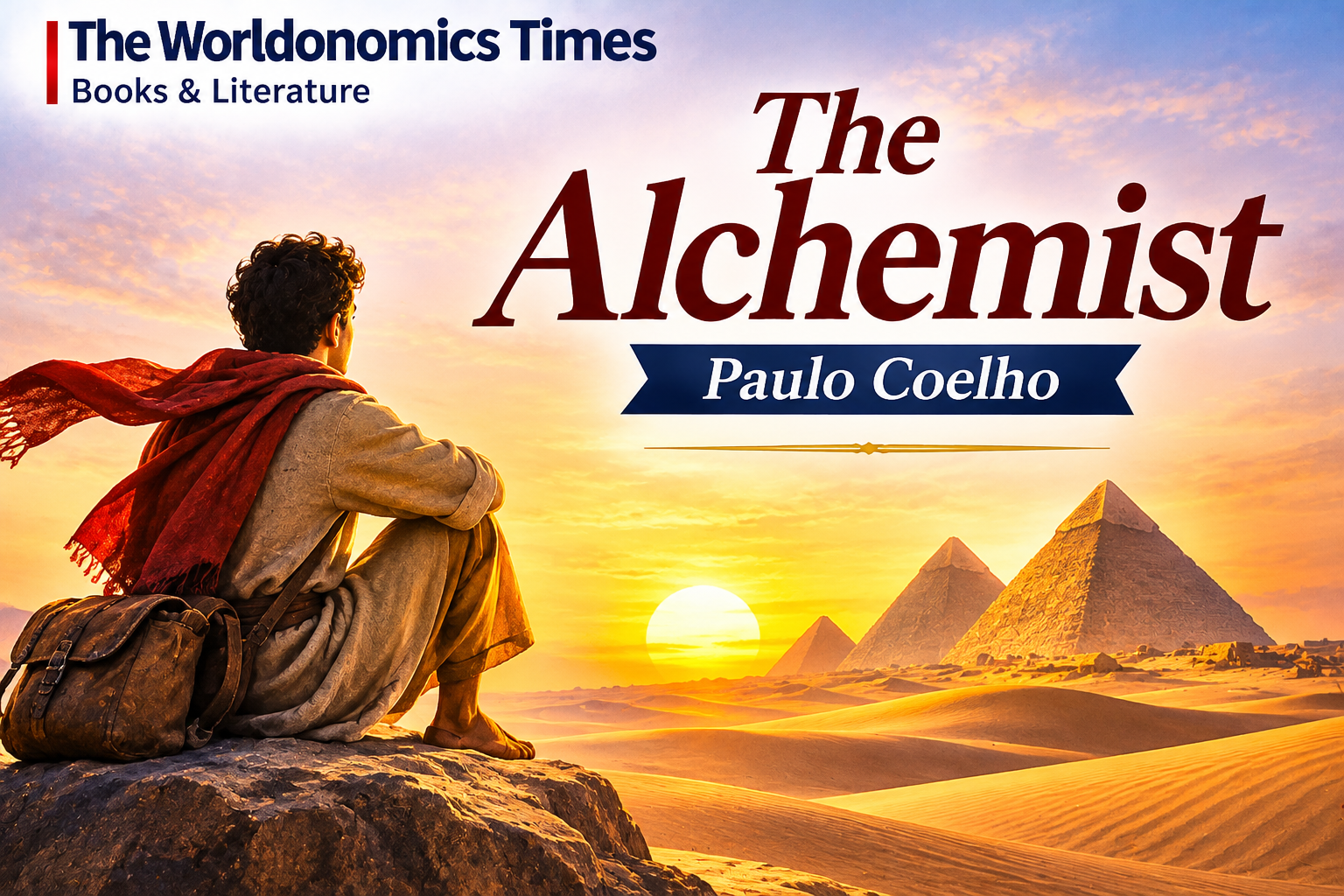
The story revolves around Santiago, a young shepherd living in Spain who repeatedly dreams about finding a treasure near the Egyptian pyramids.
Initially, he does not understand the meaning of his dream. However, after meeting an old king named Melchizedek, he begins to believe that the dream represents something important about his future.
The king introduces Santiago to the concept of a Personal Legend, which refers to an individual’s deepest purpose or ambition in life.
He encourages Santiago to pursue his dream rather than remain confined to a familiar and comfortable existence.
Inspired by this meeting, Santiago decides to sell his sheep and travel towards Egypt in search of the hidden treasure.
His journey is not easy. Shortly after arriving in Africa, he is robbed of his money and finds himself alone in a foreign land.
Instead of abandoning his dream, he takes up work with a crystal merchant. Through hard work, creativity and determination, he helps improve the merchant’s business and earns enough money to continue his journey.
Later, Santiago joins a caravan travelling across the desert. During this journey, he meets an Englishman who is studying alchemy and searching for a mysterious alchemist.
The caravan eventually reaches an oasis, where Santiago meets Fatima, a young woman with whom he falls in love.
Although he wishes to remain with her, he understands that abandoning his journey would mean giving up his Personal Legend.
Fatima encourages him to continue pursuing his dream.
Eventually, Santiago meets the Alchemist, who guides him through the final stage of his journey. Through difficult experiences and personal discoveries, Santiago gradually learns that the search for treasure is also a journey towards understanding himself.
The ending delivers an unexpected lesson about dreams, destiny and the meaning of treasure.
Understanding the Concept of Personal Legend
One of the most important ideas in The Alchemist is the concept of a Personal Legend.
According to the novel, every individual has a unique dream or purpose that gives direction to life.
However, many people gradually abandon their ambitions because of fear, social expectations, financial difficulties or the desire for security.
Santiago’s journey demonstrates the importance of identifying what truly matters and having the courage to pursue it.
This idea is relevant to students deciding their careers, entrepreneurs building businesses, professionals seeking growth and individuals looking for a meaningful direction in life.
The book suggests that success begins with understanding one’s ambitions and taking action towards achieving them.
Major Characters and Their Significance
1. Santiago – The Dreamer
Santiago represents courage, curiosity and determination. His willingness to leave his comfortable life and explore the unknown demonstrates the importance of taking risks to achieve meaningful goals.
2. Melchizedek – The Guide
The old king introduces Santiago to the concept of Personal Legend. He represents wisdom, guidance and the importance of recognising opportunities.
3. The Crystal Merchant – The Fear of Change
The crystal merchant has a dream of travelling to Mecca but never takes the necessary steps to achieve it.
His character represents people who allow fear and comfort to prevent them from pursuing their ambitions.
4. Fatima – Love and Understanding
Fatima represents genuine love and emotional support. Her character demonstrates that meaningful relationships should encourage personal growth rather than restrict individual ambitions.
5. The Alchemist – Wisdom and Transformation
The Alchemist guides Santiago towards deeper understanding. He represents knowledge, self-discovery and the transformation that comes through experience.
Five Important Lessons from The Alchemist
1. Follow Your Dreams
The novel encourages readers not to abandon their ambitions simply because the journey appears difficult.
Dreams provide direction, but achieving them requires action, patience and determination.
2. Overcome the Fear of Failure
Fear often becomes a greater obstacle than the actual challenges people face.
Santiago experiences financial loss, uncertainty and disappointment, yet continues moving forward.
The book reminds readers that failure can become an important part of personal development.
3. Learn from Every Experience
Every individual Santiago meets teaches him something valuable.
His experiences with the crystal merchant, the Englishman, Fatima and the Alchemist help him develop the knowledge and confidence required to continue his journey.
The message is that learning does not happen only through formal education. Real-life experiences also contribute significantly to personal growth.
4. Recognise the Value of Love
The relationship between Santiago and Fatima demonstrates that love and ambition do not necessarily have to conflict.
A meaningful relationship should allow individuals to grow, discover themselves and pursue their aspirations.
5. Understand That the Journey Matters
The most important lesson of the novel is that achieving a goal is not the only measure of success.
The experiences, relationships, challenges and personal transformations encountered along the way are equally valuable.
Why The Alchemist Is Relevant in Today’s World
In today’s competitive environment, people frequently measure success through income, professional positions, business growth, academic qualifications and social recognition.
While these achievements are important, The Alchemist encourages readers to look beyond external measures of success.
For students, the novel highlights the importance of choosing a career based on interests, abilities and ambitions.
For entrepreneurs, it offers an encouraging message about taking calculated risks, learning from setbacks and remaining committed to long-term goals.
For working professionals, it reminds them that career development should involve continuous learning, personal satisfaction and a clear sense of purpose.
The book is also relevant to individuals experiencing career uncertainty or considering a major change in their lives.
Its central message is that personal growth often begins when people move beyond familiar surroundings and become willing to explore new opportunities.
Global Popularity and Literary Significance
Since its publication in 1988, The Alchemist has achieved remarkable international recognition.
Originally written in Portuguese, the novel has been translated into more than 80 languages and published in countries across the world.
Its popularity has established Paulo Coelho as one of the most recognised contemporary authors in international literature.
The novel’s influence extends beyond traditional readers. It is frequently discussed in educational settings, book clubs, motivational programmes and personal development discussions.
Its accessible language and universal themes have helped it connect with readers from different cultural, professional and economic backgrounds.
Conclusion: The Courage to Discover Your Own Path
The Alchemist by Paulo Coelho is much more than a story about a shepherd searching for hidden treasure. It is a philosophical journey that encourages readers to understand their ambitions, overcome fear and discover their potential.
Through Santiago’s experiences, the novel demonstrates that meaningful achievements require courage, determination, patience and a willingness to learn from life’s challenges.
Its enduring message is particularly valuable in a world where people often become occupied with external expectations and forget their own aspirations.
Ultimately, The Alchemist reminds us that life is not simply about reaching a destination. It is also about discovering who we are, understanding what we value and having the courage to pursue what makes our lives meaningful.
For anyone searching for inspiration, direction or a fresh perspective on life, this book remains a worthwhile and memorable read.
The Worldonomics Times | Books, Literature & Knowledge