Behind every Indian wedding lies an economic story involving businesses, employment, entrepreneurship and an entire network of industries.
In India, weddings are much more than personal celebrations. They are cultural traditions, family milestones and increasingly, powerful economic events.
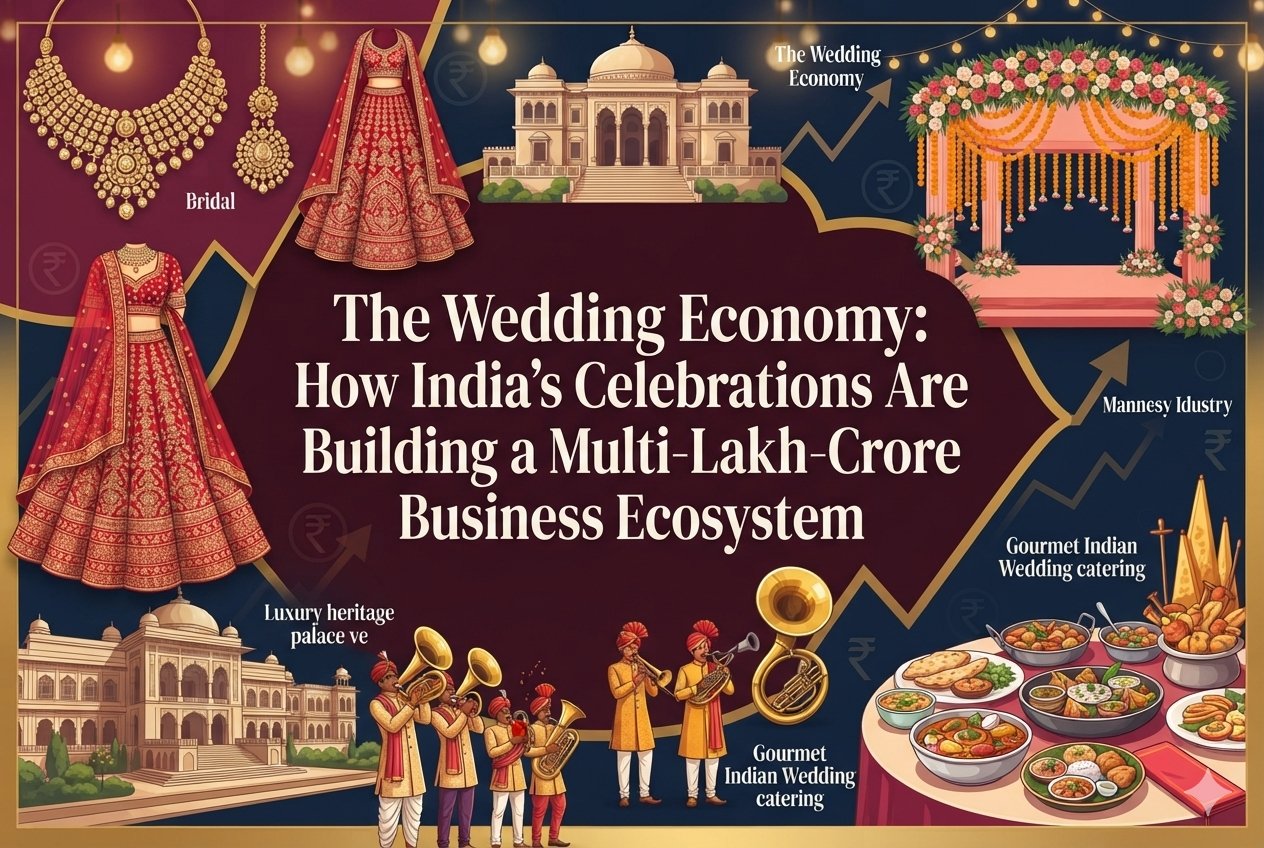
From jewellery purchases and designer outfits to destination venues, event planners, photographers, caterers and hospitality services, a single wedding can activate an extraordinary chain of economic activity.
But have we ever considered how much business activity is generated by one wedding?
The Numbers Behind the Celebrations
India’s wedding economy has reached remarkable proportions.
According to the Confederation of All India Traders (CAIT), approximately 46 lakh weddings during the November–December 2025 wedding season were projected to generate business worth ₹6.5 lakh crore.
A 2026 KPMG study also estimated wedding-linked household expenditure at approximately ₹6.5 lakh crore in 2025.
These are industry estimates rather than official national income or GDP measurements, but they illustrate the enormous scale of India’s celebration economy.
1. One Wedding, Multiple Industries
A wedding creates demand across several interconnected sectors:
- Jewellery: Gold, diamonds, precious stones and traditional ornaments.
- Textiles and fashion: Sarees, lehengas, designer clothing and accessories.
- Hospitality: Hotels, resorts, banquet halls and accommodation.
- Food and catering: Restaurants, sweet shops, local vendors and food suppliers.
- Event management: Wedding planners, decorators, florists and entertainment companies.
- Media and technology: Photography, videography, digital invitations and social media services.
- Travel and transportation: Airlines, taxis, travel agencies and destination management companies.
The economic impact extends far beyond the wedding venue. It reaches manufacturers, wholesalers, retailers, transporters and local service providers.
2. The Rise of Wedding Entrepreneurs
The wedding industry is creating opportunities for a new generation of entrepreneurs.
Wedding planners, makeup artists, professional photographers, invitation designers, destination wedding specialists and customised gifting businesses are transforming traditional services into organised businesses.
What was once largely dependent on personal contacts and word-of-mouth recommendations is increasingly becoming a professional service industry.
For small businesses and MSMEs, weddings provide opportunities to build brands, expand customer networks and generate seasonal revenue.
3. Employment: The People Behind the Celebration
Every grand celebration requires a workforce.
Decorators, electricians, chefs, waiters, drivers, florists, tailors, artisans, musicians, security personnel and event coordinators all contribute to the wedding ecosystem.
Many of these opportunities are temporary or seasonal, but they provide meaningful income to thousands of individuals and small service providers.
The wedding economy therefore supports not only established businesses but also independent professionals and informal workers.
4. Destination Weddings: When Celebrations Become Tourism
A significant transformation in the Indian wedding market is the growing popularity of destination weddings.
Rajasthan, Goa, Kerala, Uttarakhand and other tourist destinations are attracting families looking for distinctive wedding experiences.
This creates additional demand for hotels, resorts, airlines, local transportation, tourism services and regional businesses.
A destination wedding can effectively turn a family celebration into a multi-day tourism event, bringing spending into the local economy.
5. The Financial Side: An Opportunity for Finance Professionals
Behind the glamour lies a complex financial ecosystem.
Wedding businesses must manage:
- Advance payments and vendor contracts.
- Seasonal cash flow and working capital.
- Inventory and cost management.
- GST and other applicable tax compliances.
- Employee payments and contractual obligations.
- Profitability, budgeting and financial reporting.
For finance professionals, this industry offers interesting opportunities in accounting, taxation, internal controls, business planning and financial consulting.
As wedding businesses become more organised, professional financial management will become increasingly important.
6. The Other Side of the Wedding Economy
Every growing industry also carries risks.
Seasonality, unpredictable demand, rising commodity prices, vendor defaults, cancellations and excessive dependence on advance bookings can create financial pressure.
For families, extravagant celebrations can sometimes lead to unnecessary borrowing and financial stress.
For businesses, the real challenge is not simply generating revenue during wedding season but maintaining profitability and financial stability throughout the year.
Sustainable growth requires better budgeting, transparent pricing, responsible spending and professional business management.
The Road Ahead: From Tradition to Economic Opportunity
India’s wedding industry demonstrates how cultural traditions can create significant economic opportunities.
With increasing digitalisation, organised event management, destination tourism and the emergence of specialised wedding businesses, this sector has considerable potential for entrepreneurship and employment.
However, its long-term success will depend on how effectively businesses balance creativity with financial discipline, growth with sustainability and celebration with responsible consumption.
A wedding may last a few days, but the economic activity it generates can support hundreds of businesses and livelihoods.
Perhaps it is time we stopped looking at weddings only as celebrations and started recognising them as an important part of India’s business ecosystem.
Because behind every grand celebration lies a business story waiting to be understood.