By Worldonomics Times | Global Economy
Date: October 27, 2026
Introduction
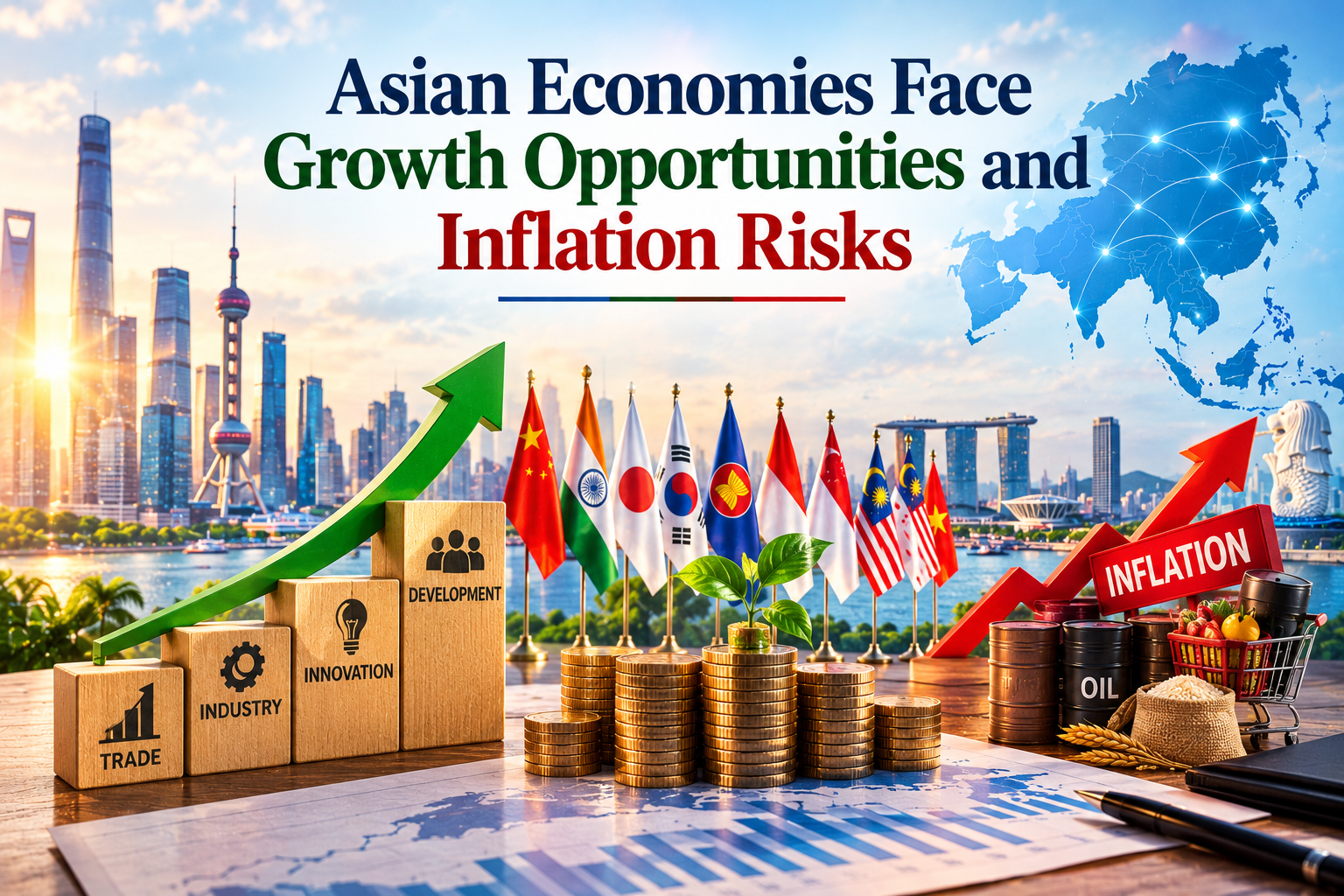
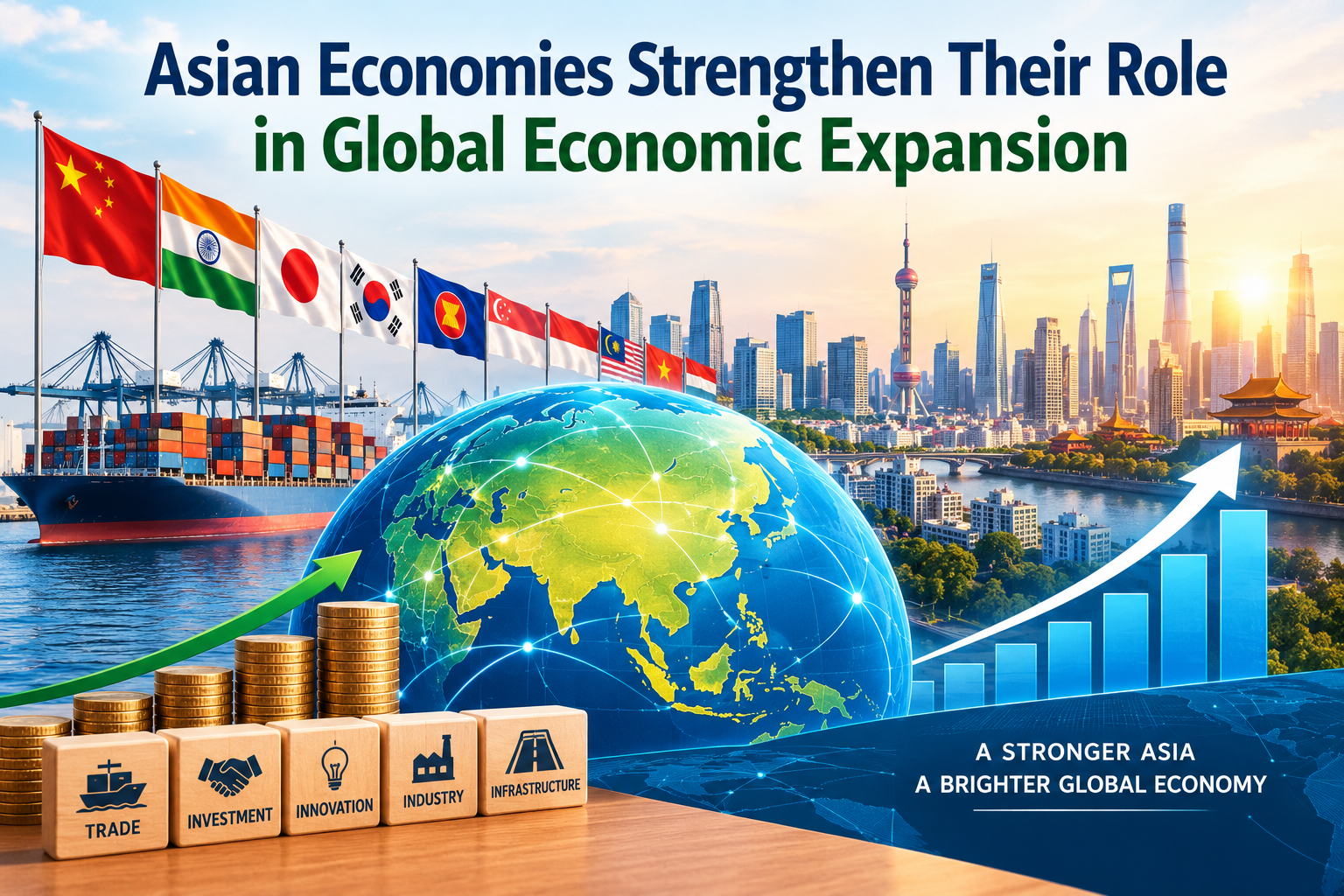
Asian economies are strengthening their position as a major engine of global economic expansion, supported by technology investment, resilient exports, growing consumer markets and deeper regional trade connections. From India’s expanding services sector to South Korea and Taiwan’s semiconductor industries, the region is playing an increasingly important role in global production, innovation and investment.
According to the International Monetary Fund (IMF), Asia-Pacific is projected to contribute approximately 68% of global economic growth in 2026. The region’s economy is forecast to grow by 4.8% in 2026, before moderating to 4.4% in 2027. Strong demand for technology products and the ability of businesses to adapt to changing trade patterns are helping sustain this momentum.
However, the region’s expansion is not uniform. Rising energy costs, geopolitical uncertainty and changing international trade policies continue to create risks for economies across Asia.
Technology Investment Drives Regional Growth
Technology has become one of the most significant contributors to Asia’s economic expansion. Demand for artificial intelligence (AI), data centres, cloud computing and advanced semiconductors is creating opportunities for manufacturers, technology suppliers and service providers.
South Korea and Taiwan are benefiting from demand for advanced chips, while Japan maintains an important role in electronics, industrial equipment and specialised manufacturing. Malaysia and Singapore also participate in technology supply chains through semiconductor-related production, assembly and services.
Meanwhile, India is expanding its digital services, software development, financial technology and technology-enabled business operations. Investments in data centres and digital infrastructure are supporting demand for equipment, electricity, construction and professional services.
The IMF’s October 2026 regional outlook identifies the AI-driven technology boom as a major force supporting economic activity across Asia. Nevertheless, the benefits are concentrated in certain industries and countries, leaving other sectors less exposed to the investment surge.
To sustain the gains, Asian economies must ensure that technology investment produces lasting productivity improvements rather than relying solely on temporary demand for hardware and infrastructure.
Trade and Manufacturing Strengthen Global Integration
Asia’s role in global trade remains central to its economic influence. The region supplies a wide range of products, including electronics, machinery, vehicles, chemicals, textiles and industrial components. Its interconnected manufacturing networks allow businesses to source materials, assemble products and distribute goods across international markets.
According to the World Trade Organization (WTO), Asian merchandise exports are projected to increase by 9.9% in 2026, making the region the fastest-growing major region for merchandise export volumes in the organisation’s October outlook. Strong technology-related demand and resilient trade within Asia are contributing to this performance.
Businesses are also reconsidering their supply chains in response to tariffs, geopolitical tensions and changing production costs. This reconfiguration creates opportunities for countries that can offer reliable infrastructure, skilled workers, competitive operating costs and predictable regulations.
India and several Southeast Asian economies are seeking to attract manufacturing investment as companies diversify production locations. However, these opportunities require improvements in logistics, customs procedures, workforce capabilities and access to dependable energy supplies.
Regional trade agreements and stronger economic partnerships can further improve market access and reduce dependence on individual export destinations.
Domestic Demand Provides a Stronger Foundation
Although exports remain important, domestic consumption is another key source of economic expansion across Asia. Rising incomes, urbanisation, expanding middle-class populations and greater access to digital services are supporting demand for housing, healthcare, education, transportation and consumer goods.
India’s large domestic market provides an important source of economic activity, while Indonesia, Vietnam, the Philippines and other Southeast Asian economies benefit from growing consumer demand and investment in infrastructure.
A strong domestic market can help businesses remain resilient when international demand weakens. It can also encourage companies to invest in new products, distribution networks and services designed for local consumers.
However, domestic demand depends on stable employment, affordable credit and household purchasing power. If food, fuel and electricity prices rise sharply, consumers may reduce discretionary spending. Policymakers must therefore balance growth objectives with measures that protect vulnerable households and maintain confidence.
Energy Costs and Inflation Remain Challenges
Despite strong economic opportunities, rising energy prices remain a concern for many Asian economies. Countries that depend heavily on imported oil and natural gas face higher transportation, electricity and manufacturing costs when international energy markets become volatile.
These pressures can affect household budgets, business profitability and national trade balances. Higher import bills may also put pressure on currencies, increasing the domestic cost of energy and other internationally traded goods.
The IMF has identified the energy shock arising from conflict in the Middle East as one of the major factors shaping Asia’s economic outlook in 2026. Although some economies have responded by diversifying energy supplies and increasing renewable energy use, their capacity to absorb further shocks is limited.
Governments can strengthen resilience by investing in renewable power, improving energy efficiency and expanding reliable electricity infrastructure. Carefully targeted assistance can also help vulnerable households manage temporary increases in essential living costs without placing excessive pressure on public finances.
Investment, Skills and Productivity Will Shape the Future
Maintaining Asia’s economic momentum will require more than strong exports and technology investment. Governments must also improve workforce skills, strengthen infrastructure and create conditions that encourage sustainable private investment.
Artificial intelligence and automation are changing employment requirements across industries. While these technologies can improve productivity and create new business opportunities, workers may need additional training to adapt to changing roles.
Investment in education, vocational training and digital skills can help businesses adopt new technologies while expanding employment opportunities. Stronger social protection can also help workers manage transitions between industries.
The region could unlock additional growth through services trade. The IMF estimates that reducing barriers to services trade could increase Asia-Pacific’s long-term GDP by close to 1%. Improved digital connectivity, simpler regulations and greater regional cooperation could help businesses expand across borders.
The Worldonomics Times View
Asia’s growing contribution to global economic expansion reflects its manufacturing strength, technology capabilities, expanding consumer markets and increasingly interconnected regional economies. These advantages position the region to remain a major influence on international trade, investment and innovation.
However, continued success is not guaranteed. Energy-price volatility, geopolitical tensions, uneven access to technology and changing trade policies could weaken growth if governments fail to address underlying vulnerabilities.
The Worldonomics Times believes that Asia’s next phase of economic expansion must combine technological progress with inclusive development and greater resilience. Policymakers should prioritise energy security, workforce development, infrastructure investment and stronger regional economic partnerships.
Businesses, meanwhile, must focus on innovation, productivity and supply-chain diversification to remain competitive in an evolving global marketplace.
Ultimately, Asia’s importance to the world economy will depend not only on the scale of its growth, but also on the sustainability of that growth and the extent to which its benefits reach businesses, workers and households across the region.