By Worldonomics Times | Global Economy
Date: October 27, 2026
Introduction
Investors are closely monitoring US Treasury yields as financial markets prepare for a key monetary policy decision by the Federal Reserve. Persistent inflation, elevated energy prices and uncertainty over the future path of interest rates are shaping investor expectations, influencing bond markets and affecting borrowing costs across the global economy.
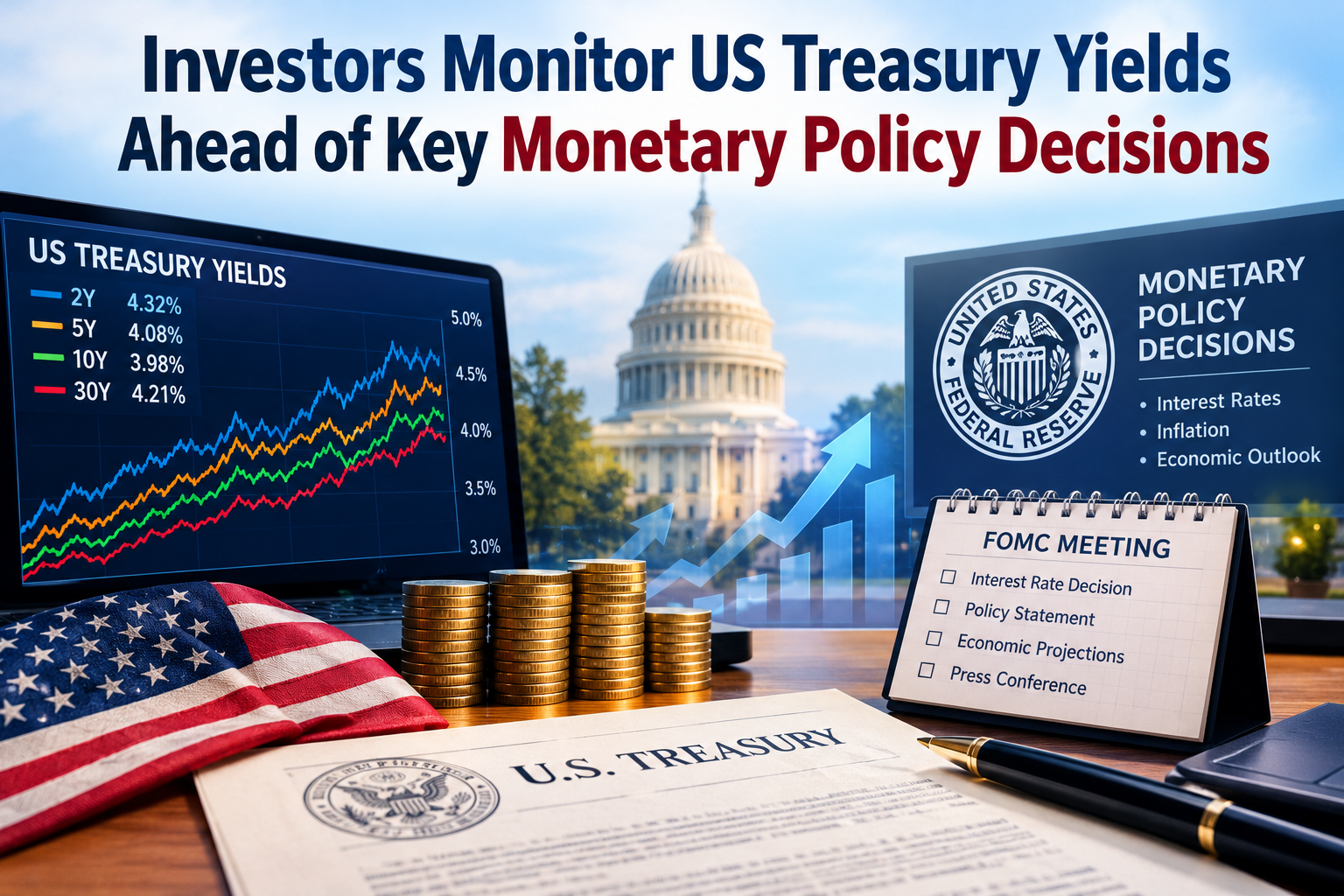
The benchmark 10-year US Treasury yield hovered just below 5% in late October, reflecting a combination of inflation concerns, changing investment sentiment and expectations surrounding the Federal Reserve’s next move. The central bank’s October 27–28 meeting has become a major focus for financial markets, with investors looking for signals about whether interest rates will remain unchanged or rise again in the coming months.
Treasury yields matter far beyond the United States. They influence mortgage rates, corporate borrowing costs, government financing and international capital flows. As a result, even modest changes in yield expectations can affect investment decisions across developed and emerging economies.
Treasury Yields Reflect Inflation and Interest-Rate Expectations
US Treasury securities are widely regarded as a benchmark for global financial markets because they are backed by the US government and trade in a large, liquid market. Their yields reflect several factors, including expected inflation, future Federal Reserve policy, economic growth prospects and investor demand for government debt.
When investors expect interest rates to remain elevated, yields on newly issued securities may rise to offer competitive returns. Conversely, when investors anticipate slower growth or lower future rates, demand for existing Treasury bonds can increase, pushing bond prices higher and yields lower.
Recent market movements demonstrate how quickly these forces can change. The 10-year Treasury yield approached the psychologically important 5% level in late October after retreating from higher levels earlier in the month. Investors have also sought the relative safety of government bonds amid uncertainty surrounding technology-sector valuations and the durability of AI-related investment.
However, demand for Treasury securities is not determined by risk appetite alone. Inflation expectations, government borrowing requirements and the supply of bonds entering the market can also influence yields.
Federal Reserve Decision Takes Centre Stage
The Federal Reserve’s policy meeting is the immediate focus for investors. Markets broadly expect the central bank to keep its benchmark interest-rate range unchanged at 3.75%–4.00% at the October meeting, although persistent inflation has raised questions about whether additional tightening may be necessary later in the year.
Investors will pay close attention to the Federal Open Market Committee’s statement and the accompanying press conference for indications of how policymakers assess inflation, employment and economic growth.
If the Fed signals that interest rates may remain high for longer, Treasury yields could face renewed upward pressure, particularly at shorter maturities that are more sensitive to expected policy changes. A more cautious assessment of economic conditions could instead strengthen expectations of a prolonged pause or eventual rate reductions.
The challenge for policymakers is to prevent inflation from becoming entrenched without unnecessarily weakening economic activity. Strong consumer spending and business investment may support growth, but persistent price pressures complicate the case for easing monetary policy.
Inflation and Energy Prices Complicate the Outlook
Inflation remains a central concern for the bond market. Higher fuel prices can increase transportation expenses, raise production costs and put pressure on household budgets. If these increases spread to other goods and services, inflation may remain elevated for longer than policymakers anticipate.
The Federal Reserve must distinguish between temporary supply-driven price increases and persistent inflationary pressure. Raising interest rates can restrain demand, but monetary policy cannot directly resolve disruptions to global energy supplies.
Investors are therefore assessing both economic data and geopolitical developments when determining the likely direction of Treasury yields. A sustained increase in energy prices could strengthen expectations of tighter monetary policy, while easing supply pressures could reduce concerns about further rate increases.
Employment figures, consumer spending, wage growth and inflation reports will also influence market expectations in the weeks ahead.
Implications for Global Financial Markets
Movements in US Treasury yields have significant international consequences. Higher US yields can attract capital towards dollar-denominated assets, potentially putting pressure on other currencies and reducing the appeal of investments in some emerging markets.
Countries with substantial foreign-currency borrowing may face higher debt-servicing costs if their currencies weaken against the dollar. Businesses in developing economies can also encounter more expensive international financing, potentially delaying investment and expansion plans.
For investors, rising Treasury yields can make bonds more attractive relative to equities, particularly when stock valuations are elevated. However, higher yields also reduce the market value of existing fixed-rate bonds, creating potential losses for investors who sell before maturity.
In the United States, Treasury yields influence mortgage rates, corporate debt costs and other borrowing benchmarks. Higher long-term yields can therefore affect housing demand, business investment and consumer spending even when the Federal Reserve leaves its policy rate unchanged.
These connections make the Treasury market an important indicator of broader financial conditions rather than simply a reflection of government borrowing costs.
Government Borrowing and Market Confidence
The outlook for Treasury yields is also influenced by the US government’s financing requirements. Large fiscal deficits increase the volume of debt that must be issued, while investors consider whether future borrowing can be sustained without placing excessive pressure on bond markets.
When investors demand higher compensation for holding long-term debt, government financing costs can increase. Over time, higher interest payments may absorb a larger share of public revenue, potentially limiting the resources available for infrastructure, public services and other priorities.
Nevertheless, Treasury yields do not move solely in response to government debt. Economic growth, inflation expectations, monetary policy and global demand for safe assets remain important factors.
Maintaining confidence in US institutions, fiscal management and the stability of financial markets will be essential to preserving the Treasury market’s central role in global finance.
What Investors Will Watch Next
Investors will continue to monitor the Federal Reserve’s policy announcement, inflation data, employment figures and changes in energy prices. Developments in global trade and geopolitical conditions may also influence demand for safe-haven assets.
The shape of the Treasury yield curve will provide additional clues. Short-term yields generally respond more directly to expected central bank decisions, while longer-term yields reflect a broader combination of inflation expectations, growth prospects and the supply of government debt.
Rather than reacting to a single announcement, investors will need to assess whether incoming data indicate a lasting change in the economic outlook. Diversification, careful management of interest-rate exposure and attention to liquidity can help market participants navigate periods of volatility.
The Worldonomics Times View
US Treasury yields remain at the centre of global financial attention as investors assess inflation risks and the Federal Reserve’s next policy decision. Their movements influence borrowing costs, asset valuations and capital flows well beyond American markets.
The Worldonomics Times believes that the direction of Treasury yields will depend on the balance between persistent inflation, economic resilience and the Federal Reserve’s commitment to price stability. Investors should prepare for continued volatility while distinguishing short-term market reactions from longer-term economic trends.
For policymakers, credible communication and data-driven decisions will be essential to maintaining confidence. For businesses and households, the evolution of borrowing costs will remain an important factor in financial planning.
Ultimately, the Treasury market’s message is clear: interest-rate expectations, inflation and fiscal sustainability are closely connected. Understanding these relationships will be critical for investors navigating the changing global economic landscape.