By Worldonomics Times | Global Economy
Date: October 27, 2026
Introduction
The global economy continues to demonstrate resilience, but economic growth is becoming increasingly uneven across countries. While some economies are benefiting from strong artificial intelligence (AI) investment, technology exports and favorable trade conditions, others are struggling with rising energy costs, inflationary pressures and limited financial resources.
According to the International Monetary Fund (IMF), global economic growth is projected to reach 3.1% in 2026 before improving to 3.4% in 2027. However, these figures conceal significant differences in economic performance across regions and income groups. Energy-importing countries with limited participation in the technology sector face particularly difficult conditions.
This uneven recovery highlights a growing challenge for policymakers: maintaining economic stability while ensuring that the benefits of technological progress and international trade are shared more widely.
AI Investment Supports Growth in Technology-Driven Economies
Artificial intelligence has emerged as an important source of investment and economic activity. Companies worldwide are increasing expenditure on data centres, semiconductors, cloud computing and digital infrastructure to meet growing demand for AI-powered services.
Economies with strong technology industries and established positions in global supply chains are benefiting from this investment. Increased demand for advanced chips, computing equipment and related services is supporting production, exports and business expansion.
The United States remains an important centre of AI investment, while countries such as South Korea, Japan and Taiwan play significant roles in semiconductor manufacturing and advanced electronics. Other economies are also seeking to attract technology investment and strengthen their digital capabilities.
The benefits, however, are not distributed equally. Countries with limited technological infrastructure, shortages of skilled workers or restricted access to capital may struggle to participate in the AI-driven expansion.
The IMF has cautioned that the concentration of technology investment in a relatively small number of countries and industries could leave the broader global economy vulnerable if expected productivity gains or commercial returns fail to materialise.
Energy Costs Create Pressure for Import-Dependent Economies
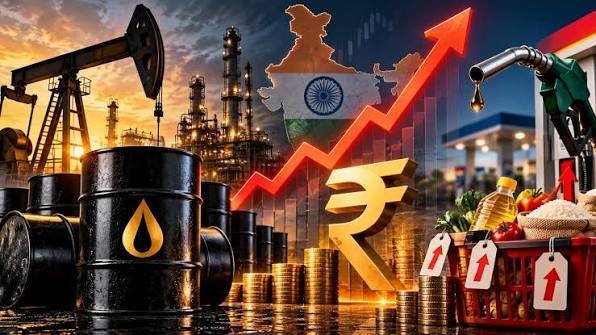
While technology-related investment is supporting growth in some markets, higher energy costs are creating difficulties for countries that rely heavily on imported oil and natural gas.
An increase in international energy prices raises transportation expenses, manufacturing costs and electricity bills. Businesses may pass these additional costs on to consumers, contributing to inflation and reducing household purchasing power.
Countries that depend on imported energy can also experience worsening trade balances as they spend more foreign currency to secure essential supplies. If their currencies weaken, imported fuel becomes even more expensive, intensifying pressure on domestic prices.
These challenges are particularly serious for economies that lack substantial domestic energy resources and have limited access to technology-driven investment. They may experience higher import bills without receiving the economic benefits associated with expanding technology exports.
According to the IMF’s October 2026 World Economic Outlook, the combination of energy-price pressures and limited participation in the technology value chain is creating a particularly challenging environment for many vulnerable economies.
Lower-Income Countries Face Greater Vulnerabilities
Lower-income economies often have fewer financial resources to manage external shocks. Limited tax revenues, high borrowing costs and restricted access to international capital can reduce their ability to support households and businesses during periods of economic stress.
Rising food and fuel prices can have a disproportionate impact on vulnerable communities because essential goods account for a substantial share of household expenditure. Higher import costs can also place pressure on government budgets, leaving fewer resources for healthcare, education, infrastructure and social protection.
Furthermore, countries with limited digital infrastructure may find it difficult to benefit fully from the AI investment boom. Without reliable electricity, affordable internet access and adequate technical training, businesses may struggle to adopt advanced technologies and compete in international markets.
These differences risk widening the income gap between economies that are well positioned to benefit from technological change and those facing persistent structural constraints.
Strengthening education, improving infrastructure and expanding access to affordable financing will be essential to creating more inclusive growth opportunities.
Inflation and Financial Uncertainty Remain Key Risks
Inflation remains an important concern as higher energy and food prices increase costs across the global economy. The IMF projects global headline inflation at 4.7% in 2026, before easing to 4.1% in 2027.
Persistent inflation can complicate decisions by central banks. Keeping interest rates high for longer may help control price pressures, but it can also increase borrowing costs for households, businesses and governments. Conversely, easing monetary policy too quickly could allow inflation to become more persistent.
Financial markets also face uncertainty surrounding technology valuations, geopolitical developments and international trade policies. A sharp reassessment of AI-related investment expectations could weaken investor confidence and reduce spending, with consequences for economies connected to technology supply chains.
Governments must therefore remain alert to both inflationary pressures and financial vulnerabilities while preserving sufficient flexibility to respond to future economic shocks.
Policy Priorities for a More Balanced Recovery
Policymakers need to adopt strategies that reflect their countries’ individual economic circumstances. Energy-importing economies can strengthen resilience by diversifying energy supplies, improving energy efficiency and investing in renewable power.
Developing economies should also prioritise infrastructure, education, digital connectivity and skills development to improve their ability to attract investment and participate in global technology networks.
Governments facing cost-of-living pressures should consider temporary, targeted assistance for vulnerable households while maintaining responsible public finances. Improving trade relationships and reducing unnecessary barriers can further support international commerce and economic cooperation.
For technology leaders, the priority should be to ensure that AI investment translates into sustainable productivity gains, wider business adoption and meaningful employment opportunities.
The Worldonomics Times View
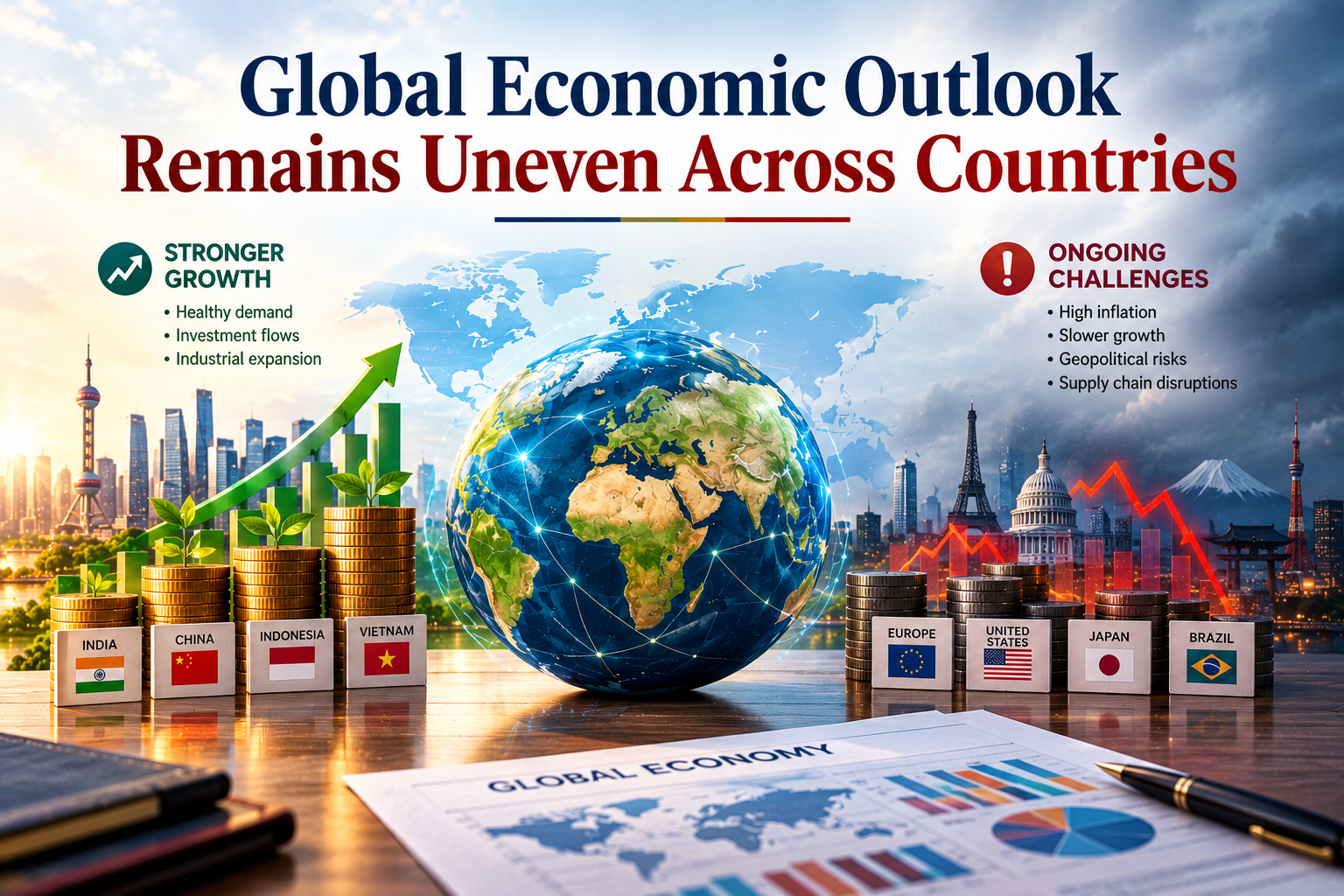
The global economy is not moving forward at the same pace. Technology investment and favorable trade conditions are creating opportunities for some countries, while rising energy costs and financial constraints are placing others under increasing pressure.
The challenge is to prevent these differences from becoming a lasting divide between economies that can adapt quickly and those that lack the resources to respond.
The Worldonomics Times believes that sustainable global growth requires a balance between technological innovation, energy security and inclusive economic development. Governments must strengthen domestic resilience, support vulnerable communities and create conditions that allow businesses of different sizes to participate in emerging opportunities.
International cooperation will remain essential. By improving access to technology, strengthening trade relationships and helping vulnerable economies manage external shocks, countries can build a more balanced and resilient global economy.
Ultimately, the strength of the global recovery will depend not only on overall growth figures, but also on how effectively countries turn economic opportunities into lasting prosperity for their people.