By Worldonomics Times
Introduction
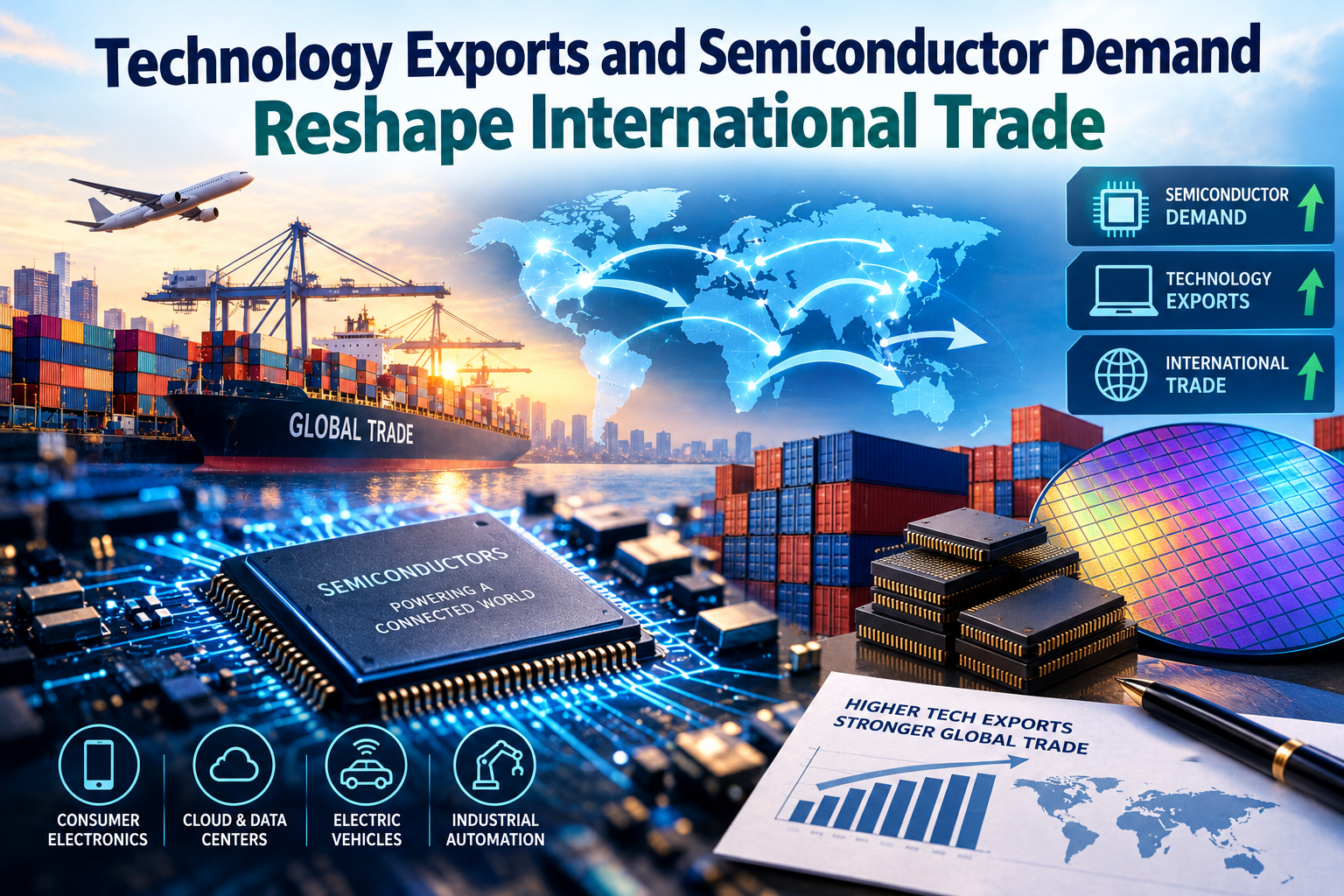
International trade is undergoing a significant transformation as technology exports and rising semiconductor demand reshape global economic relationships. Traditionally, trade was driven largely by agricultural commodities, energy resources, textiles, and manufactured goods. Today, advanced technologies—including semiconductors, artificial intelligence (AI) systems, telecommunications equipment, cloud computing infrastructure, and electronic components—are becoming central to global commerce.
Semiconductors, often described as the backbone of the digital economy, are essential to smartphones, automobiles, medical equipment, industrial machinery, data centres, and defence systems. Their growing importance is changing export strategies, investment decisions, and geopolitical alliances. As countries compete for technological leadership, the global trading system is increasingly shaped by innovation, supply-chain resilience, and access to critical components.
Technology Exports: A New Engine of Global Growth
Technology exports have emerged as an important driver of economic growth and international competitiveness. Countries that develop advanced manufacturing capabilities, software services, digital infrastructure, and research-intensive industries can access higher-value markets and strengthen their positions in global supply chains.
The United States remains influential in semiconductor design, software, and advanced computing technologies. Taiwan plays a crucial role in contract chip manufacturing, while South Korea is a major producer of memory chips and electronic components. Japan supplies important semiconductor materials and manufacturing equipment, and China has developed extensive electronics manufacturing capabilities.
Meanwhile, India is expanding its role through information technology services, electronics manufacturing, mobile phone production, and semiconductor-related investments. Government initiatives supporting domestic manufacturing and digital infrastructure aim to reduce import dependence and encourage participation in international technology supply chains.
These developments demonstrate that technology exports involve more than finished products. They encompass intellectual property, specialised machinery, technical expertise, design services, and digital solutions. Countries that can combine these capabilities are better positioned to capture value from the expanding digital economy.
Semiconductor Demand and the Global Supply Chain
The semiconductor industry has become one of the most strategically significant sectors in international trade. Demand is increasing as AI applications, electric vehicles, renewable energy systems, robotics, and advanced communication networks become more widespread.
AI-driven data centres require powerful processors, high-bandwidth memory, networking chips, and other specialised components. Electric vehicles rely on semiconductors for battery management, power conversion, driver-assistance systems, and vehicle connectivity. Industrial automation and smart infrastructure also depend on increasingly sophisticated chips.
However, semiconductor production is complex and geographically concentrated. Designing a chip, manufacturing it, testing it, and packaging it may involve several countries. This interconnected structure allows businesses to benefit from specialised expertise and economies of scale, but it also creates vulnerabilities.
Natural disasters, geopolitical tensions, export restrictions, transport disruptions, and sudden demand surges can affect production and delivery schedules worldwide. Shortages experienced across several industries in recent years demonstrated how disruptions in one part of the semiconductor supply chain can affect automobile production, consumer electronics, and industrial manufacturing elsewhere.
Consequently, governments and businesses are placing greater emphasis on supply-chain diversification, strategic inventories, domestic manufacturing capacity, and long-term supplier partnerships.
Geopolitics and the Changing Rules of Trade
Technology has increasingly become a matter of national security and economic strategy. Governments are introducing industrial incentives, investment screening, export controls, and restrictions on selected advanced technologies to protect strategic capabilities and maintain technological advantages.
Competition over advanced chips, semiconductor manufacturing equipment, and AI computing infrastructure has intensified economic tensions between major powers. These measures can influence where companies invest, which markets they serve, and how technology crosses national borders.
At the same time, countries are strengthening partnerships to secure access to critical materials, specialised equipment, and reliable production facilities. International trade is therefore evolving from a system focused primarily on cost efficiency towards one that also prioritises security, reliability, and strategic independence.
Although these policies may encourage domestic investment, they can also increase production costs, fragment supply chains, and create uncertainty for international businesses. Maintaining an appropriate balance between national security and open trade will be essential to sustaining innovation and global economic growth.
Opportunities and Challenges for Emerging Economies
The transformation of technology-driven trade presents both opportunities and challenges for emerging economies. Countries with skilled workforces, improving infrastructure, and supportive industrial policies can attract foreign investment and become important manufacturing or technology-service hubs.
For India, semiconductor demand offers an opportunity to expand electronics manufacturing, develop domestic chip-design capabilities, attract global technology companies, and generate skilled employment. Greater participation in semiconductor packaging, testing, electronic components, and design services could strengthen the country’s position in international markets.
Nevertheless, entering the semiconductor industry requires substantial capital investment, reliable electricity and water supplies, advanced infrastructure, skilled engineers, and sustained research and development. Building competitive manufacturing ecosystems takes time, and dependence on imported equipment, specialised materials, and foreign technology remains a challenge for many emerging economies.
Furthermore, the benefits of technology-led trade may not be distributed equally. Countries lacking infrastructure or technical expertise risk remaining dependent on imported high-value products while exporting lower-value goods. International cooperation, workforce development, and investment in innovation will be critical to narrowing this gap.
The Worldonomics Times View
Looking ahead, technology exports and semiconductor demand are likely to remain important forces shaping international trade. Advances in AI, automation, clean energy, and connected devices will create new markets for specialised chips and digital services. At the same time, sustainability considerations may encourage semiconductor manufacturers to improve energy efficiency, water management, and resource utilisation.
Businesses will increasingly need to evaluate supply-chain risks alongside production costs, while governments will need policies that encourage innovation without unnecessarily restricting international cooperation. Diversified sourcing, transparent trade regulations, investment in research, and stronger international partnerships can help create a more resilient global technology ecosystem.
Conclusion
Technology exports and semiconductor demand are redefining the structure of international trade. Competitive advantage increasingly depends not only on natural resources or low-cost manufacturing but also on technological expertise, innovation, and access to reliable supply chains.
For developed and emerging economies alike, the challenge is to translate growing demand into sustainable economic opportunities while managing geopolitical risks and technological dependencies. Countries that invest in skills, infrastructure, research, and international collaboration will be better positioned to benefit from this transformation.
As the digital economy expands, semiconductors will remain more than essential industrial components: they will be strategic assets influencing global competitiveness, economic security, and the future direction of world trade.