By The Worldonomics Times | Global Economy
Date: 3 November 2026
A Historic Achievement in Global Commerce
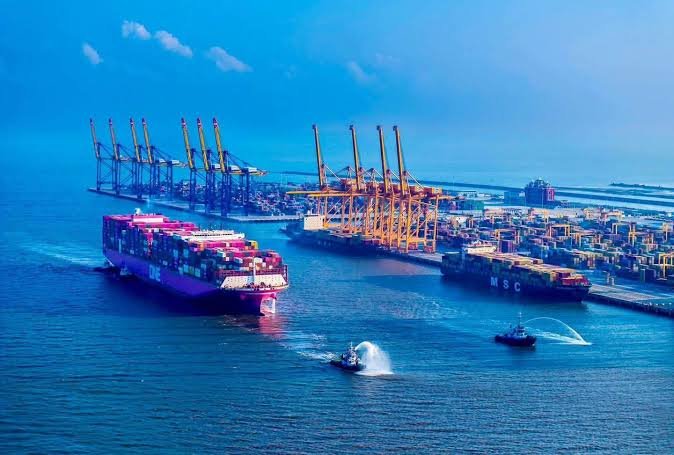
Vietnam has achieved a major milestone in international trade, with its total merchandise import and export turnover surpassing US$1 trillion during the first ten months of 2026. The latest preliminary figures released by Vietnam’s General Statistics Office on November 3 show that total trade reached approximately US$1,010.55 billion, representing a remarkable increase of 32.3% compared with the same period in 2025.
This is the first time Vietnam’s merchandise trade has crossed the trillion-dollar threshold. The achievement highlights the country’s expanding role in global commerce and its growing importance as a manufacturing, export and supply-chain centre. It also reflects nearly two decades of economic integration, investment-led industrial expansion and stronger connections with international markets.
According to the latest figures, exports reached US$499.24 billion, rising 27.5% year-on-year, while imports stood at US$511.31 billion, increasing 37.4%. The figures demonstrate strong activity on both sides of Vietnam’s international trade, although imports have grown faster than exports.
Manufacturing and Electronics Drive Export Growth
Vietnam’s export performance has been supported by its expanding manufacturing sector, particularly electronics, computers, machinery, telecommunications equipment, textiles and footwear.
Electronics, computers and components emerged as the country’s largest export category, generating more than US$149.4 billion in the first ten months of 2026, an increase of approximately 71% compared with the previous year. Machinery, equipment and spare parts contributed more than US$63.2 billion, while telephones and components accounted for around US$57.6 billion.
Textile and garment exports reached approximately US$33.7 billion, while footwear exports stood at US$20.24 billion. These figures underline Vietnam’s ability to serve a wide range of international industries, from consumer goods and apparel to advanced electronics and industrial equipment.
Processed and manufactured products continue to dominate the country’s export structure. The Ministry of Industry and Trade estimates that these products accounted for approximately 87.4% of total export turnover during the first ten months. This reflects Vietnam’s transition from a largely agricultural and resource-based trading economy towards a more diversified manufacturing and industrial export base.
Foreign Investment Strengthens Vietnam’s Trade Position
Foreign direct investment has played a significant role in Vietnam’s emergence as a major international trading economy. Global manufacturers have increasingly established production facilities in the country to benefit from its competitive manufacturing environment, workforce, infrastructure development and access to international markets through free trade agreements.
Foreign-invested enterprises accounted for approximately US$405.31 billion of exports during the first ten months, representing 81.2% of total export value. Their exports increased by 33% year-on-year. The domestic economic sector, meanwhile, contributed around US$93.93 billion, with growth of 8.2%.
The figures demonstrate the substantial contribution of multinational companies to Vietnam’s export expansion. However, they also highlight an important challenge: strengthening domestic businesses so that a larger share of export earnings, technology and industrial value creation remains within the Vietnamese economy.
Recent investment figures reinforce this trend. Registered foreign direct investment reached US$50.36 billion in the first ten months, up 76.4% year-on-year, while disbursed investment totalled US$21.07 billion, an increase of 12.1%.
Expanding Trade Relationships Across Major Markets
Vietnam’s international trade growth has been supported by strong commercial relationships with major economies, including the United States, China, the European Union, South Korea, Japan and ASEAN members.
During the first ten months of 2026, Vietnam recorded a merchandise trade surplus of approximately US$140.10 billion with the United States and US$40.84 billion with the European Union. It also maintained a surplus with Japan.
However, the country continued to record significant trade deficits with several major manufacturing and supply-chain partners. The deficit with China reached approximately US$134.94 billion, while the shortfall with South Korea stood at US$48.63 billion.
These figures illustrate Vietnam’s position within regional production networks. The country exports substantial quantities of finished products to major consumer markets while importing components, machinery, materials and intermediate goods needed by its manufacturing industries.
Trade Deficit Highlights the Need for Balanced Growth
Despite crossing the trillion-dollar threshold, Vietnam’s trade figures also reveal an important economic concern. Imports increased by 37.4%, significantly faster than the 27.5% growth recorded in exports. Consequently, the country registered a merchandise trade deficit of approximately US$12.07 billion during the first ten months of 2026, compared with a surplus of US$19.49 billion in the corresponding period last year.
Nevertheless, October provided some encouraging signs. Vietnam recorded an estimated merchandise trade surplus of US$7.31 billion during the month, following a surplus in September. This helped narrow the cumulative deficit.
Higher imports are not necessarily a negative development for a manufacturing-oriented economy. Purchases of industrial machinery, electronic components and production materials can support future exports and expand industrial capacity. However, maintaining a sustainable trade balance will require stronger domestic production of supporting components and greater participation by local suppliers in international supply chains.
Vietnam’s Ambition for the Coming Decade
Vietnam’s government is seeking to build on this achievement through a broader import-export strategy extending to 2030, with a vision towards 2045. The draft strategy targets average annual export growth of 15–16% and import growth of 12–13% during 2026–2030.
The proposed objectives also include increasing the contribution of domestic enterprises to total exports, raising the technological content of manufactured products and diversifying international markets. Vietnam aims to reduce excessive dependence on a limited number of trading partners and strengthen its presence in emerging markets across South Asia, the Middle East, Africa and Latin America.
These priorities will become increasingly important as global trade faces changing tariff policies, geopolitical tensions, supply-chain disruptions and stricter environmental and product standards. Greater investment in technology, skilled workers, logistics and domestic supporting industries will help Vietnam move towards higher-value manufacturing.
The Worldonomics Times Views
Vietnam’s achievement of more than US$1 trillion in merchandise trade within ten months represents a defining moment in its economic development. It demonstrates how international integration, manufacturing expansion and foreign investment can transform a country’s position in the global economy.
However, the size of trade alone should not be the only measure of long-term success. Vietnam must ensure that domestic companies become more deeply involved in production networks, that technology and skills transfer improve, and that export growth creates greater value within the national economy.
The country’s next challenge is to turn its expanding trade volume into sustainable industrial development, stronger domestic enterprises and more balanced international economic relationships. If Vietnam can achieve these objectives, the trillion-dollar milestone may become a foundation for an even more influential role in global commerce.