By The Worldonomics Times | Global Economy
Date: 3 November 2026
US Announces Withdrawal of Trade Preferences
The United States has announced plans to suspend South Africa and Rwanda from its flagship African trade preference programme, the African Growth and Opportunity Act (AGOA), effective 1 January 2027. The decision, announced on November 2 by US Trade Representative Jamieson Greer, could affect exporters in both countries by removing preferential duty-free access to the American market for thousands of eligible products.
President Donald Trump has notified Congress and the governments of South Africa and Rwanda of his intention to terminate their participation following an annual review of eligibility requirements. Washington stated that both governments were engaging in practices inconsistent with the programme’s conditions, including concerns involving trade and investment barriers and US national security and foreign policy interests.
The announcement represents a significant development in US-Africa economic relations. AGOA has served as an important trade framework between the United States and eligible sub-Saharan African countries since 2000, providing preferential access to one of the world’s largest consumer markets. <Cite refs={[“turn493712search0″,”turn493712news15″,”turn493712news16”]}/>
Understanding the African Growth and Opportunity Act
AGOA was introduced in 2000 to strengthen economic cooperation between the United States and sub-Saharan Africa. It allows eligible African countries to export thousands of qualifying products to the US without paying ordinary import duties, subject to programme rules and product-specific requirements.
The initiative is designed to encourage economic development, expand employment opportunities, promote investment and support African participation in international supply chains.
However, access is conditional. Participating countries are expected to maintain market-based economic systems, uphold the rule of law, protect internationally recognised rights and reduce barriers to American trade and investment. Their eligibility is reviewed periodically by the US government.
The latest announcement does not mean that the wider AGOA programme is being cancelled or that all commercial relations with the two countries will end. It concerns the withdrawal of their individual preferential status. Businesses will still be able to export to the United States, but affected products may face higher import duties under the applicable US tariff arrangements. <Cite refs={[“turn493712news16″,”turn446354search16″,”turn446354search0”]}/>
South Africa Faces Pressure on Export Industries
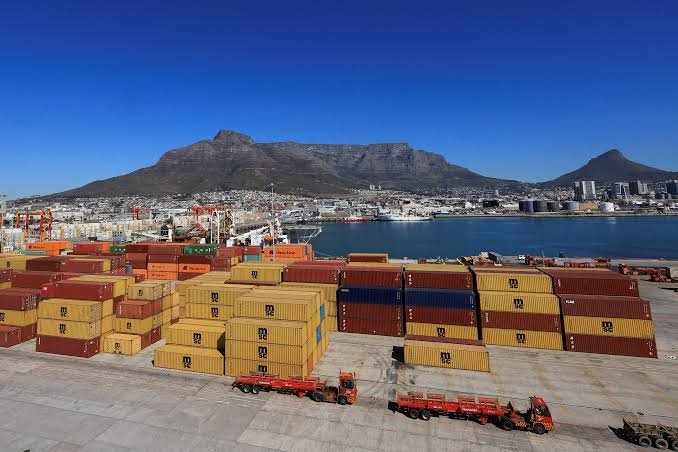
South Africa is expected to face the greater commercial impact because it has been the largest beneficiary of AGOA. According to Reuters, the country exported approximately US$1.7 billion worth of goods under the programme in 2025.
Important export categories include motor vehicles and automotive components, agricultural products, citrus fruit, wine and other manufactured goods. These industries benefit from preferential access to American buyers and are connected to wider employment and supplier networks.
The South African government has highlighted that AGOA exports represent approximately 10% of its total exports to the United States and around 1% of its overall global exports. Although these proportions indicate that the country’s entire export economy is not dependent on the programme, the removal of tariff preferences could create difficulties for businesses that rely on the American market.
Higher duties may reduce the price competitiveness of South African products, particularly where exporters compete with suppliers from countries that continue to receive preferential treatment. Companies could face pressure to absorb additional costs, reduce margins or seek alternative destinations.
South Africa’s Department of Trade, Industry and Competition has said that the government will support affected industries and continue pursuing trade, investment and economic cooperation with the United States. Pretoria has also indicated that it intends to accelerate efforts to diversify export markets. <Cite refs={[“turn493712news15″,”turn446354search4″,”turn446354search8”]}/>
Rwanda’s Trade Position Also Comes Under Scrutiny
Rwanda is also affected by the decision, although its trade exposure differs from South Africa’s. The United States has identified concerns involving trade and investment barriers, the rule of law, political pluralism, internationally recognised worker rights and human rights.
Rwanda’s exports to the American market include coffee, tea and minerals. Losing AGOA preferences could make qualifying products less competitive, depending on the tariffs applied after the suspension.
Rwanda has already experienced a partial AGOA suspension since 2018. That earlier measure restricted its apparel exports following a dispute over tariffs on imported second-hand clothing from the United States. The proposed 2027 action would extend the loss of preferential treatment beyond apparel to the country’s remaining eligible exports.
The decision also comes amid tensions surrounding the conflict in eastern Democratic Republic of Congo. Washington has accused Rwanda of supporting the M23 armed group, an allegation Kigali has denied. The US administration has recently imposed sanctions connected with the conflict, adding to wider diplomatic and security disagreements in the region.
There was no immediate official response from Rwanda to the November 2 announcement. <Cite refs={[“turn493712news15″,”turn446354search16″,”turn446354search9”]}/>
Diplomatic Disagreements Complicate Trade Relations
The decision involving South Africa comes after a period of deteriorating relations between Washington and Pretoria. The Trump administration has criticised several South African domestic and foreign policies, including its positions on international conflicts and its legal action against Israel at the International Court of Justice.
The United States has also raised concerns about corruption and barriers to American trade and investment. South Africa has rejected several US allegations and maintained that its domestic policies and foreign relations are matters of national sovereignty.
The US Trade Representative’s announcement sets out the administration’s stated concerns, but does not provide detailed examples of every alleged trade barrier or national security issue. It is therefore important to distinguish Washington’s official explanation from the wider diplomatic disagreements surrounding the decision.
South Africa has continued to express its willingness to engage with the United States. However, the planned suspension suggests that trade preferences are increasingly linked to broader diplomatic, governance and foreign-policy considerations. <Cite refs={[“turn493712news16″,”turn446354search0″,”turn446354search3”]}/>
Implications for African Trade and Investment
The proposed suspensions could have implications beyond the two affected countries. AGOA has been an important part of US economic engagement with Africa, encouraging businesses to establish export-oriented production and build commercial relationships with American buyers.
Changes in eligibility may create uncertainty for companies considering long-term investment in African manufacturing and agricultural production. Exporters may need to reassess pricing, supply contracts and market strategies before the new arrangements take effect.
The development could also encourage South Africa and Rwanda to strengthen trade relationships with other partners, including China, India, the European Union and regional African markets. The African Continental Free Trade Area offers an additional framework for expanding commerce within the continent, although regional integration cannot immediately replace the scale and purchasing power of the US market.
For American businesses and consumers, changes to AGOA preferences may also affect sourcing costs and supply relationships involving agricultural products, automotive components and other imported goods.
The Worldonomics Times Views
The proposed suspension of South Africa and Rwanda from AGOA demonstrates how international trade increasingly intersects with diplomacy, governance and national security considerations. Preferential market access can create valuable export opportunities, but it also depends on the political and economic conditions established by the trading partner.
For South Africa and Rwanda, the immediate priority is to protect existing export industries, maintain employment and identify alternative markets. Both countries will need to strengthen domestic competitiveness and reduce excessive dependence on individual trading arrangements.
The United States, meanwhile, faces the challenge of balancing its eligibility requirements with its wider objective of maintaining strong economic partnerships across Africa. The decision may influence how other African governments assess the long-term reliability and conditions attached to preferential trade access.
Ultimately, the January 2027 deadline will be important for exporters, investors and policymakers. The coming months may determine whether diplomatic engagement can change the outcome or whether affected businesses must prepare for a new trading environment.