New Delhi, November 2026:
For many Micro, Small and Medium Enterprises (MSMEs), the next stage of growth is not necessarily about finding hundreds of small customers. It may be about securing a few reliable institutional customers that can provide larger orders, credibility and opportunities for long-term business relationships.
Public Sector Undertakings (PSUs) are particularly important in this regard. Across sectors such as engineering, infrastructure, energy, mining, defence, transportation, banking, telecommunications, manufacturing and services, PSUs require thousands of products and services from external suppliers.
For MSMEs, this creates a significant opportunity—but entering the PSU supply chain requires preparation, compliance, quality and a clear understanding of procurement processes.
A Large and Growing Procurement Opportunity
The Government of India’s Public Procurement Policy for Micro and Small Enterprises provides an important foundation for MSMEs.
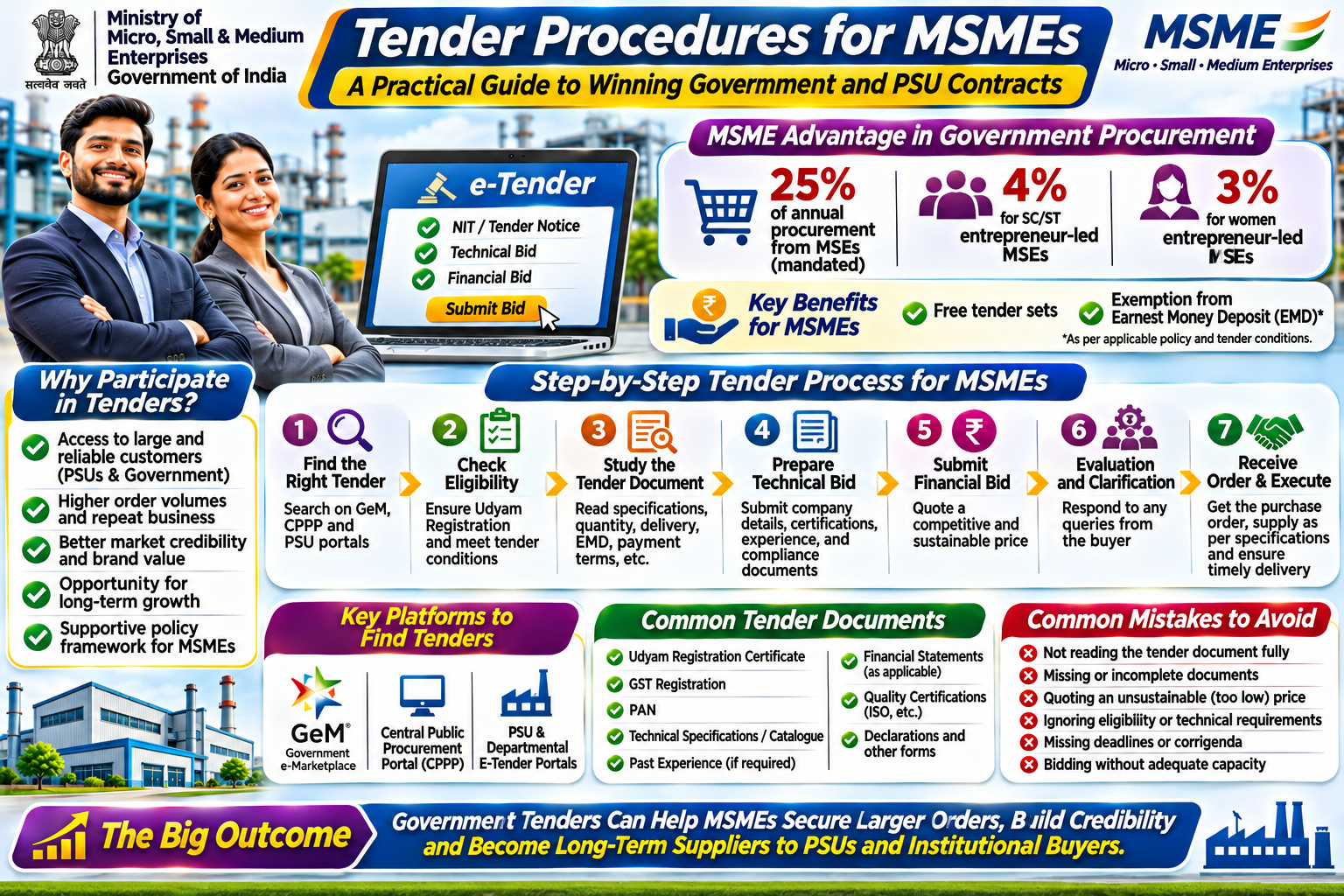
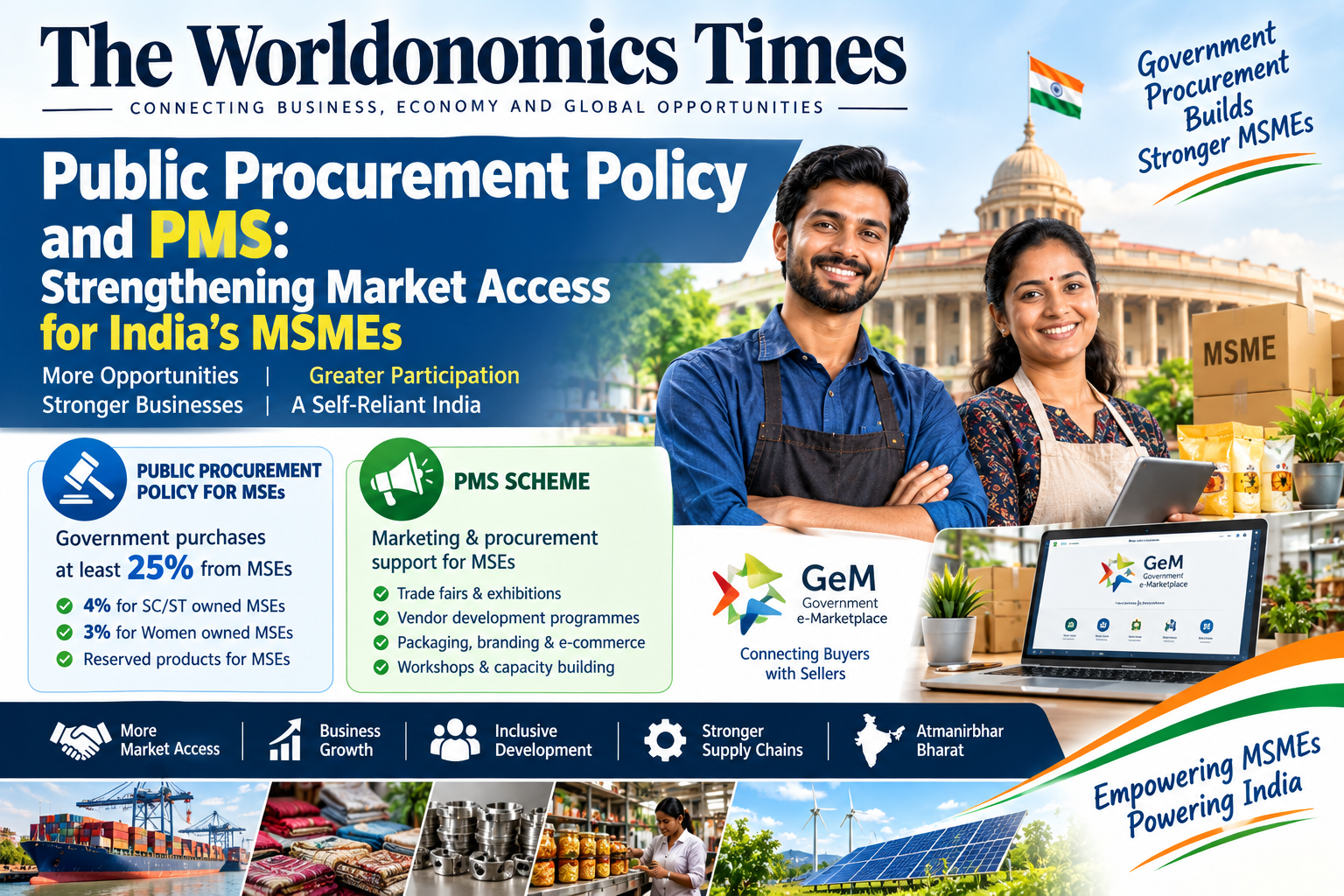
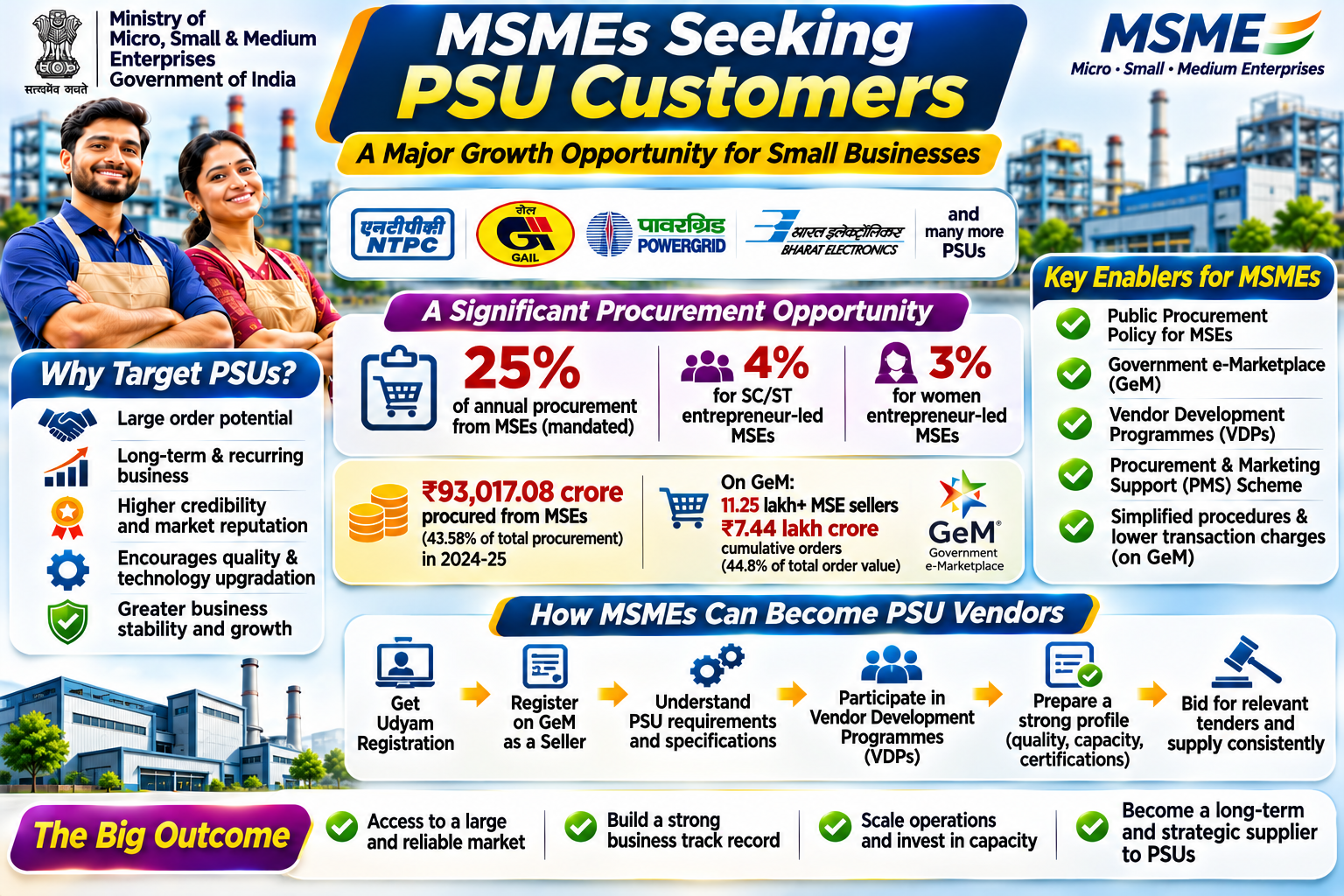
The policy mandates Central Ministries, Departments and Central Public Sector Enterprises (CPSEs) to target 25% of annual procurement from Micro and Small Enterprises (MSEs). Within this overall target, 4% is earmarked for MSEs owned by SC/ST entrepreneurs and 3% for women-owned MSEs.
The scale of procurement is substantial. During 2024-25, Central Ministries, Departments and CPSEs reported procurement of ₹93,017.08 crore from MSEs, representing 43.58% of total procurement, according to the Ministry of MSME’s year-end review.
This demonstrates that PSU procurement is already a major commercial market for smaller enterprises.
Why MSMEs Should Target PSUs
PSU customers can offer several strategic advantages.
Large order potential: A single institutional purchase can be considerably larger than a typical retail or small-business order.
Credibility: Supplying a recognised PSU can strengthen the reputation of an MSME when approaching other corporate customers.
Repeat opportunities: Once an enterprise successfully establishes itself as an approved supplier, future procurement opportunities may become easier to pursue.
Business stability: Institutional customers can provide greater visibility over demand compared with highly fragmented markets.
Technology and quality improvement: PSU requirements can encourage MSMEs to improve manufacturing processes, certifications, testing, documentation and quality-control systems.
Therefore, becoming a PSU supplier should be viewed as a long-term business strategy rather than simply winning one tender.
GeM Is Becoming an Important Gateway
The Government e-Marketplace (GeM) has transformed the way government organisations purchase goods and services.
As of 30 November 2025, GeM had more than 11.25 lakh registered MSE sellers, which had cumulatively secured government orders worth ₹7.44 lakh crore. MSEs accounted for 44.8% of total order value transacted through the platform.
This makes GeM particularly important for MSMEs seeking government and PSU customers.
A business should therefore ensure that its GeM profile is professionally prepared, with accurate product descriptions, appropriate categories, competitive pricing, delivery capability and complete documentation.
Recent GeM reforms have also reduced transaction costs and simplified participation. In October 2026, GeM announced that transaction charges had been reduced from 0.50% to 0.30%, while orders up to ₹10 lakh became exempt from transaction charges.
Vendor Development Programmes Can Open Doors
Many MSMEs do not know exactly what PSUs are looking to purchase.
This is where Vendor Development Programmes (VDPs) and Buyer-Seller Meets become valuable.
The Ministry of MSME has been organising VDPs in collaboration with CPSEs and government organisations to create market linkages. During 2019-23, more than 9,474 MSMEs participated in VDPs organised by MSME Development and Facilitation Offices.
These programmes can provide MSMEs with opportunities to understand:
- Products and components required by PSUs
- Technical specifications
- Vendor-registration procedures
- Quality requirements
- Procurement cycles
- Tender procedures
- GeM participation
- Outsourcing opportunities
- Documentation and compliance requirements
For an entrepreneur, meeting a PSU procurement official directly can be far more valuable than simply submitting an application without understanding the buyer’s requirements.
What PSUs Look for in MSME Suppliers
An MSME seeking PSU customers should think like a professional institutional supplier.
Price is important, but price alone is rarely enough.
PSUs may evaluate factors such as:
- Product quality
- Technical specifications
- Production capacity
- Delivery capability
- Relevant certifications
- Past experience
- Financial and statutory compliance
- Quality-control systems
- After-sales service
- Ability to maintain consistent supply
An MSME should therefore prepare a professional company profile, product catalogue, technical specifications, customer references and capacity statement.
Prepare Before Approaching a PSU
The first step should be enterprise readiness.
An MSME should maintain an updated Udyam Registration, GST registration, PAN, banking information and other applicable licences.
The next step is product readiness.
Products should have clear specifications, professional packaging, appropriate labelling and, wherever relevant, barcode identification and quality certifications.
The third step is digital readiness.
The enterprise should have an active GeM seller profile and should understand how to search for relevant tenders and submit compliant bids.
Finally, the business should identify PSUs that actually purchase its products or services.
A manufacturer of electrical components, for example, should research PSUs in power, transmission, railways, infrastructure and manufacturing rather than approaching every government organisation randomly.
PMS Can Support Market Development
The Ministry of MSME’s Procurement and Marketing Support (PMS) Scheme also includes Vendor Development Programmes as a market-access intervention.
The scheme supports activities such as trade fairs, exhibitions and other initiatives designed to improve market access for MSMEs.
This creates a useful progression:
Prepare the product → Improve packaging → Obtain certifications → Participate in exhibitions → Meet PSU buyers → Register as vendor → Participate in GeM/tenders → Win orders.
From First Order to Long-Term PSU Relationship
Winning the first PSU order is only the beginning.
MSMEs must focus on timely delivery, consistent quality, accurate documentation and quick resolution of customer issues.
A supplier that repeatedly performs well can build a strong institutional track record.
That track record can subsequently help the MSME approach other PSUs, large private companies and export markets.
The objective should therefore be to move from being an occasional vendor to a dependable strategic supplier.
A Major Opportunity for India’s MSMEs
India’s PSU ecosystem represents a huge potential customer base for MSMEs. The combination of the 25% MSE procurement target, GeM, Vendor Development Programmes and market-access schemes is creating multiple pathways for smaller enterprises to participate in institutional procurement.
For entrepreneurs, the opportunity is clear.
Instead of waiting for large organisations to discover their business, MSMEs should actively identify PSU requirements, improve their capabilities, participate in Vendor Development Programmes, register on GeM and develop professional tendering capabilities.
The next big customer for an MSME may not be a retail consumer—it could be a PSU.
With the right preparation, quality and persistence, a small enterprise can move from serving a local market to becoming a supplier in one of India’s largest institutional supply chains.
PSU procurement can provide more than an order. It can provide credibility, scale, recurring business and a pathway to sustainable MSME growth.