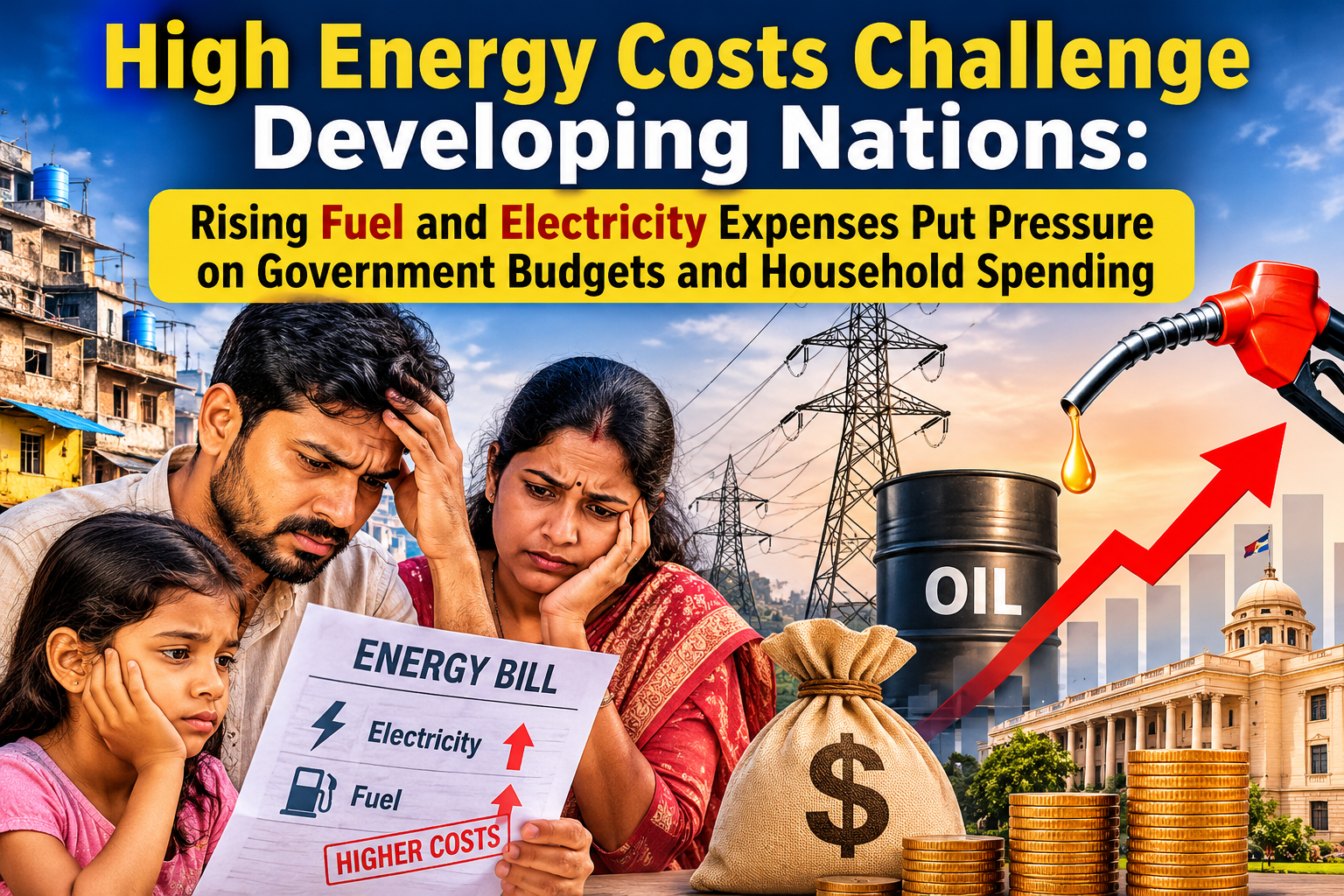
Rising international energy prices are creating fresh economic challenges for developing nations, increasing transportation and electricity costs, putting pressure on government finances and reducing the purchasing power of millions of households.
Developing economies are facing renewed financial pressure as rising fuel and electricity expenses affect businesses, public services and household budgets. Geopolitical conflicts, disruptions to international energy supplies and volatility in commodity markets have pushed energy affordability back to the centre of the global economic debate.
For countries that depend heavily on imported oil and natural gas, higher international prices can quickly translate into larger import bills, increased inflation and additional pressure on foreign-exchange reserves. Governments must also decide how much financial assistance they can provide to consumers without worsening already challenging fiscal conditions.
The World Bank’s October 2026 Commodity Markets Outlook estimates that global energy prices will increase by 32% in 2026, reversing three consecutive years of declining prices. Brent crude oil is forecast to average approximately $91 per barrel, compared with $69 in 2025.
These developments demonstrate how international energy disruptions can affect economic stability, particularly in developing countries with limited financial resources.
Geopolitical Conflicts Drive Energy Price Increases
One of the major reasons behind rising energy costs is continuing geopolitical instability.
The Middle East remains a strategically important region for global oil and gas supplies. Conflict-related disruptions and uncertainty surrounding major shipping routes have increased concerns about the availability and transportation of energy resources.
When international oil supplies become uncertain, global prices can rise even before physical shortages reach importing countries.
Developing economies are particularly vulnerable because many depend on imported petroleum products to support transportation, manufacturing, electricity generation and agriculture.
Higher fuel prices increase the cost of moving goods, operating machinery and delivering essential services. These additional expenses eventually affect businesses and consumers throughout the economy.
Government Budgets Face Growing Pressure
Rising energy costs create a difficult challenge for governments that attempt to protect consumers from sudden price increases.
Many developing countries use fuel subsidies, electricity support programmes, tax reductions and price controls to limit the impact of higher energy costs.
Although these measures can provide temporary relief, they also increase government expenditure and reduce available fiscal resources.
The International Monetary Fund reported in June 2026 that nearly 900 policy measures had been introduced across approximately 170 countries following the energy shock associated with the Middle East conflict.
The IMF has warned that broad-based subsidies and price controls can become expensive, particularly when governments extend them for long periods.
Countries with high public debt and substantial interest payments have less flexibility to absorb additional energy-related expenses.
As a result, governments face a difficult choice between supporting households today and preserving resources for infrastructure, healthcare, education and long-term economic development.
Household Spending and Living Costs Increase
Higher energy prices directly affect household purchasing power.
When petrol, diesel, cooking fuel and electricity become more expensive, families have less money available for food, education, healthcare and other essential expenses.
Lower-income households are especially vulnerable because energy and food account for a larger share of their monthly budgets.
According to UN Trade and Development (UNCTAD), between February 23 and August 31, 2026, diesel prices increased by approximately 83% in Nigeria and 51% in Myanmar. These increases illustrate how the same international energy shock can affect countries differently.
The impact extends beyond fuel purchases. Higher transportation expenses increase the cost of food distribution, public transport and everyday consumer goods.
For families already facing inflation and limited savings, rising energy expenses can force difficult spending decisions.
Businesses and Industrial Production Under Pressure
Energy is an essential input for almost every major economic sector.
Manufacturing companies depend on electricity and fuel to operate factories, machinery and transportation networks. Agricultural producers require energy for irrigation, fertiliser production, storage and distribution.
When electricity and fuel costs rise, businesses face higher operating expenses and may reduce production, postpone expansion or increase the prices of their products.
Small and medium-sized enterprises are particularly exposed because they often have limited financial resources to absorb unexpected cost increases.
Industries such as textiles, chemicals, construction, steel, cement and food processing may experience additional pressure because energy represents a significant part of their production costs.
Higher expenses can also reduce the international competitiveness of developing countries whose manufacturers compete with businesses operating in economies with more affordable energy supplies.
India and Other Emerging Economies Face Energy Challenges
India and several other emerging economies remain sensitive to international energy price movements because of their dependence on imported crude oil and other energy resources.
Higher oil prices can increase India’s import expenditure, place pressure on the current account and influence domestic inflation.
Transportation, logistics, agriculture and manufacturing may all experience higher operating expenses when fuel prices rise.
Electricity affordability is equally important for households and industries. Reliable and reasonably priced power is essential for maintaining industrial productivity, attracting investment and supporting economic growth.
Other developing economies, particularly those with limited foreign-exchange reserves and weaker fiscal positions, may face even greater difficulties.
For these countries, higher energy bills can reduce the resources available for importing food, medicines, machinery and other essential goods.
Renewable Energy Offers a Long-Term Solution
The current energy crisis highlights the importance of reducing excessive dependence on imported fossil fuels.
Investment in solar, wind, hydropower and other renewable energy sources can improve domestic energy security and reduce exposure to international price volatility.
Developing countries also need stronger electricity grids, energy storage facilities and modern transmission infrastructure to support a more reliable energy system.
Improving energy efficiency in buildings, industries and transportation can further reduce consumption and operating costs.
However, the transition requires substantial investment, technological expertise and long-term policy planning. International financial institutions and private investors can play an important role in supporting these developments.
The Worldonomics Times View
Rising energy costs are not simply a problem for the fuel and electricity sectors. They represent a wider economic challenge that affects inflation, employment, industrial competitiveness and the financial stability of developing nations.
In our view, the biggest concern is that countries already struggling with public debt and limited fiscal resources are being forced to spend more to protect households from rising energy expenses.
Governments should avoid relying excessively on broad-based subsidies that may become financially unsustainable. Instead, temporary and targeted assistance should prioritise low-income households, vulnerable communities and businesses that are essential to economic activity.
For India and other emerging economies, reducing dependence on imported fossil fuels must become a long-term economic priority. Investment in renewable energy, domestic production, efficient electricity networks and alternative transportation systems can improve resilience against future international energy shocks.
We also believe that energy security should be treated as an important component of national economic planning rather than merely an environmental objective.
International cooperation, affordable development financing and technology sharing will be necessary to help developing countries accelerate their energy transitions.
Our position is clear: affordable and reliable energy is essential for sustainable economic growth. Governments must protect vulnerable households today while investing in energy systems that reduce dependence on unpredictable international markets tomorrow.
Ultimately, countries that combine responsible fiscal policies, diversified energy supplies and long-term investment in clean technology will be better prepared to manage future energy crises and protect their economic development.